- Ripple is pursuing a VASP license to integrate directly into Brazil’s financial system
- Brazil’s regulatory framework is shaping compliant crypto infrastructure
- The move focuses on backend control, not just XRP price or adoption
Ripple’s latest move into Brazil may look like simple expansion, but the underlying strategy runs deeper. The company is actively pursuing a Virtual Asset Service Provider (VASP) license with Brazil’s central bank, aligning itself with one of the most structured crypto regulatory environments emerging today.
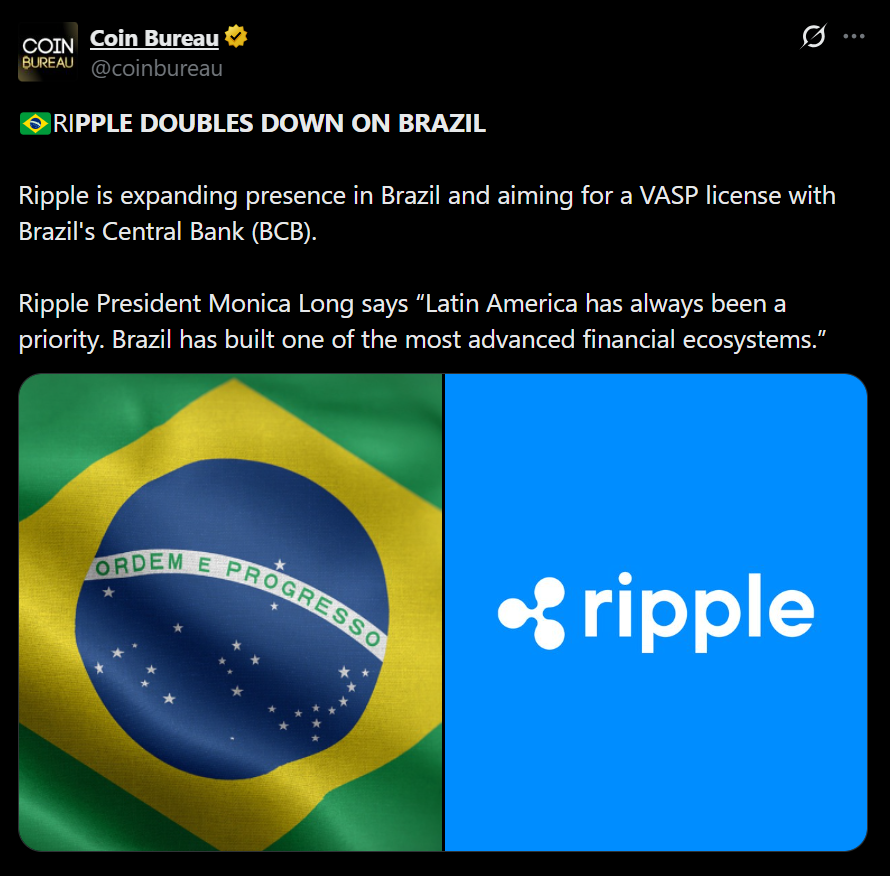
This isn’t just about entering a new market. It’s about embedding into the regulatory framework itself, where licensed players gain long-term advantages. Once approved, Ripple wouldn’t just operate in Brazil, it would become part of the financial system’s foundation.
Brazil Is Becoming a Regulatory Blueprint
Brazil is quickly positioning itself as a model for how crypto can coexist with traditional finance. The country has already implemented clear licensing requirements, compliance standards, and supervisory structures for digital asset firms.
Unlike regions that take a restrictive stance, Brazil is building with institutions in mind. That includes defining how companies like Ripple can operate legally within payments, custody, and settlement layers.
With further regulatory developments expected through 2027, the country is shaping what compliant crypto infrastructure could look like globally.
Ripple’s Focus Is on Infrastructure, Not Hype
Ripple’s broader strategy has long been centered on backend integration rather than retail-facing narratives. While XRP often dominates headlines, many of Ripple’s real-world partnerships focus on payments, liquidity, and financial rails.
Brazil fits naturally into that approach. It offers a large, digitally active population alongside regulators willing to formalize crypto systems instead of resisting them.
By securing a VASP license, Ripple positions itself where institutions, fintech firms, and payment providers may eventually need to connect.
The Real Competition Is for Financial Rails
This move highlights a larger shift in crypto. The competition is no longer just about tokens or user adoption, it’s about who controls the infrastructure layer.
Licensing plays a key role here. Companies that secure regulatory approval early can shape how services are built and accessed within that ecosystem.
In that sense, Ripple isn’t just expanding geographically. It’s competing for influence over how financial systems evolve in crypto-friendly jurisdictions.
A Long-Term Strategic Position
Ripple’s Brazil push reflects a long-term view of crypto’s direction. As regulation becomes clearer, the companies embedded in compliant frameworks will likely have an advantage over those operating on the fringes.
For XRP holders, this may not immediately translate into price movement. But from a structural perspective, it signals where Ripple believes the real value lies.
And that’s not just in tokens… it’s in the rails everything else runs on.