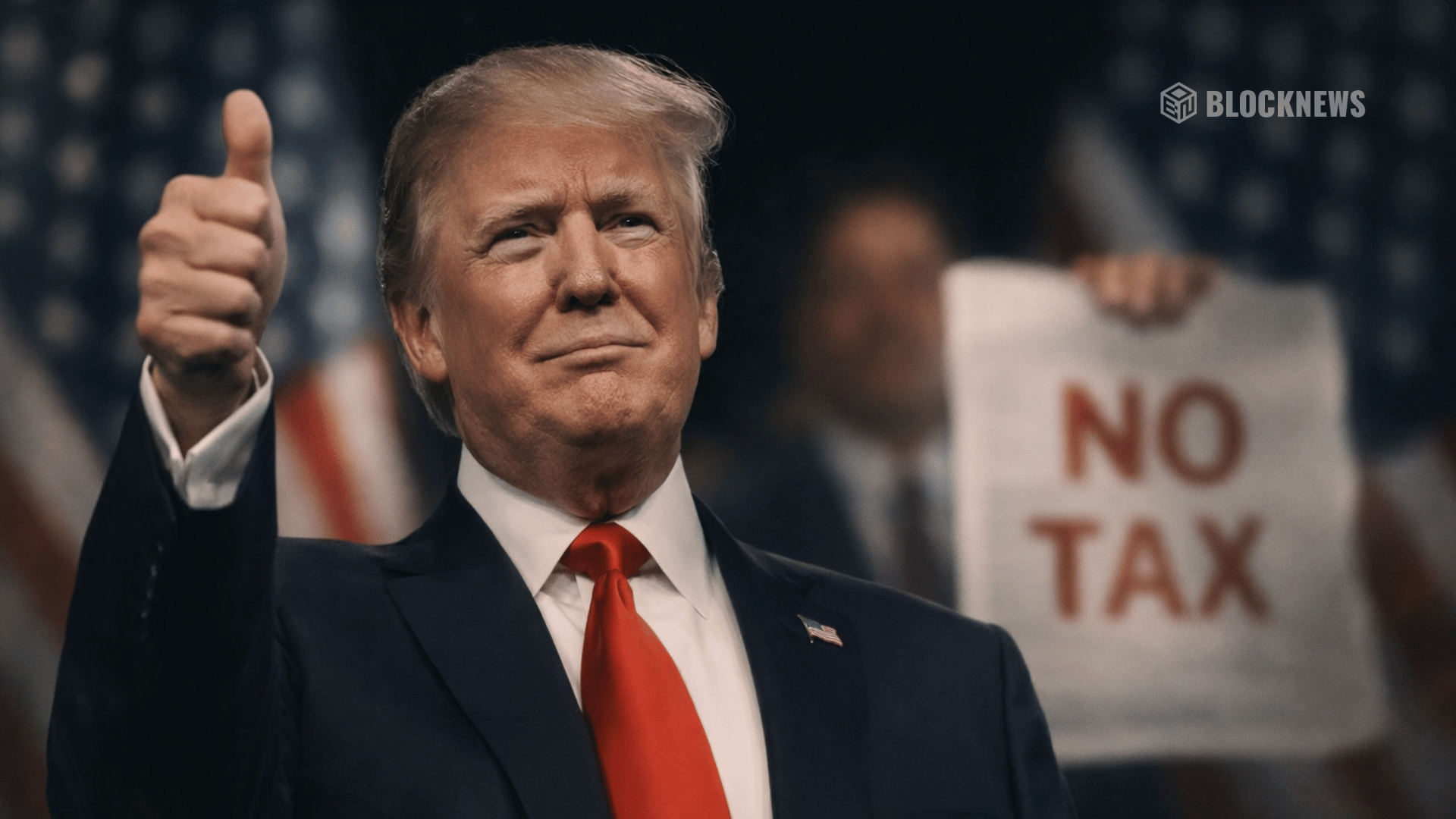
- Trump suggested tariffs could one day replace federal income tax, but no law has changed yet
- The 2025 tax bill extends cuts and deductions but does not eliminate income tax
- Crypto tax exemptions were removed from the final legislation
In late 2025, President Donald Trump reignited debate over U.S. tax policy after publicly suggesting that Americans may eventually no longer need to pay federal income tax. The idea, raised during a White House meeting, centered on using tariff revenues from imported goods to fund government operations instead of traditional income taxes.

While the comment sparked immediate headlines and online speculation, especially across crypto circles, the reality is more nuanced. The proposal reflects exploratory thinking rather than an enacted policy shift, and any such change would require sweeping legislation and congressional approval.
What’s Actually Changing in U.S. Tax Law
The most concrete development is the passage of the “One Big Beautiful Bill Act” in 2025. The legislation does not eliminate income tax, but it extends several Trump-era tax cuts and introduces new deductions that could meaningfully reduce tax liabilities for many Americans starting in 2026.
Some taxpayers may see larger refunds next year due to updated withholding structures and deduction mechanics, which has added to the perception that taxes are being quietly reduced. Still, income tax remains firmly in place, and no framework currently exists to replace it entirely with tariffs.
Why Crypto Communities Reacted So Strongly
Trump’s remarks quickly gained traction in crypto communities, where speculation spread that lower taxes could free up capital for investment into digital assets. Some interpreted the comments as a signal that broader tax relief — possibly even crypto-specific exemptions — could be coming.
However, proposed provisions that would have reduced or eliminated taxes on crypto gains were ultimately removed from the final bill. As of now, there have been no changes to how cryptocurrencies are taxed in the U.S., and experts caution that talk of “tax-free crypto” remains speculative.

What Happens Next
Replacing federal income tax with tariffs would represent one of the largest structural shifts in U.S. fiscal policy in modern history. Such a move would face intense political, economic, and legal scrutiny, making it far from guaranteed.
For now, Trump’s comments appear to be more about signaling long-term ambition than announcing imminent reform. Crypto investors may find the narrative exciting, but the underlying rules remain unchanged heading into 2026.
Whether income tax reform evolves into something more dramatic — and whether crypto becomes a beneficiary — is a story still very much in progress.