

- DOT emissions were reduced by over 50% with a new supply cap introduced
- Market reaction has been strong but still feels early in the cycle
- Institutional access is expanding through new investment products
Polkadot has just gone through one of the most important shifts in its history, and oddly enough… most of the market hasn’t fully reacted yet. The network slashed its annual token emissions from around 120 million DOT to roughly 55 million, while also introducing a hard cap of 2.1 billion tokens.
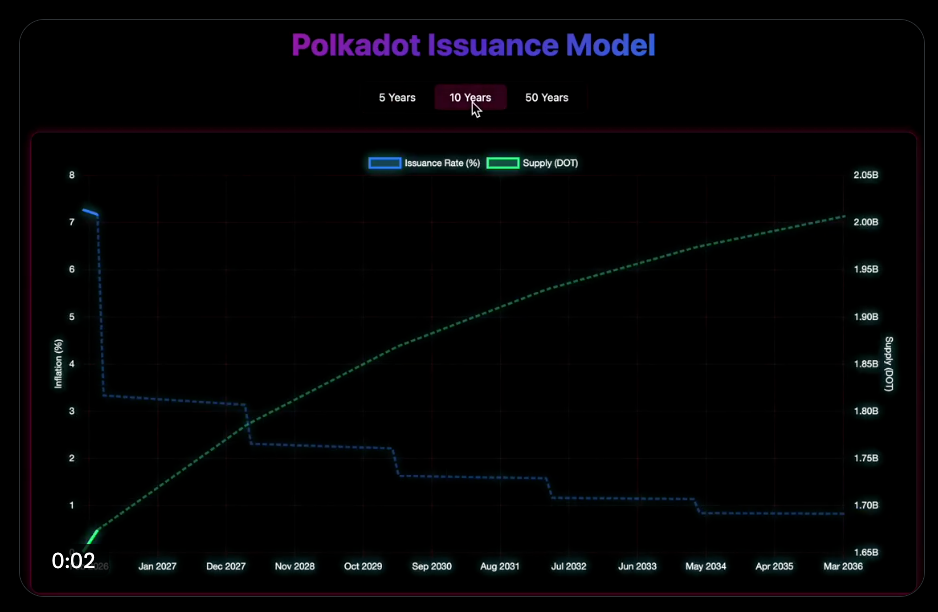
That’s not a small adjustment. It fundamentally changes how DOT should be viewed as an asset. For years, Polkadot faced criticism around its tokenomics. Strong tech, yes, but inflation that made long-term holding less appealing. That narrative suddenly looks outdated.
Scarcity Finally Enters the Picture
This is the first time Polkadot has leaned fully into scarcity as part of its economic design. Cutting emissions by more than half reduces sell pressure from newly issued tokens, while the supply cap introduces a clearer long-term framework for valuation.
In simple terms, fewer new tokens hitting the market… and a defined ceiling. That combination tends to matter over time, even if the impact isn’t immediate.
Historically, assets with tightening supply dynamics often see their narratives shift slowly. Not overnight, not instantly, but gradually as the market recalibrates.
The Market Reaction Feels Early
There has been some reaction already. DOT posted double-digit gains, and trading volume jumped more than 300%, which signals real interest. Positioning data also shows traders leaning more bullish, particularly among more experienced participants.
But even with that, it still feels early. Structural changes like this rarely get priced in all at once. Bitcoin didn’t instantly become “digital gold” after its halvings. It took time, multiple cycles, and a shift in how people thought about it.
Polkadot, interestingly, is still trading far below its previous highs. That gap is hard to ignore.

Institutions Are Quietly Stepping In
Another piece of the puzzle is access. The launch of a Polkadot ETF may not seem massive at first glance, but it changes who can actually buy and hold DOT.
Institutions tend to move slowly. They don’t chase pumps, they accumulate over time. And when supply is tightening at the same time new capital pathways are opening… that’s usually not random.
It’s a setup that can take months, sometimes longer, to fully play out.
A Reset in How DOT Is Viewed
What’s happening here isn’t just a technical update or a one-off event. It’s a reset in how Polkadot is positioned in the broader crypto market.
The old narrative — strong ecosystem but weak tokenomics — is starting to fade. In its place, a new story is forming, one centered around scarcity, structure, and long-term positioning.
The market hasn’t fully caught up to that shift yet. And that’s kind of the point.