
- OKX integrates trading bots directly into its platform for retail users
- Automation brings structured execution closer to institutional workflows
- Bots improve discipline but amplify both good and bad strategies
OKX is quietly changing how retail traders interact with the market, and it’s happening through something deceptively simple, built-in automation. By embedding tools like Spot Grid, Smart Portfolio, and DCA bots directly into the app, the exchange is removing friction that once kept these strategies out of reach for most users. What used to require APIs or third-party setups is now just a tap away.
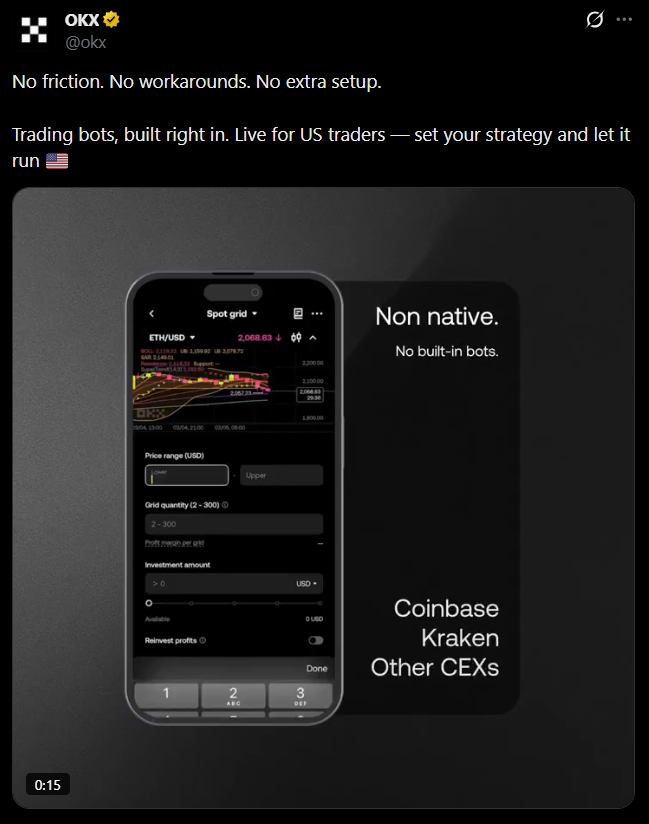
That shift might sound minor, but it isn’t. When automation becomes native, behavior changes. Traders stop reacting in real time and start relying on systems that run continuously, executing predefined strategies without needing constant attention.
From Emotional Trading to Structured Execution
Let’s be real for a second. Most traders don’t fail because they lack information, they fail because they act on impulse. Fear, hesitation, overconfidence, it all shows up at the worst moments. Bots don’t deal with any of that. They follow instructions, no matter what the market is doing.
Grid strategies, for example, are designed to capture volatility in both directions. DCA smooths out entries over time, reducing the pressure of timing the market perfectly. Portfolio automation adds another layer, forcing consistency across allocations. But none of this guarantees success, it just removes emotional noise from execution.
Automation Doesn’t Fix Bad Decisions
Here’s the part that gets overlooked. Bots don’t make strategies better, they just execute them faster and more consistently. If the logic behind a strategy is flawed, automation can actually accelerate losses instead of preventing them.
That’s the tradeoff. You gain discipline, but you also remove the chance to second-guess mistakes in real time. For some traders, that’s an advantage. For others… it can be a problem.
Retail Is Moving Closer to Institutional Models
This rollout reflects a broader shift. The edge in trading isn’t just about having information anymore, it’s about how consistently you can act on it. Institutional desks have always relied on systems to execute strategies, with humans overseeing rather than reacting.
Retail traders are starting to adopt that same approach. Not fully, not yet, but the direction is clear. Systems are taking over execution, while users focus more on setup and supervision.
A Subtle but Meaningful Change
What OKX is doing isn’t flashy. It’s not promising guaranteed profits or revolutionary strategies. It’s offering structure, and in markets like crypto, structure can be the difference between staying in the game and slowly bleeding out over time.
This isn’t full automation of trading, but it’s a step toward it. And once users get comfortable with system-driven execution, it’s hard to go back to purely manual decisions.