
- Meta plans to re-enter stablecoins in the second half of 2026
- The company may partner with Stripe instead of issuing its own token
- Clearer U.S. regulation is shaping corporate crypto strategy
Meta is preparing to step back into the stablecoin arena, four years after winding down its controversial Diem project. According to reports, the company has begun early discussions with crypto infrastructure providers as it evaluates integrating stablecoin payments across Facebook, Instagram, and WhatsApp. This signals a strategic pivot rather than a repeat of its past experiment.
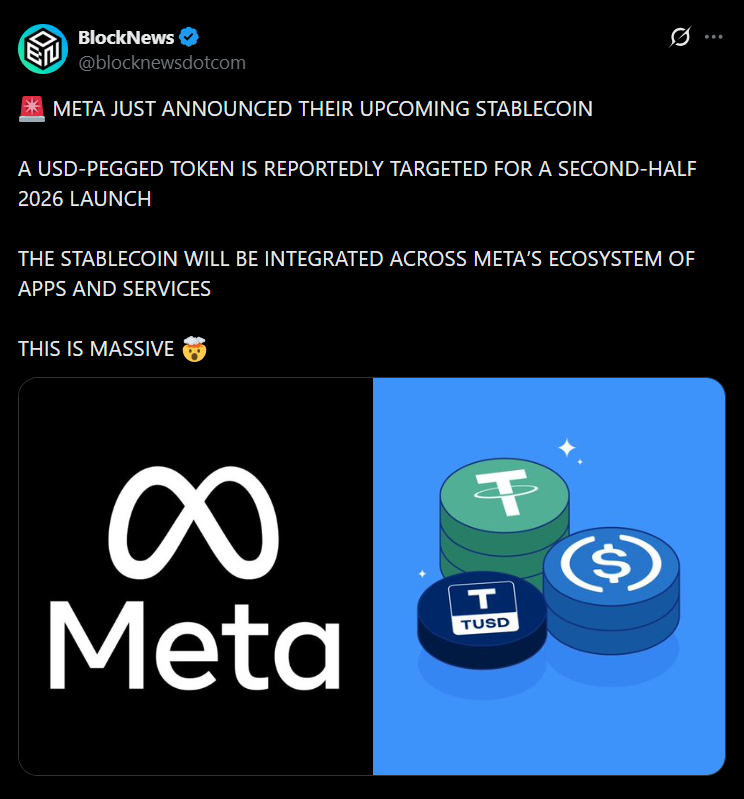
Unlike the 2019 Libra initiative, which sparked immediate regulatory backlash, Meta is reportedly avoiding issuing its own token. Instead, it is exploring partnerships with third-party providers. That shift alone suggests the company absorbed hard lessons from its earlier confrontation with policymakers.
A Different Strategy This Time
The new focus is practical, not ideological. Meta wants to facilitate cheaper cross-border payments for content creators and improve remittance functionality across its global user base. Stablecoins offer predictable value, lower transaction costs, and faster settlement compared to traditional payment rails.
Rather than building a consortium-backed digital currency, Meta is expected to leverage existing infrastructure. Stripe is seen as a likely partner, especially after its acquisition of stablecoin firm Bridge last year. This approach minimizes regulatory risk while tapping into established compliance frameworks.
Regulation Is Creating an Opening
The timing is notable. Stablecoin legislation in Washington has progressed, providing more clarity around issuance, reserves, and oversight. Corporate executives now see a more defined regulatory pathway compared to the uncertain environment Libra faced.
This evolving framework has encouraged traditional finance players to enter the space. Fidelity is reportedly exploring stablecoin initiatives, and banks are engaging in settlement-focused digital token projects. Meta’s return fits into this broader institutional wave.

Why This Matters for Crypto
Meta’s platforms serve billions of users worldwide. Even limited integration of stablecoin payments could materially expand real-world usage. Remittances, creator payouts, and cross-border commerce are natural use cases that align with stablecoin utility.
The difference this time is tone and structure. Meta is not trying to reshape global currency systems. It is attempting to plug stablecoins into existing financial architecture in a compliant way.
A More Cautious but Calculated Move
Meta’s re-entry does not guarantee success. Regulatory scrutiny will remain high, and execution will matter. However, partnering rather than issuing reduces friction and aligns the company with current policy trends.
If successful, this could mark one of the largest corporate integrations of stablecoins to date. The second half of 2026 may reveal whether big tech can finally coexist with crypto infrastructure instead of challenging it head-on.