- XRP trades near $1.86 as investors debate substance versus social-driven narrative
- Institutional ETF interest contrasts with weak on-chain usage and bank adoption gaps
- Price action suggests consolidation, not a clean breakout, despite regulatory clarity
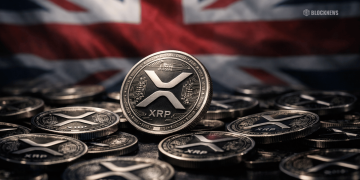
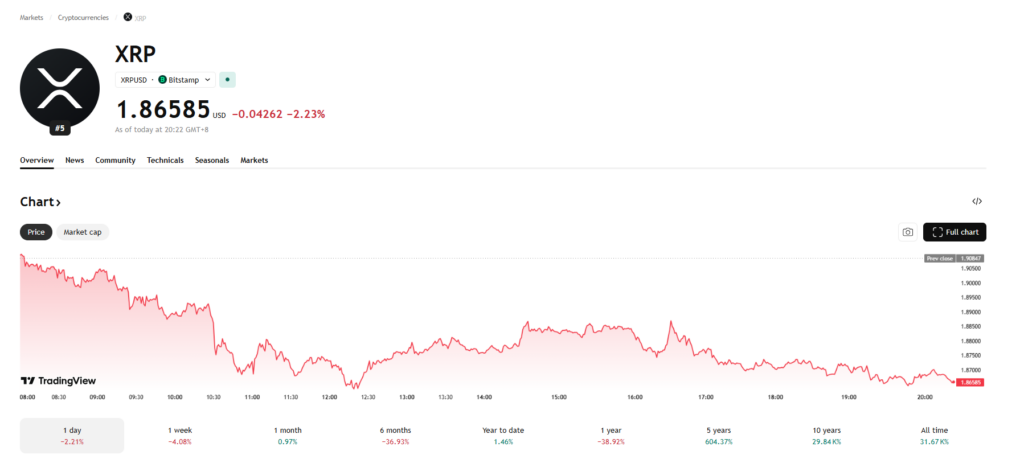
As 2026 approaches, XRP keeps triggering the same argument. Is it a real bridge asset with long-term relevance, or a token powered mostly by narrative and momentum. Trading around $1.86, XRP sits in a no-man’s land where neither bulls nor bears have full control. Some investors point to ETF inflows and legal clarity as validation. Others see a token still struggling to prove why it needs to exist at scale.
Institutions Are Interested, But Usage Still Lags
On paper, the bullish case looks respectable. Analysts like Standard Chartered’s Geoffrey Kendrick see XRP potentially reaching much higher levels by 2026, largely driven by regulated products and improved market structure. ETF participation has given XRP a seat at the institutional table it didn’t have before.
But skeptics focus on a different issue. Banks often use Ripple’s technology without using XRP itself. RippleNet adoption does not automatically translate into token demand, and that gap matters. Escrow unlocks also hang over the market, making supply dynamics less compelling than many narratives suggest.
Price Action Is Telling a Cautious Story
If fundamentals really turned a corner, price should reflect that. Instead, XRP remains well below its prior highs, even after the SEC case resolution and ETF launches. That disconnect fuels the question investors keep asking: why does XRP struggle when the headlines look positive.
Technical signals point to consolidation rather than accumulation. Many buyers from higher levels are still underwater, creating resistance on every bounce. Models suggest XRP could spend much of 2026 moving sideways unless something materially changes.
What Will Actually Decide XRP’s Future
This won’t be settled by social media or courtroom wins. XRP’s long-term case depends on one thing: real, sustained usage of the token itself. Not pilots. Not tests. Not infrastructure that works without it. Actual settlement volume that makes XRP hard to replace.
If Ripple can convert partnerships into meaningful XRP demand, the narrative flips. If not, the hype-versus-substance debate will keep dragging sentiment lower, no matter how many ETFs launch.
Conclusion
XRP isn’t dead, but it isn’t proven either. Right now, it sits between belief and evidence. 2026 will matter because it forces a shift from legal validation to utility validation. That’s when the market will decide whether XRP is a structural asset or just another story that peaked too early.