

- Crypto value capture is shifting from general usage to high-intensity trading activity
- Hyperliquid is gaining dominance, capturing a growing share of DeFi fees
- A feedback loop of trading, fees, and token buybacks is driving sustained value growth
There’s been a quiet shift happening in crypto, and it’s starting to change how blockchains actually capture value. It used to be pretty straightforward—more users, more transactions, more value. Simple transfers, steady activity… that was enough.
But that model feels outdated now. These days, it’s not about how many people are using a chain—it’s about how intensely they’re trading on it.
Perpetual trading volume recently hit around $8.4 billion in just 24 hours, while spot DEX activity lagged behind at $3.7 billion. That gap says a lot. Capital isn’t just moving—it’s rotating, constantly, and that kind of behavior favors platforms built specifically for trading.
Hyperliquid Emerges as a Fee Leader
This shift becomes even clearer when you look at where fees are actually going. Out of roughly $41.45 million in total DeFi fees, Hyperliquid alone contributed about $618,377. It might not sound massive at first glance, but the trend behind it matters more than the number itself.
What’s happening is a restructuring of revenue flow. Instead of value being spread across general-purpose chains, it’s concentrating around platforms that can monetize trading activity more efficiently. And right now, Hyperliquid is leaning right into that.
Market Share Starts to Reflect the Change
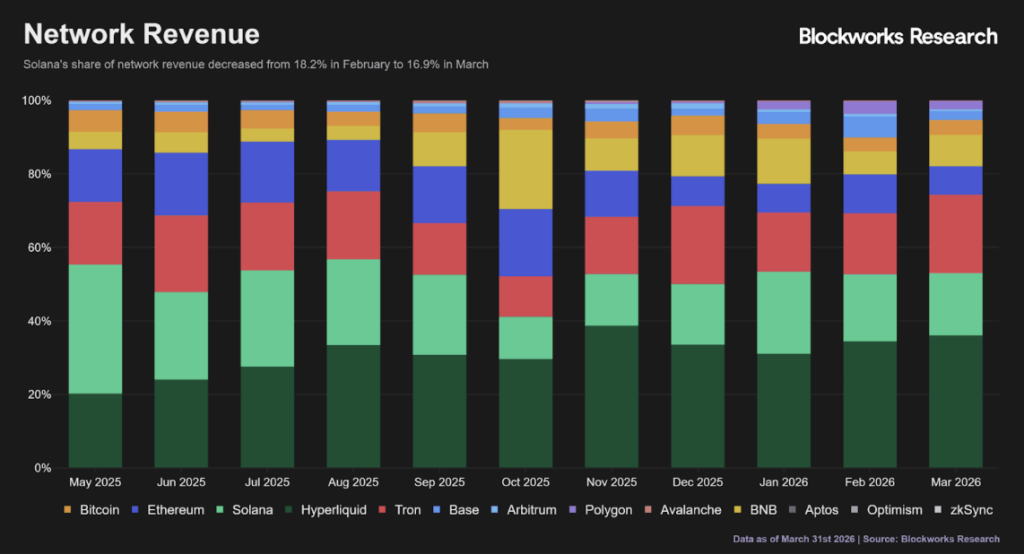
The numbers back it up. Hyperliquid’s share has been climbing steadily through 2025, reaching around 36.4% by March 2026. That’s not just growth—it’s dominance starting to take shape.
Meanwhile, Solana is still holding a decent position at around 16%, though it’s slipped slightly from 18%. Ethereum has dropped further, sitting near 7.7%, with Base trailing at about 2.4%. It’s not that these networks are inactive… it’s just that activity alone doesn’t translate into revenue the same way it used to.
And that’s the key shift. Value now follows trading intensity, not just participation.
Trading Activity Turns Into Real Value
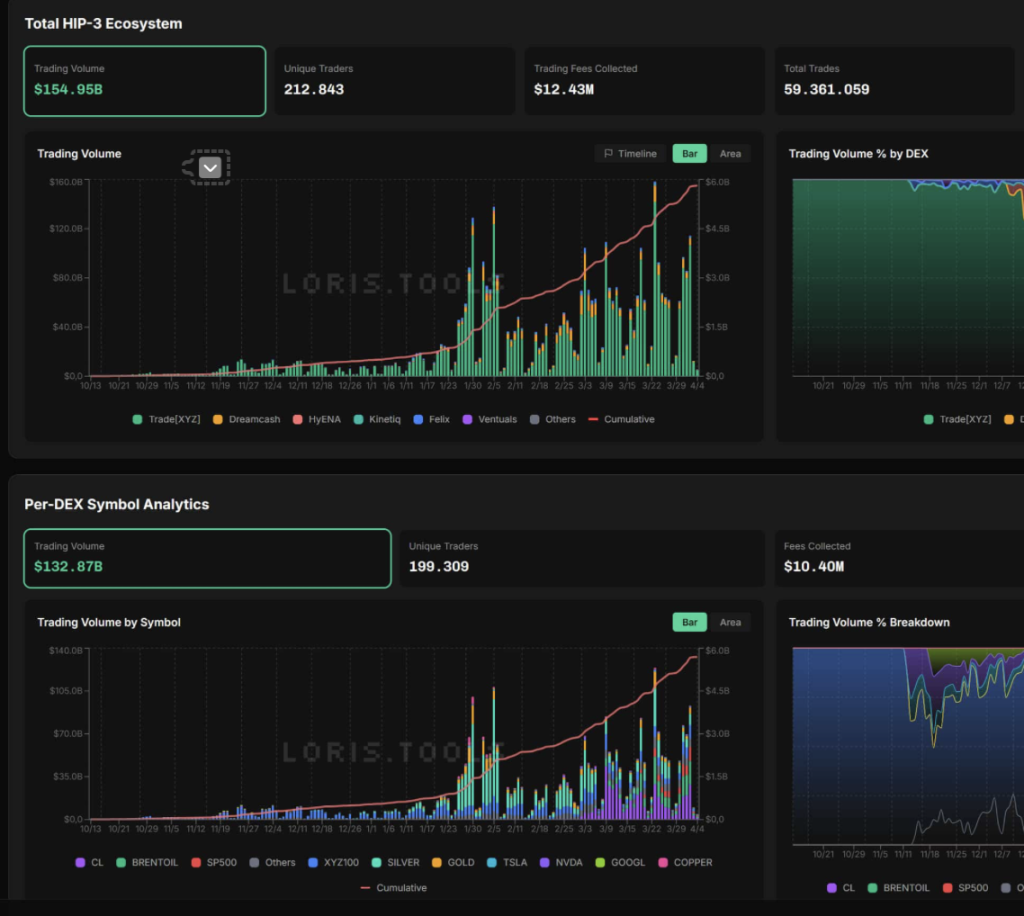
Hyperliquid’s growth isn’t just about market share—it’s about how efficiently it turns activity into actual value. Through HIP-3, the platform has scaled rapidly, reaching around $154.95 billion in total volume, driven by over 212,000 traders and nearly 59 million trades.
What stands out is how that growth accelerated. It didn’t just rise gradually—it spiked, especially starting in January, as participation picked up and volumes expanded quickly. And as expected, fees followed.
So far, fee generation has reached about $12.43 million, showing that the platform isn’t just busy—it’s profitable.
A Feedback Loop That Reinforces Growth
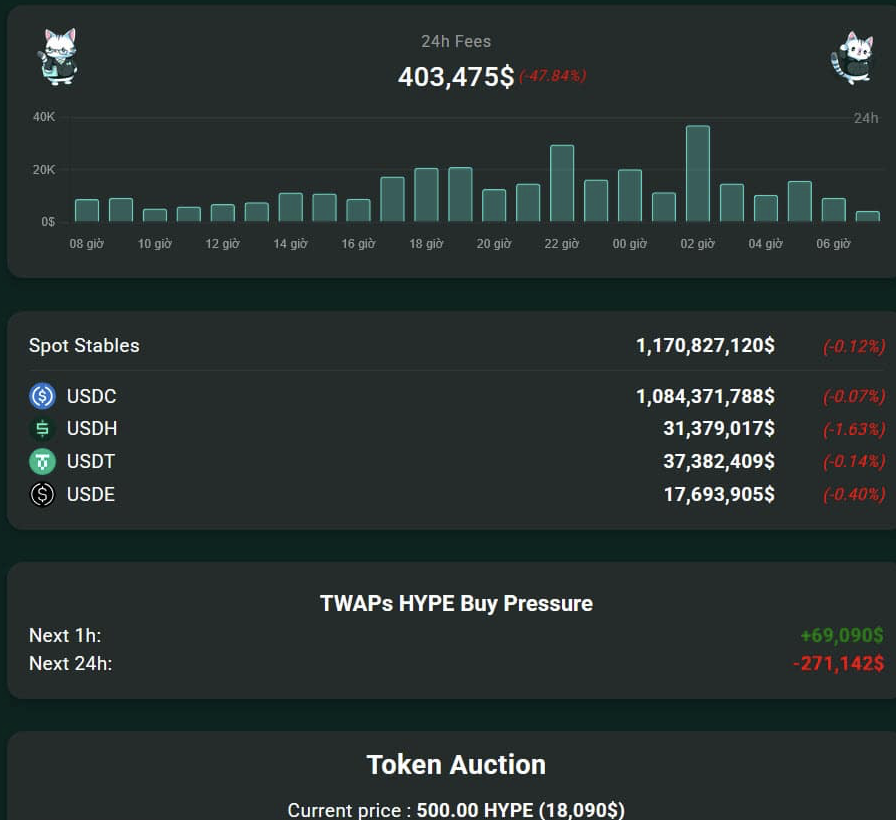
What makes this model interesting is what happens next. The fees generated don’t just sit idle—they feed directly back into the ecosystem. In the last 24 hours alone, around $403,475 in fees were used for buybacks, removing roughly 10,794 HYPE tokens from circulation.
That creates a loop. Trading drives fees, fees drive buy pressure, and reduced supply starts to support price. It’s not immediate, not always obvious, but over time, it builds.
And that’s really the bigger picture here. Crypto isn’t just evolving in terms of technology—it’s evolving in how value is created, captured, and recycled. And right now, trading seems to be at the center of it.