
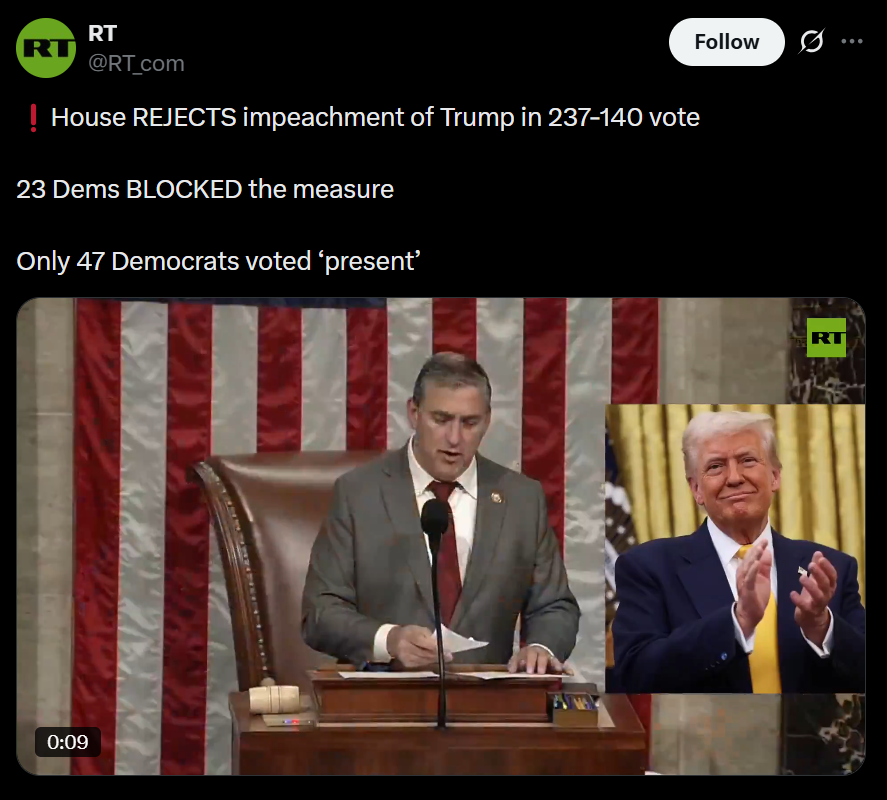
- House votes 237–140 to block an impeachment resolution against Trump.
- All Republicans vote to table; Democrats split, with 47 voting “present.”
- Leadership avoided forcing a divisive vote they know the Senate would reject.
The House voted 237–140 on Thursday to block — or “table” — a resolution from Rep. Al Green (D-Texas) calling for the impeachment of President Donald Trump. Every Republican supported shelving the effort, while Democrats were split, with 47 choosing to vote “present” rather than take a firm stance for or against the measure. This effectively halted the impeachment push before it could advance.
Why Democratic Leaders Backed Away
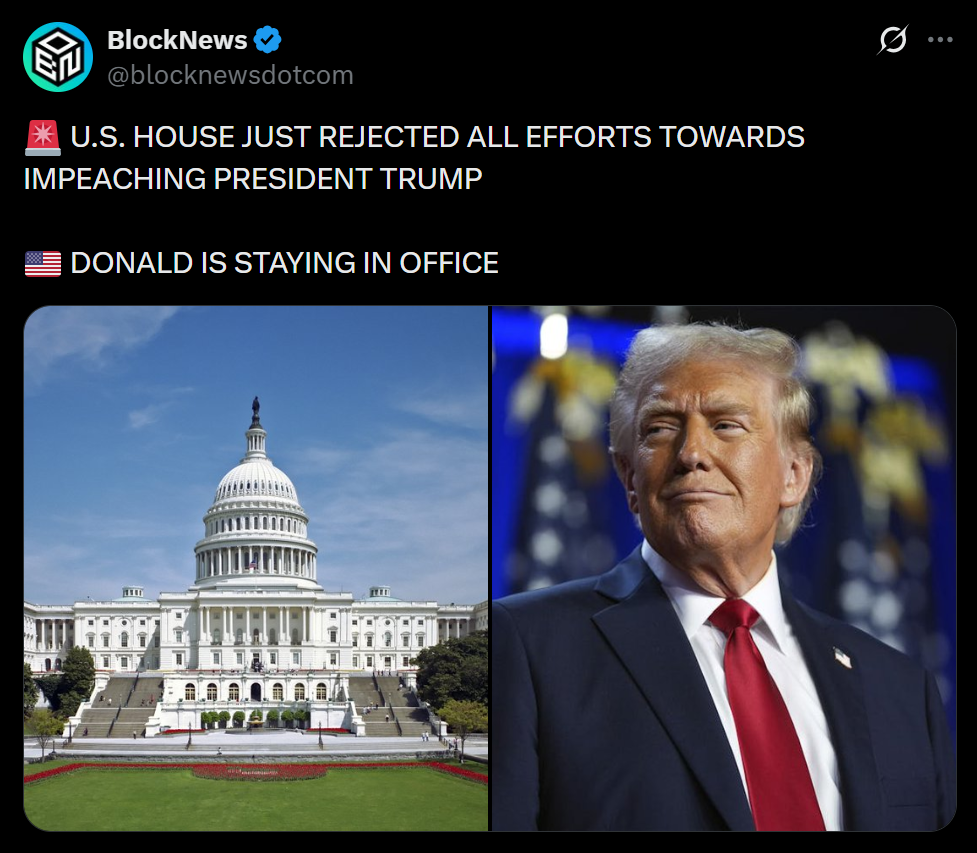
Even though many Democrats privately believe Trump should face impeachment, the party’s leadership urged caution. Their concern isn’t about the substance of the accusations but about the political fallout. With a Republican-controlled Senate virtually guaranteed to acquit Trump, Democrats worry that forcing a recorded vote could endanger members in competitive swing districts. Leadership emphasized their focus on “making life more affordable for everyday Americans,” signaling they did not want impeachment to overshadow policy messaging.
Political Pressures Behind the Split
The vote exposed the tightrope Democrats must walk. Progressives push for accountability, while moderates fear a backlash. Voting “present” allowed leadership and some members to avoid choosing sides in a highly charged vote while still blocking the resolution from moving forward. For Republicans, the vote was simple — full unity in shutting down the effort and avoiding debate over impeachment charges.
Why the Resolution Was Doomed
Even if the House had moved forward, the impeachment bid faced almost certain failure. The Senate remains firmly controlled by Republicans, meaning any articles of impeachment would die long before reaching conviction. That reality shaped Democratic strategy, with leaders opting to avoid the internal division and political risk associated with a symbolic but unsuccessful impeachment attempt.
Conclusion
The vote reflects less about Trump’s actions and more about the real-time political calculus inside Congress. With Republicans unified and Democrats split between principle and pragmatism, the impeachment push was sidelined — not because the topic has disappeared, but because the math simply isn’t there.