

- FedEx is running a Hedera node and joining its governing council
- The move highlights enterprise focus on shared data infrastructure
- Governance participation matters more than short-term HBAR price swings
When FedEx commits to running a node on Hedera and joins its governing council, that’s not a marketing stunt. It’s a logistics giant stepping into shared digital infrastructure with real skin in the game. FedEx isn’t speculating on crypto price cycles or chasing retail enthusiasm. It’s addressing something far more practical: data integrity across complex global supply chains that move millions of packages every day.
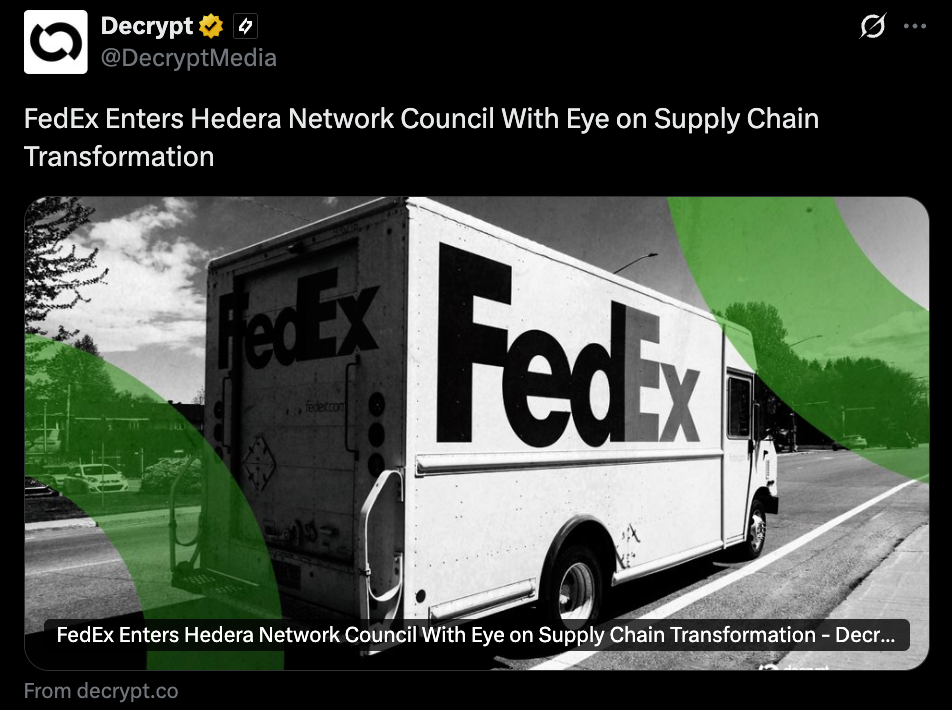
That distinction matters. Enterprises don’t experiment publicly with infrastructure that touches mission-critical systems unless they see durable value.
Governance Is the Real Signal, Not HBAR’s Chart
Too many observers will glance at HBAR’s price and try to extract meaning from a daily candle. That misses the structural shift. By joining the council, FedEx gains influence over how Hedera evolves — from technical standards to network performance and long-term sustainability. Governance participation embeds the company into the protocol’s direction rather than leaving it as a passive user.
Enterprise adoption doesn’t begin with speculative flows. It begins with seats at the table.
The Company It Keeps Tells the Story
FedEx joins a council that already includes firms like Google, IBM, and Dell. These aren’t companies that casually attach their names to experimental infrastructure. They participate when coordination problems are real and when shared systems can reduce friction across industries. Hedera’s model — a governed, permissioned council running a public network — is designed specifically for that kind of long-term collaboration.

That alignment suggests the focus is durability, not hype cycles.
Conclusion
FedEx joining Hedera isn’t about boosting crypto narratives or igniting token rallies. It’s about building neutral, auditable data rails where errors are costly and trust must scale across borders. If blockchain has a practical lane, it’s this one — boring, backend, and mission-critical. And that’s exactly where real infrastructure power lives.