

- China is closing the gap with the US as the world’s largest state Bitcoin holder
- A flip could reshape geopolitical narratives around digital reserves
- Bitcoin is increasingly viewed as a strategic asset, not just an investment
The United States and China now sit almost side by side as the largest national holders of Bitcoin, and the gap is narrowing fast. According to treasury data, the US currently holds just over 198,000 BTC, while China is close behind with roughly 194,000 BTC. In percentage terms, both countries control just under 1% of Bitcoin’s fixed 21 million supply, a small share on paper but massive in symbolic and strategic terms.
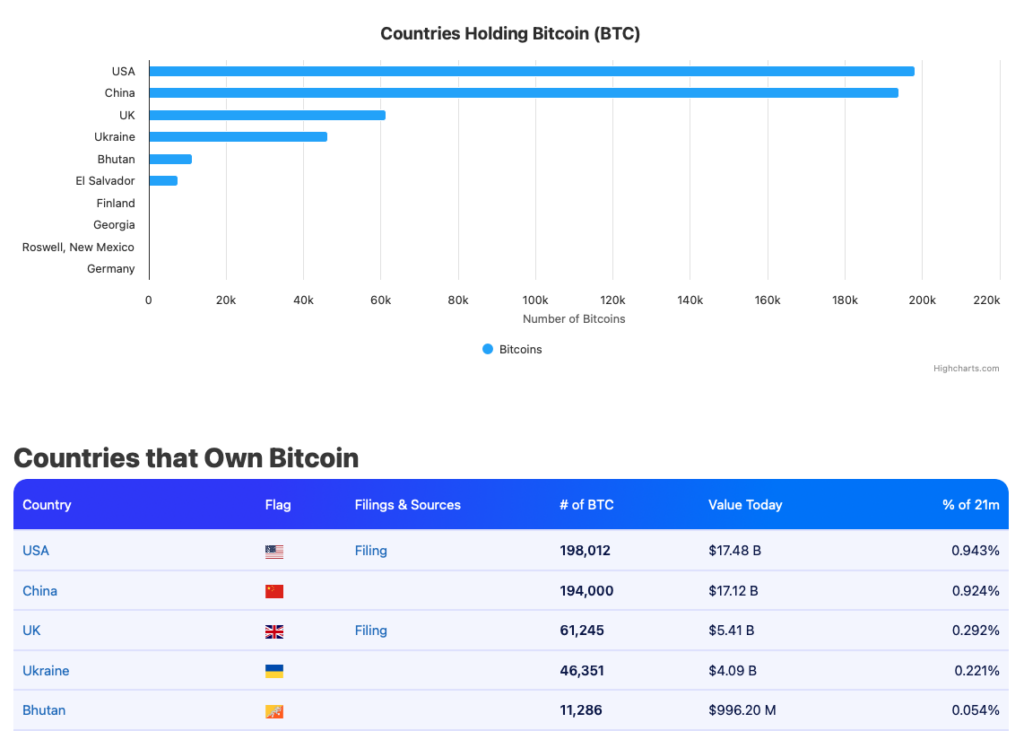
After China and the US, the drop-off is steep. The United Kingdom sits in third place with just over 61,000 BTC, highlighting how concentrated state-level Bitcoin ownership already is. At current levels, it would not take much for China to overtake the US outright.
Why a China Overtake Would Raise Eyebrows
China’s growing proximity to the US in Bitcoin holdings carries weight far beyond the numbers. Over the past two decades, China has steadily expanded its influence across global trade, manufacturing, and finance. Bitcoin adds a new dimension to that influence, especially as digital assets increasingly intersect with monetary policy and reserve strategy.
There’s an added layer of irony here. China maintains strict bans on domestic crypto trading and mining, yet it continues to hold a substantial Bitcoin reserve. That contrast suggests Bitcoin is viewed differently at the state level than at the retail level, more as a strategic asset than a speculative tool.
Bitcoin as a Strategic Reserve Asset
The conversation around Bitcoin has shifted. It’s no longer just about price cycles or adoption curves. Senior financial figures have openly questioned how long the US dollar can remain the dominant global reserve, and Bitcoin is often mentioned as a potential long-term alternative or hedge.
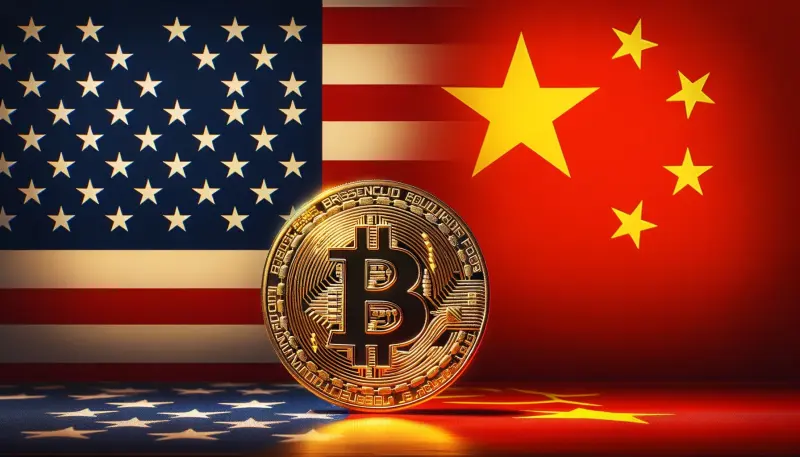
If digital assets ever play a meaningful role in future reserve systems, then state accumulation matters. In that context, China overtaking the US in Bitcoin holdings would be seen by many as a symbolic loss of ground, even if the practical impact unfolds slowly.
The US Response May Not Be Passive
Despite the optics, the story is far from over. The US has taken a noticeably more pro-crypto stance in recent years, especially under the current administration. Crypto policy, regulation, and adoption are now treated as strategic priorities rather than fringe topics.
That shift could translate into more active engagement with digital assets over time, whether through regulatory clarity, institutional participation, or changes in how seized and held Bitcoin is managed. If that happens, the US could just as easily widen the gap again.
Conclusion
China nearing the US in Bitcoin holdings is not just a leaderboard update. It’s a signal that Bitcoin is being taken seriously at the highest levels of government, even by countries that publicly restrict crypto use. Whether China overtakes the US or not, the bigger takeaway is clear: Bitcoin is quietly becoming a geopolitical asset, and states are paying attention.