

- Kingsport advanced zoning rules for crypto mining and data centers
- Mining would be limited to heavy industrial zones with strict oversight
- Noise concerns are the driving force behind the new framework
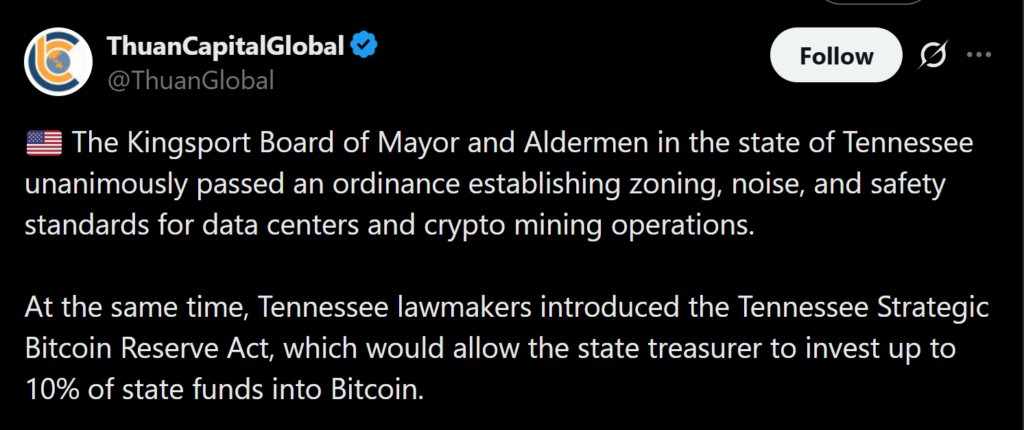
Kingsport is moving to formally define where and how crypto mining can operate within city limits, signaling a more structured approach to an industry that has often expanded faster than local rules. City officials advanced a new ordinance this week that establishes zoning guidelines for crypto mining operations and data centers, aiming to protect residents while still leaving room for industrial development. The measure passed its first reading and now heads toward final approval.
Where Crypto Mining Will Be Allowed
Under the proposed ordinance, crypto mining activities such as Bitcoin operations would only be permitted in heavy industrial zones. Even then, operators would need special exception approval rather than automatic clearance. City management framed the rules as guardrails rather than a ban, designed to ensure mining doesn’t spill into areas where it could disrupt daily life.
Noise and vibration are central to the framework. Mining facilities would be subject to ongoing sound and vibration studies, acknowledging that noise complaints have been the primary friction point between operators and nearby communities.
Why Noise Is Driving the Conversation
Kingsport’s move didn’t happen in isolation. Nearby towns have already dealt with backlash over constant humming and vibration from mining sites located too close to residential areas. During discussions, officials referenced experiences in surrounding communities where noise issues persisted despite promises of mitigation.

A stalled mining proposal last year highlighted the tension. Even with assurances around quieter cooling technology, local resistance proved decisive. For residents, trust has been hard to earn once noise becomes a daily reality.
A Model Other Cities Are Watching
Several board members described the ordinance as balanced and well-researched, noting that other municipalities are already reviewing Kingsport’s approach. The idea isn’t to push crypto mining out entirely, but to ensure it develops in a way that respects existing property owners and land-use expectations.
By placing crypto mining firmly within industrial zoning and layering oversight on top, the city is trying to avoid reactive bans down the line.
Conclusion
Kingsport’s zoning rules reflect a broader shift in how local governments are approaching crypto mining. Instead of reacting after conflicts arise, cities are starting to define boundaries upfront. For the industry, that means clearer expectations. For residents, it means fewer surprises. How well the balance holds will depend on enforcement, not just the ordinance itself.