
- Ripple’s $750M buyback sparked debate over whether XRP holders actually benefit
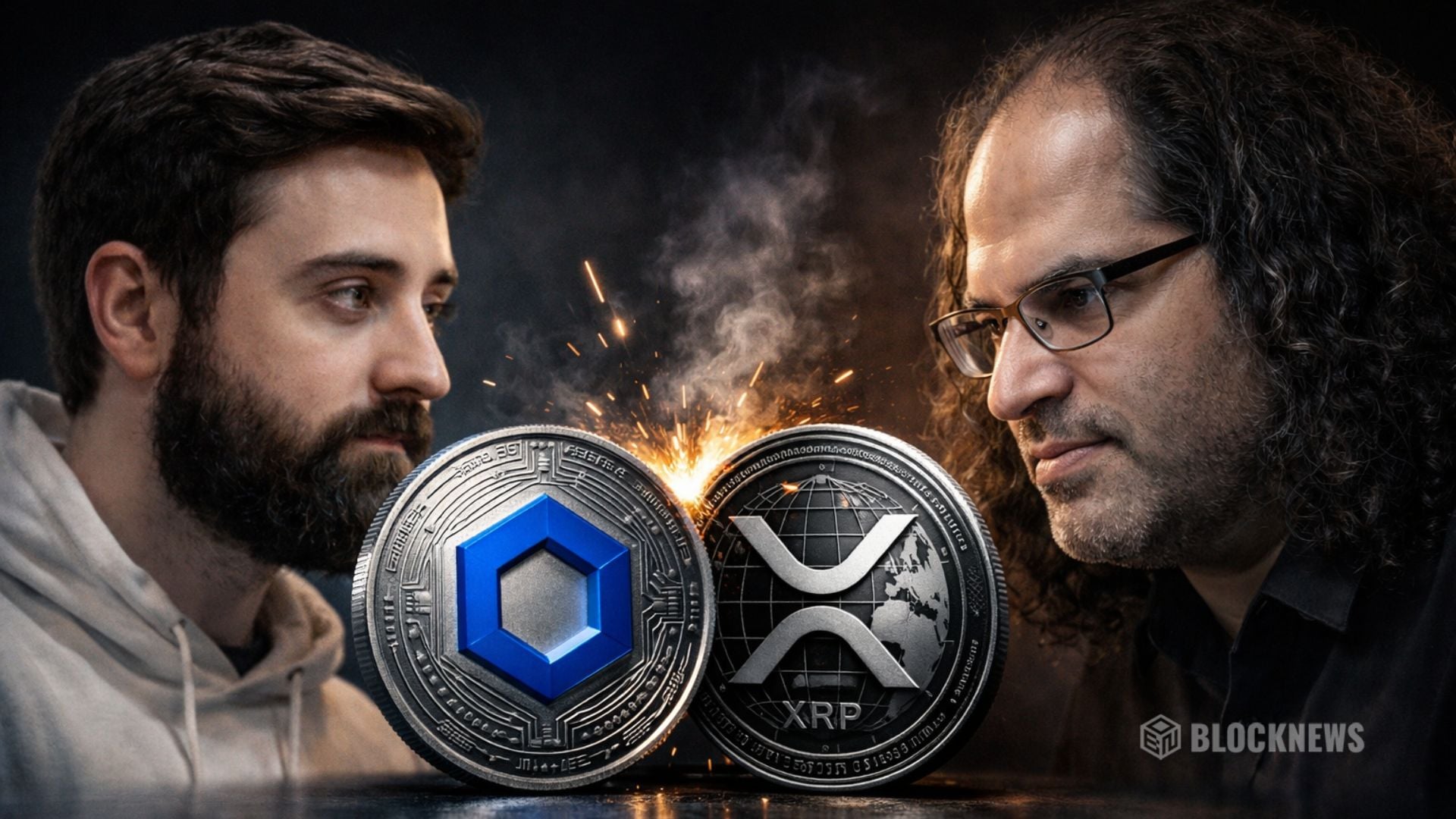
- Chainlink’s Zach Rynes and Ripple’s David Schwartz clashed over token economics
- The rivalry reflects a broader competition around institutional adoption narratives
A heated dispute has broken out between supporters of Chainlink and XRP, and it’s quickly turning into one of those familiar crypto community clashes. What started as criticism of Ripple’s financial strategy soon spiraled into a broader debate about token economics and who actually benefits from corporate decisions tied to blockchain projects. The conversation has spread across social media, with each side digging in and defending its network. At the center of it all is a question many crypto holders quietly wonder about: do company moves really help token holders, or mostly the company itself?
Ripple’s $750M Share Buyback Triggers Questions
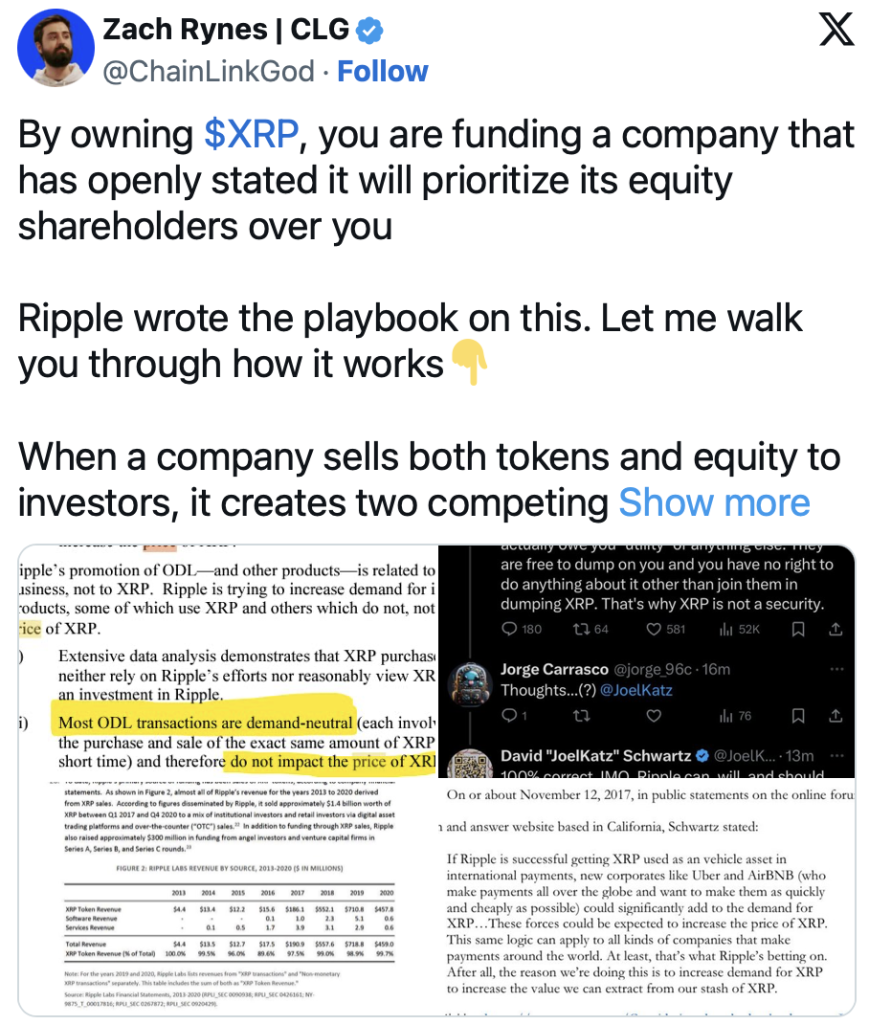
The controversy began after Ripple announced a $750 million share buyback, a move that values the company at roughly $50 billion. Chainlink community liaison Zach Rynes didn’t hold back in his response, arguing that Ripple funds its operations by selling XRP while the upside from financial moves like buybacks mainly flows to equity shareholders. In other words, the company may benefit directly while token holders see little of that value, maybe even the opposite.
Rynes put the argument bluntly during the exchange. “So Ripple using the proceeds of XRP sales to fund Ripple Labs stock buybacks is good for XRP holders because it makes the price of XRP go down, that’s your argument?” he said, clearly skeptical of the logic behind the defense.
He also questioned long-standing claims that XRP could become a dominant bridge asset in global finance. According to Rynes, stablecoins tied to the US dollar already dominate many payment and trading flows across crypto markets. On top of that, he pointed out that the XRP Ledger accounts for less than one percent of the real-world asset sector, while holding under 0.01% of the stablecoin supply.
David Schwartz Pushes Back Against Criticism
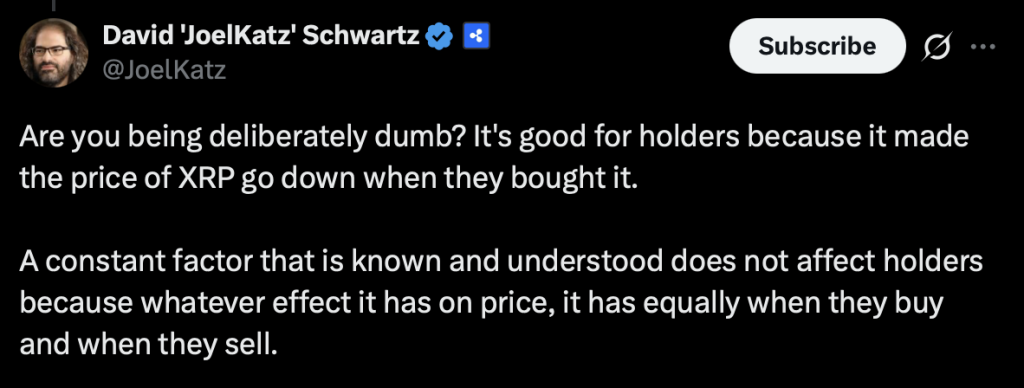
Ripple CTO David Schwartz stepped in to respond directly, rejecting the idea that Ripple’s strategy somehow harms XRP holders. His argument leaned on market transparency. Since Ripple’s XRP sales are widely known and discussed, Schwartz said they’re already reflected in the token’s price.
In a pointed reply, Schwartz wrote, “Are you being deliberately dumb? It’s good for holders because it made the price of XRP go down when they bought it.” His reasoning was fairly simple, if a bit controversial. If XRP sales occasionally push the price lower, buyers can accumulate more tokens at cheaper levels.
That dynamic, he said, affects every market participant equally. According to Schwartz, there’s no hidden disadvantage when the market already knows the supply conditions.
Rynes, however, dismissed the explanation outright. He called the argument “elite tier gaslighting,” insisting that token holders shouldn’t be told falling prices are somehow beneficial. Schwartz remained firm in his stance, repeating that transparent supply dynamics do not create unfair advantages for insiders.
Institutional Adoption Becomes Another Battleground
Beyond the buyback debate, the dispute highlights a deeper rivalry between the two ecosystems. Both communities frequently frame their networks as essential infrastructure for institutional finance, and that narrative tends to spark competition.
Chainlink supporters often point to integrations with large institutions like Swift, DTCC, and JPMorgan. These relationships revolve around Chainlink’s role as a decentralized oracle network and its growing focus on cross-chain interoperability.
XRP advocates, meanwhile, emphasize Ripple’s payment infrastructure and real transaction activity. Ripple says its network has processed more than $100 billion in transactions, and supporters also highlight increasing investment products tied to XRP. Exchange-traded fund inflows connected to the token reportedly reached $1.44 billion by early March.
Different Missions, Same Industry Spotlight
From a neutral standpoint, the two projects actually operate in fairly different corners of the crypto ecosystem. Chainlink specializes in providing external data feeds and interoperability tools that allow blockchains to communicate with real-world systems. XRP, on the other hand, focuses on cross-border settlement and payment infrastructure.
Still, distinctions like that rarely stop online debates. The discussion continues across social platforms and crypto forums, with both communities promoting their projects as key players in the future of institutional finance.
And judging by the tone of this latest exchange… it doesn’t look like the rivalry is cooling down anytime soon.