

- Senator Cynthia Lummis proposes a $300 crypto tax exemption for purchases
- The bill would cap tax-free crypto transactions at $5,000 annually
- The goal is to make Bitcoin usable for everyday payments like coffee
Senator Cynthia Lummis is once again pushing a proposal that could significantly change how Americans use cryptocurrency in everyday life. The Wyoming lawmaker is advocating for a de minimis tax exemption that would allow small crypto transactions, up to $300, to occur without triggering capital gains taxes. The idea is simple, but the implications could be big for Bitcoin and the broader digital asset economy.
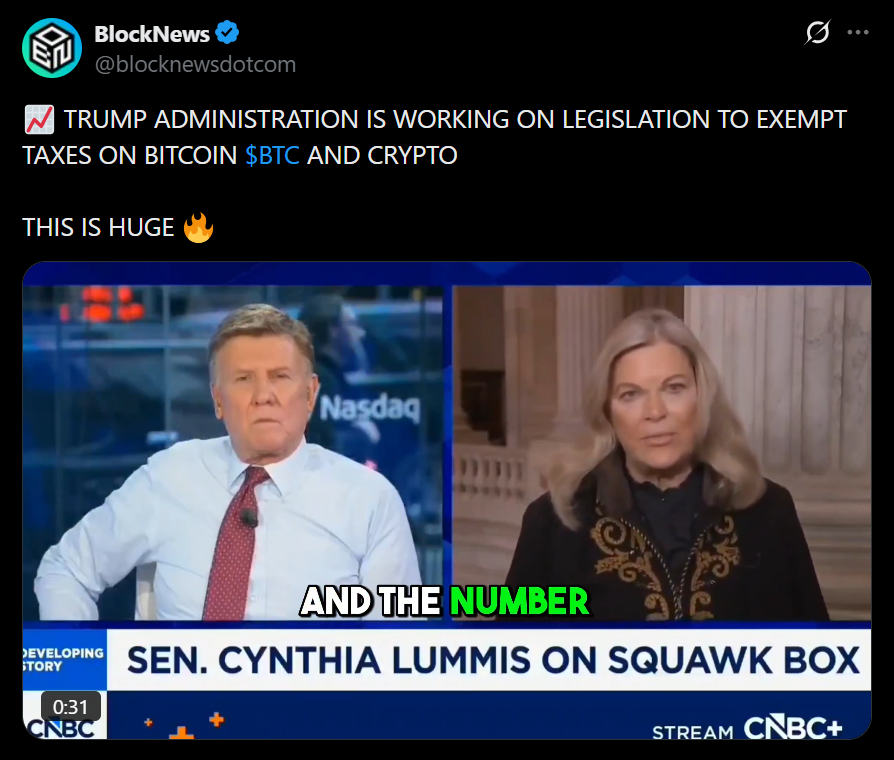
Right now, every crypto transaction technically counts as a taxable event in the United States. Even buying a cup of coffee with Bitcoin can require calculating gains or losses based on the asset’s purchase price. Lummis argues that this rule makes everyday crypto payments impractical and discourages real-world adoption.
The $300 Crypto Tax Exemption Proposal
Lummis originally introduced legislation last year that would create a new section of the tax code allowing small crypto transactions to avoid capital gains reporting. Under the proposal, purchases of up to $300 would qualify for the exemption. The bill also includes an annual cap of $5,000 for these transactions.
However, not all crypto activity would qualify. The exemption would not apply to transactions involving conversions into cash or stablecoins, assets used in active business operations, or property held primarily for generating income. The focus is strictly on small consumer-style payments.
Supporters say the threshold strikes a reasonable balance. It allows everyday spending without overwhelming the tax system while still maintaining oversight over larger crypto transactions.
Making Bitcoin a Practical Payment Method
During a recent interview, Lummis emphasized that the biggest challenge facing cryptocurrency adoption is usability in everyday transactions. When every small purchase requires tax reporting, most people simply avoid using crypto for payments altogether.
The proposed exemption could change that dynamic. If implemented, Americans could theoretically use Bitcoin for routine purchases without worrying about complex tax calculations each time. The goal, according to Lummis, is to create an environment where digital assets function more naturally as a medium of exchange.
The Clarity Act Remains a Parallel Priority
Beyond tax policy, Lummis is also involved in broader efforts to create regulatory clarity for the crypto industry. She confirmed that members of the Senate Banking Committee have been negotiating market structure legislation, including the CLARITY Act, for months.
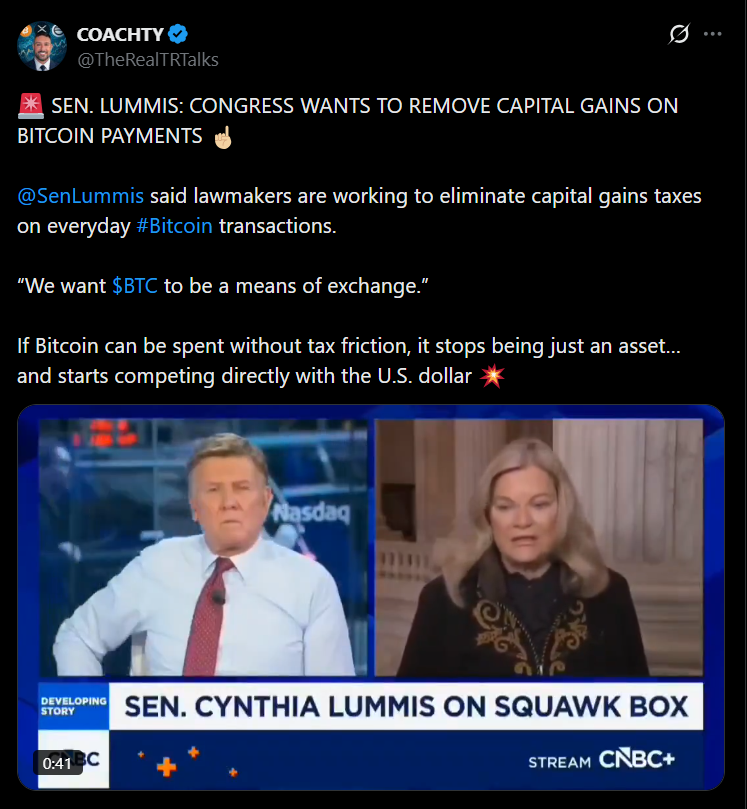
The legislation aims to clearly define which crypto assets fall under the jurisdiction of the Securities and Exchange Commission versus the Commodity Futures Trading Commission. If passed, the bill would create a more predictable regulatory framework for digital asset markets.
Kraken’s Federal Reserve Access Signals Integration
Lummis also recently praised a milestone for crypto banking infrastructure. Kraken Financial, the Wyoming-chartered banking arm of the crypto exchange Kraken, secured access to a Federal Reserve master account. This allows the institution to connect directly to core U.S. payment systems such as Fedwire.
According to Lummis, the development represents a step toward deeper integration between traditional finance and digital assets. With direct access to payment rails, crypto-focused banks could potentially offer services that bridge fiat currencies and cryptocurrencies more seamlessly.
A Push Toward Everyday Crypto Adoption
The proposed tax exemption and broader regulatory initiatives reflect a growing push in Washington to make digital assets easier to use within the financial system. Small policy changes like the $300 rule may seem technical, but they could significantly affect how people interact with crypto.
If lawmakers move forward with the proposal, everyday Bitcoin transactions might finally become more practical for regular consumers. That shift could bring cryptocurrency closer to functioning as a true payment system rather than just a speculative investment.