
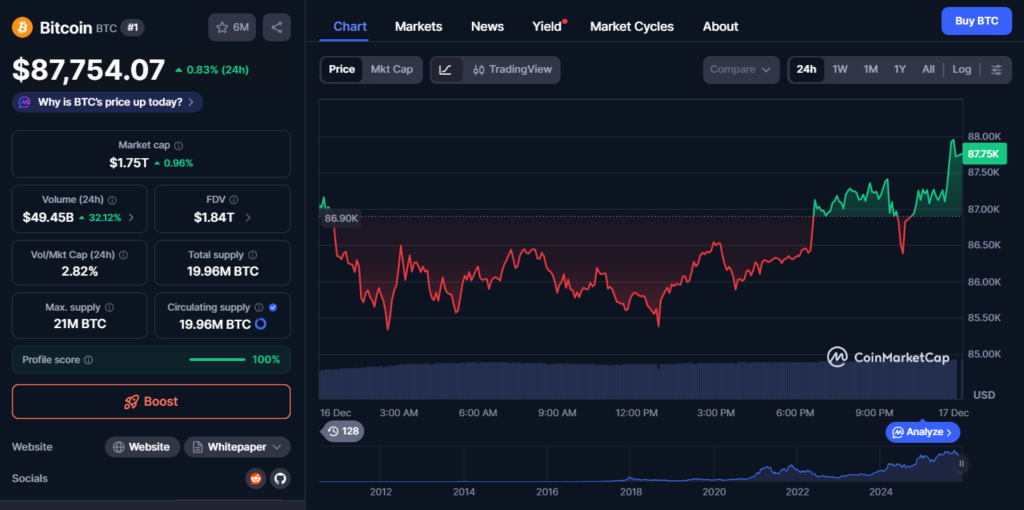
- Bitcoin rebounded above $87,000 after Monday’s sharp selloff, stabilizing crypto markets.
- Altcoins and crypto equities outperformed as U.S. stocks slipped lower.
- Analysts remain divided on whether the bounce signals relief or another leg down.
Crypto markets found some footing on Tuesday after Monday’s aggressive selloff rattled sentiment. Bitcoin climbed back above $87,000 during the early U.S. session, rebounding roughly 3% from overnight lows and offering short-term relief to traders. Ether lagged behind with a more modest 1.4% gain, while several major altcoins quietly showed relative strength as risk appetite crept back in.
Altcoins and Crypto Stocks Show Early Strength
While Bitcoin led the stabilization, altcoin majors like BNB, XRP, and SUI outperformed, posting gains between 3% and 6% overnight. Crypto-related equities also bounced sharply after Monday’s panic-driven moves. Strategy and Robinhood rose around 3–4%, while Circle jumped roughly 9%, signaling renewed interest in infrastructure and stablecoin exposure even as volatility remains elevated.
Crypto Outpaces Equities as Macro Tensions Linger
In a rare divergence, crypto assets outperformed U.S. equities, which traded modestly lower across the board. The S&P 500 slipped about 0.5% while the Nasdaq fell 0.3%, reflecting continued macro unease. Delayed U.S. employment data added to the uncertainty, with November showing unemployment rising to a four-year high of 4.6%. Even so, markets remain unconvinced that rate cuts are imminent, pricing just a 24% chance of a January Fed cut.
Dead Cat Bounce or Temporary Relief?
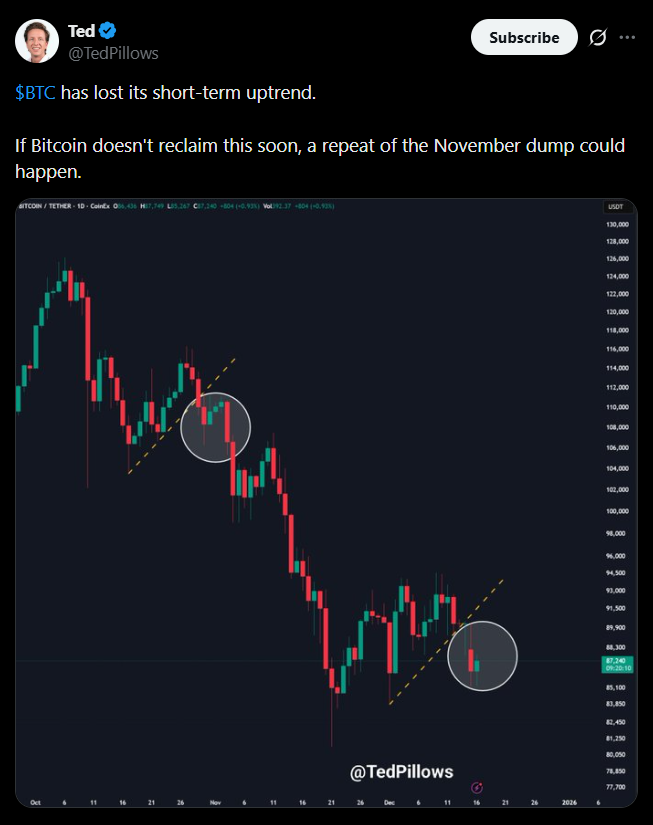
Despite the rebound, some analysts remain cautious about Bitcoin’s near-term outlook. Samer Hasn, senior market analyst at XS.com, described the recent move from November’s $80,000 low to early December highs as a corrective rally rather than a true trend reversal. He warned that the current environment remains fragile, especially after $750 million in long liquidations over the past two days, including $250 million tied to Bitcoin futures alone.
The Broader Battle for Bitcoin’s Narrative
Others see a more nuanced setup unfolding. David Hernandez of 21Shares framed the market as caught between delayed monetary easing and Bitcoin’s long-term appeal as a store of value. While short-term selling pressure may persist as traders reassess risk, underlying economic strain continues to support the case for accumulation. If inflation remains stubborn and growth slows, Bitcoin’s fixed supply could become increasingly attractive to longer-term capital, even if near-term volatility hasn’t fully played out yet.