- XRP offers near-term catalysts through compliance features and potential institutional adoption on the XRP Ledger.
- Bitcoin remains the foundational crypto asset but faces long-term quantum security upgrade discussions.
- A $1,000 allocation depends on strategy: XRP for regulatory-driven growth, Bitcoin for structural scarcity and durability.
The next three years probably won’t be calm for crypto. If anything, turbulence feels almost guaranteed. Sentiment is shaky, regulation is inching closer to reality, new risks are surfacing, and AI — well, AI is the wildcard nobody fully understands yet. In that kind of environment, even the biggest names like Bitcoin and XRP may need to adapt quickly or risk losing ground.
So let’s frame it simply. If you’ve got $1,000 to put to work today and plan to hold for three years, which makes more sense: Bitcoin or XRP?
XRP Leans Into Near-Term Catalysts
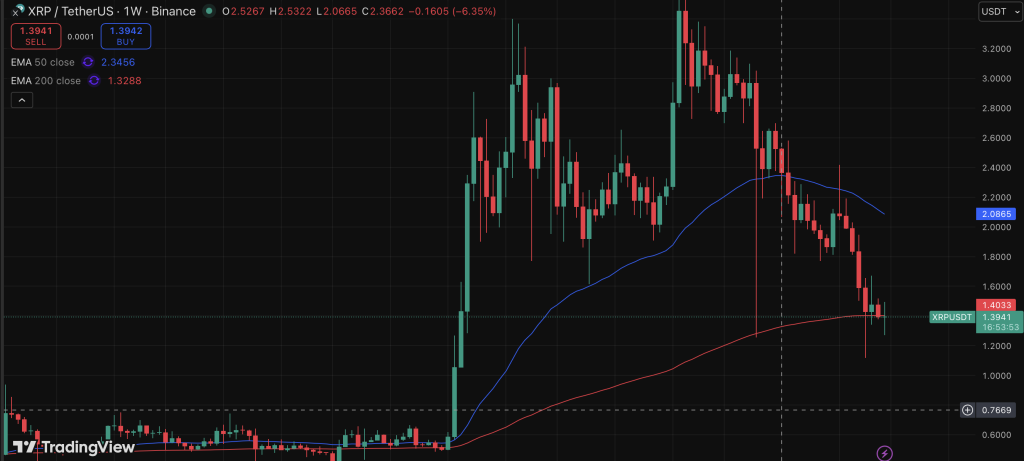
XRP’s outlook over the next few years largely depends on whether the XRP Ledger continues evolving in ways that regulated financial institutions actually care about. That’s the key. Not hype. Not headlines. Real usage.
One of XRPL’s biggest advantages is its built-in compliance tooling. Features like authorized trust lines, transaction freezes, and clawbacks allow token issuers to control who holds assets, pause suspicious balances, and even reverse transactions tied to fraud. That kind of control may sound restrictive to crypto purists, but to regulated institutions, it’s reassuring. It lowers legal friction. It makes participation feel safer.
There’s more. XRPL can issue and verify credentials directly on-chain, which simplifies proving authorization or identity for businesses operating in regulated markets. If new crypto legislation tightens oversight — and it probably will — XRPL may already be structurally aligned with those expectations. Three years is enough time for multiple feature rollouts to translate into actual adoption, and adoption, if it materializes, tends to pull demand behind it.
Bitcoin Faces a Structural Shift
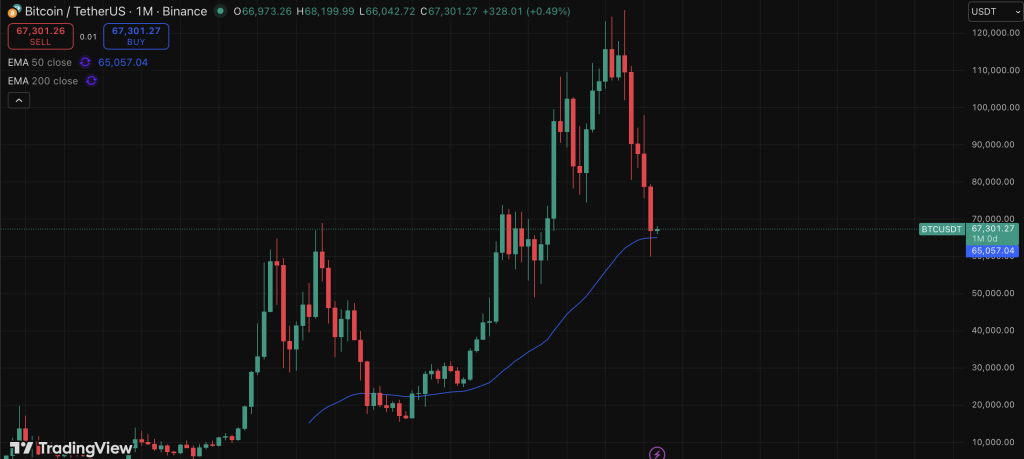
Bitcoin’s position is different. It doesn’t compete on compliance features or rapid iteration. Its value proposition is simpler — scarcity, decentralization, durability. If you don’t already own at least some Bitcoin, many would argue that’s step one before anything else. It’s the foundation of most crypto portfolios.
The core thesis remains intact: fixed supply, global recognition, resistance to debasement. If you control your keys and store BTC properly, it’s extremely difficult to seize. That combination of scarcity and sovereignty is powerful. It’s also why institutions continue allocating capital to it, despite volatility.
But there’s a wrinkle. Post-quantum cryptography — or rather, the lack of it. Right now, Bitcoin’s security model isn’t built to withstand advanced quantum computing attacks. Quantum machines capable of breaking Bitcoin’s encryption don’t exist yet, and may not for years. Still, the possibility isn’t theoretical anymore. Discussions around upgrading Bitcoin’s cryptography have started, though implementation would take time and consensus.
That creates a subtle tension. Bitcoin is stable in narrative, but potentially entering a technical transition phase. And markets don’t always love transitions.
So Where Does $1,000 Go?
If you already hold Bitcoin, allocating $1,000 to XRP could be a way to lean into shorter-term catalysts. XRPL’s compliance positioning, especially in a tightening regulatory environment, gives it a practical edge over the next few years. Momentum could build if institutions actually deploy on-chain tools rather than just talk about them.
On the other hand, Bitcoin’s long-term thesis remains unmatched in simplicity. Scarcity doesn’t change. Recognition doesn’t disappear overnight. And if quantum risks are addressed proactively, the risk-to-reward balance could tilt back strongly in its favor.
In truth, the choice isn’t clean-cut. XRP offers targeted upside tied to adoption and regulation. Bitcoin offers structural durability, albeit with a technical upgrade looming in the background. Over three years, both could perform well — but for different reasons. And in crypto, sometimes the “better” investment depends less on certainty and more on what kind of uncertainty you’re willing to hold.