

- Bitcoin surged 6% and briefly reclaimed the $70,000 level
- Broader crypto market cap climbed to $2.4 trillion
- Traders debate whether war risk could pressure the Fed to ease
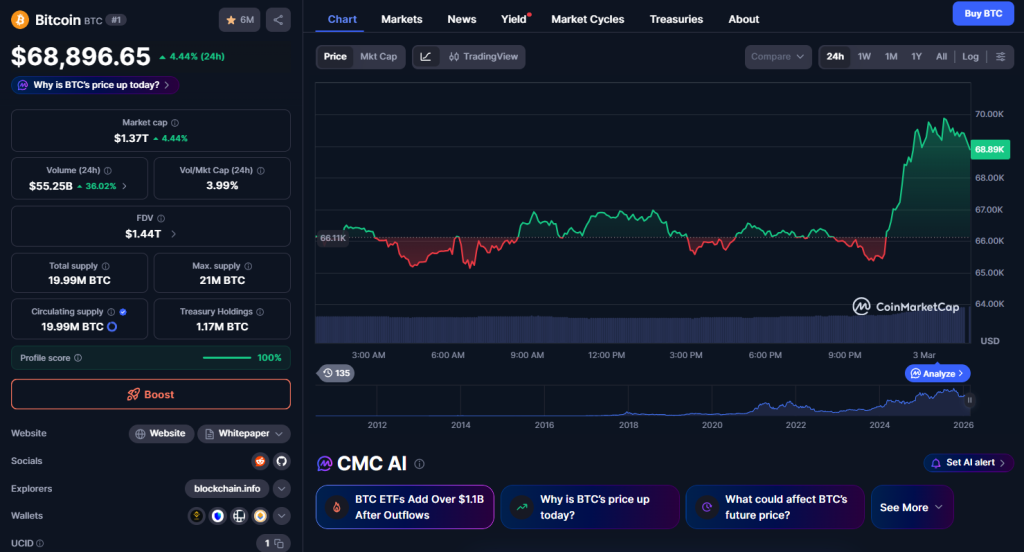
Bitcoin surged 6% on Monday, pushing above the $70,000 mark and leading a broad crypto rally that lifted Ethereum, BNB, and XRP. The move came against a tense geopolitical backdrop, as US-Iran tensions escalated and headlines signaled potential further military action. Instead of collapsing under uncertainty, crypto markets bounced sharply.
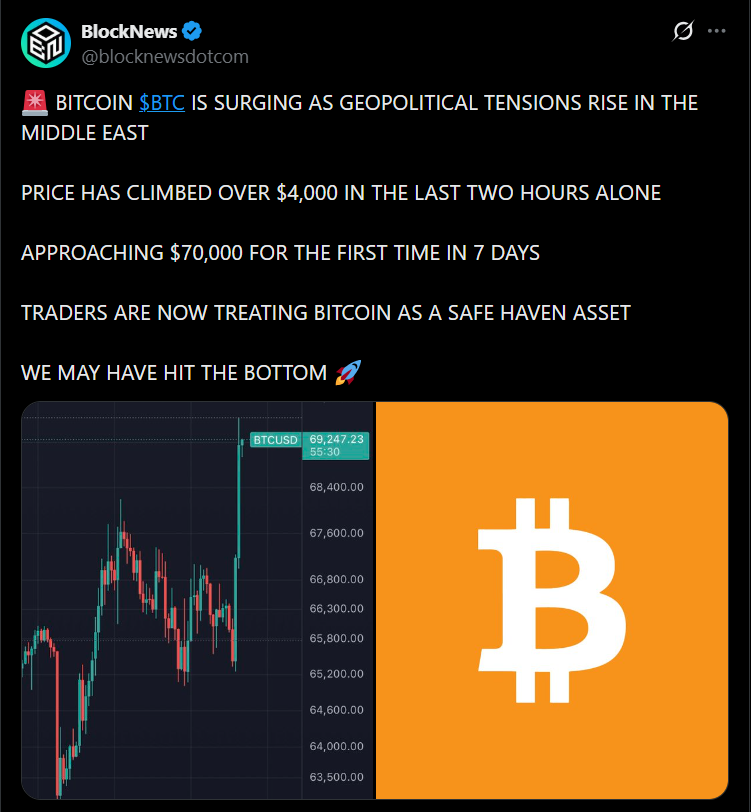
Just days earlier, Bitcoin had dropped to roughly $63,000 after reports of US-Israeli military action against Iran rattled risk sentiment. But by Sunday, momentum shifted. Following confirmation of Iran’s supreme leader’s death, Bitcoin rebounded past $67,000 before accelerating again. At last check, BTC was trading near $69,200, holding firm after a volatile weekend.
Altcoins Join the Crypto Rally
The broader market followed Bitcoin’s lead. Ethereum climbed toward $2,000, BNB advanced to around $649, and XRP moved up toward $1.40. Among mid-cap tokens, NEAR and MORPHO stood out with double-digit percentage gains, signaling that risk appetite returned quickly once selling pressure faded.
Total crypto market capitalization jumped about 4%, reaching $2.4 trillion. That rebound suggests dip buyers stepped in aggressively, capitalizing on weekend liquidations and thin liquidity conditions. What looked like panic only 48 hours ago now resembles a textbook volatility reset.
War, Oil, and the Fed’s Next Move
The geopolitical backdrop remains central to how traders interpret this rally. In a CNN interview, President Trump suggested Washington has not yet fully escalated its campaign against Iranian targets. Markets are watching closely, especially oil, which plays a crucial role in inflation expectations.
BitMEX co-founder Arthur Hayes offered a provocative angle, arguing that prolonged US military engagement could eventually increase pressure on the Federal Reserve to ease monetary conditions. Historically, major US conflicts have coincided with accommodative shifts in policy. If war-related fiscal spending expands significantly, liquidity dynamics could change.
Liquidity Still the Real Driver
Still, Hayes cautioned against premature positioning. He suggested waiting for clear signs of rate cuts or liquidity expansion before deploying aggressive capital. The Fed’s decision-making will hinge on inflation data, oil prices, and financial stability conditions. If oil surges and inflation reaccelerates, policymakers may be constrained from easing, even amid geopolitical stress.
For now, Bitcoin’s breakout above $70,000 reflects a mix of technical rebound, short covering, and renewed risk appetite. Whether this becomes a sustained rally depends less on headlines alone and more on how oil, inflation, and central bank policy evolve in the weeks ahead.