

- Bitcoin is down more than 25% from its October all-time high, but it continues to outperform most major cryptocurrencies during the broader market slump.
- BTC’s pullback aligns with its historical four-year halving cycle, where post-halving rallies often peak around 18 months before resetting.
- Despite ecosystem risks—such as potential selling from corporate holders—long-term patterns suggest Bitcoin under $100,000 remains a strong accumulation opportunity.
Bitcoin might be sitting nearly 30% below its October all-time high, but the long-term picture honestly hasn’t changed much at all. The last 60 days have been—well, rough—no way around it. Bitcoin slid more than 25% from its $126,000 peak on Oct. 6, and the sharp dips have shaken a lot of nerves. But if you zoom out just a bit, the idea of BTC trading around $93,000 doesn’t look nearly as dramatic as the headlines make it sound.
Bitcoin Still Outperforms Most of the Market
It’s easy to forget that the entire crypto market has been hammered lately, not just Bitcoin. BTC is only down around 1% for the year, while Ethereum has slipped 6%, and Solana has dropped almost 27%. Meme coins like Dogecoin? They’ve been cut in half. So yes, gold is outperforming Bitcoin at the moment—but Bitcoin is still outperforming nearly everything else in its own asset class.
Among the top 10 cryptocurrencies by market cap, literally none are positive over the past 30 days. BTC remains the anchor of the entire crypto ecosystem; when it’s stuck in a slump, almost nothing else can rise meaningfully. So if you believe crypto belongs in a diversified portfolio, Bitcoin is still the one with the strongest claim to that spot.
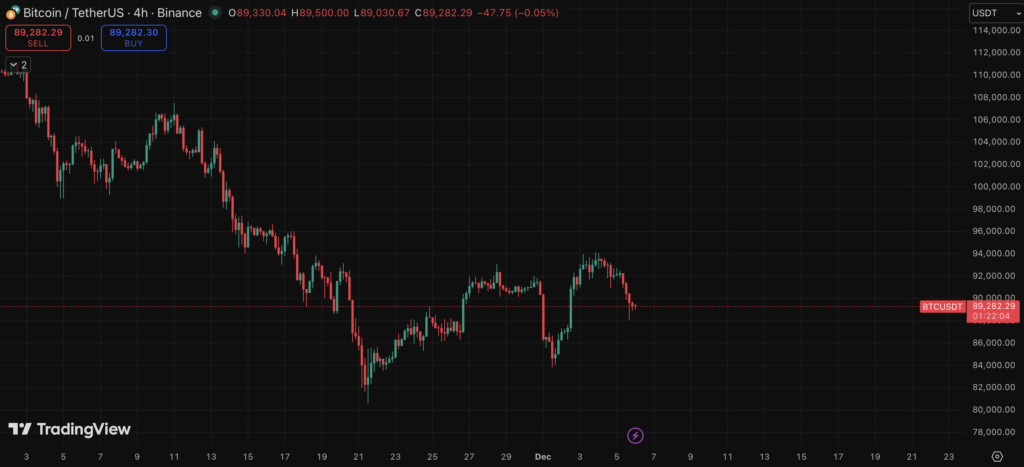
Bitcoin’s Cycles: Same Story, Different Year
Volatility is basically in Bitcoin’s DNA. Big jumps, scary drops, 10% swings in a day—this is nothing new. Even during powerful bull markets, Bitcoin often pulls back 20% or more before continuing higher. The recent slide hurts, but it’s hardly unusual.
What is predictable, though, is Bitcoin’s four-year rhythm. Every halving resets the narrative. Generally, BTC rallies for up to 18 months after a halving before hitting some kind of exhaustion phase. We’re now past that 18-month mark from the April 2024 halving—meaning Bitcoin has been running on borrowed time since October. A cooldown was almost expected.
Look at the last 15 years: Bitcoin spends two or three years as the best-performing asset on earth, then collapses violently in the following year… only to rebound and hit a fresh all-time high later. Rinse, repeat. Even if the downturn continues for a bit, history suggests BTC eventually claws back—and then some.
Some analysts, including JPMorgan, still think $170,000 by the end of next year is on the table. Sounds bold, but Bitcoin has shocked people before.
Watch the Bitcoin Ecosystem for Cracks
Investors do need to keep an eye on the broader ecosystem: miners, treasury companies, and fintechs tied closely to Bitcoin. One big red flag is Strategy (MSTR), the world’s largest corporate holder of BTC. The stock is down 35% this year, and whispers have surfaced that the company might have to sell part of its Bitcoin stash to service debt.
If Strategy were forced to dump BTC, other companies could follow, sparking a chain reaction of selling. That’s one of the few scenarios that could deepen the current downturn.
Longtime Holders Have Seen This Before
The one thing working in Bitcoin’s favor is its veterans—people who’ve survived multiple boom-and-bust cycles and learned to simply buy and HODL through the noise. While past results can’t guarantee the future, the historical chart suggests something pretty clear: Bitcoin under $100,000 has been a buy more often than not.
If history rhymes, this drawdown may end up looking like just another chapter in Bitcoin’s endlessly chaotic, strangely reliable cycle.