

- Bitcoin loses momentum after early March rally toward $76K
- Rising bond yields and ETF outflows signal shifting market sentiment
- Macro pressures, including oil and inflation, may drive BTC toward lower support levels
Bitcoin came into March looking strong, really strong actually. It pushed up to $76,000 and for a moment, it felt like the market might finally get that long-awaited bullish monthly close. Sentiment was improving, momentum was there… things looked lined up.
But that story didn’t hold. Fast forward a few weeks, and BTC is now hovering around $66,000, still holding key levels, but clearly not as confident as before. The tone has shifted, not dramatically, but enough to notice.
Rising Yields Start to Weigh on Risk Assets
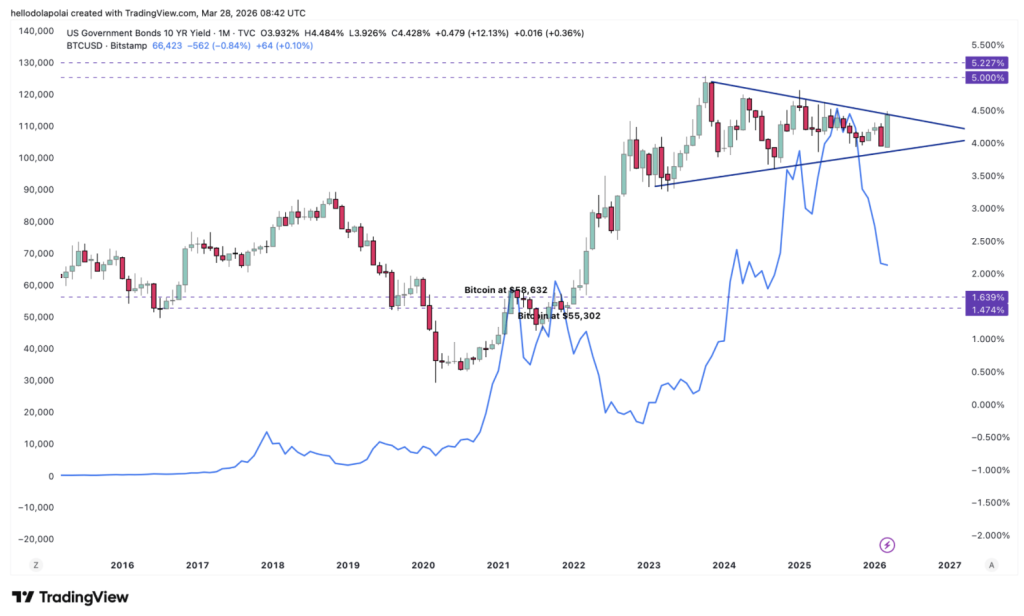
One of the biggest factors creeping into the picture right now is the U.S. 10-year Treasury yield. It’s been quietly climbing, and charts suggest it might even be forming a bullish continuation pattern. If that plays out, yields could push toward 5%, levels we haven’t seen since 2023.
And that matters more than people think. Higher yields make traditional assets, like bonds, more attractive. So capital starts to rotate, slowly at first, then faster. Risk assets, including crypto, tend to feel that pressure.
We’ve seen this before too. Back between late 2021 and 2022, yields climbed steadily while Bitcoin dropped from $67K to around $16K. Not a perfect correlation, but the relationship is hard to ignore.
ETF Flows Signal a Shift in Sentiment
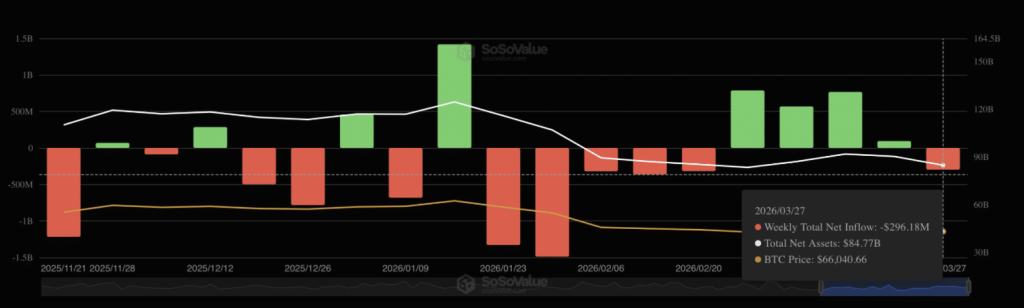
At the same time, institutional behavior is starting to change. Spot Bitcoin ETFs in the U.S. have just recorded their first real outflows in over a month, roughly $296 million leaving in the past week.
That might not sound huge compared to total inflows, but it’s the shift that matters. After weeks of steady buying, this suggests some investors are stepping back, maybe taking profits, maybe reducing exposure as uncertainty builds.
And the speed of that change is worth noting. Late February already showed signs of this, with nearly $400 million exiting in just two days. When sentiment flips, it doesn’t always do it slowly.
Oil Prices Add Another Layer of Pressure
Then there’s the inflation angle, which isn’t going away. Oil prices have surged this month, Brent climbing from around $75 to over $100, while WTI sits near similar levels. That kind of move tends to ripple through the economy.
Higher energy costs keep inflation elevated, which in turn reduces the chances of central banks easing policy anytime soon. And if rates stay higher for longer, financial conditions remain tight.
For Bitcoin, that’s not ideal. Even though it’s sometimes viewed as a hedge, in reality, it still moves closely with liquidity conditions. And right now, liquidity isn’t exactly expanding.
A Market Caught Between Strength and Uncertainty
So Bitcoin finds itself in a bit of a strange spot. It’s not collapsing, it’s still holding above key support zones, but the momentum from earlier in the month has clearly faded.
If yields keep rising and outflows continue, BTC could drift lower toward the $58K–$55K range, where stronger demand might step in. But if macro pressure eases, there’s still a path back up.
For now though, the market feels cautious. Not panicked, not bullish either, just… waiting. And in crypto, those quiet periods don’t usually last forever.