
- AWS introduces production-ready infrastructure for AI-driven crypto payments
- x402 enables real-time micropayments using USDC without subscriptions or contracts
- The shift could redefine how AI agents interact, transact, and monetize online
Amazon Web Services has taken a quiet but significant step toward reshaping how payments work on the internet, especially for AI-driven systems. By publishing full production-ready architectures for x402, AWS is signaling that agent-based payments are no longer experimental, but ready for real-world deployment. The move addresses a long-standing limitation in AI systems, where decision-making has outpaced the ability to transact seamlessly. Until now, agents could analyze and act quickly, but payments still depended on human-controlled systems and outdated billing models. AWS is essentially closing that gap, embedding payments directly into how software operates.
How x402 Turns Payments Into a Native Internet Layer
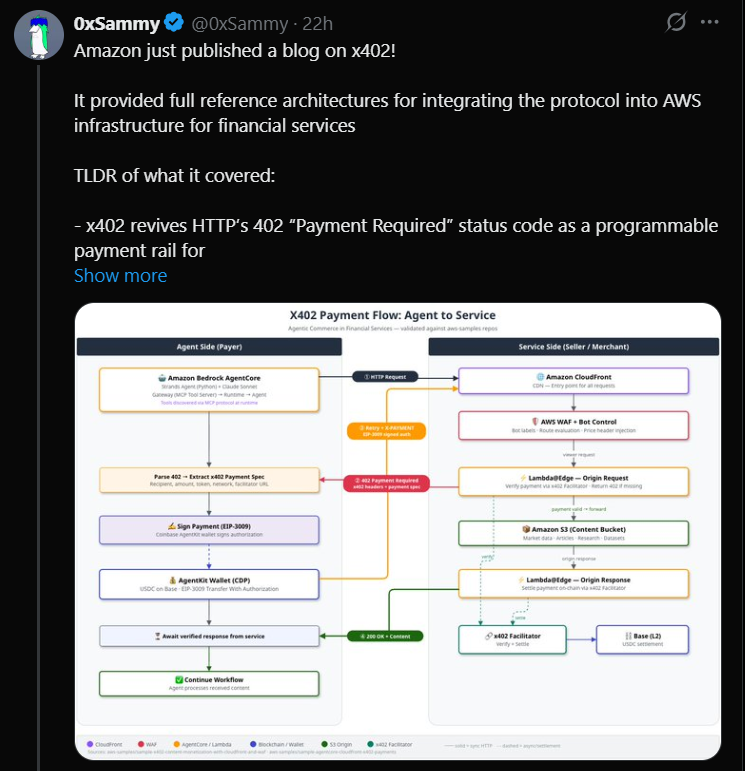
At the core of this shift is x402, a protocol that transforms HTTP’s unused 402 status code into a live payment trigger. In practice, an AI agent can request access to a resource, receive a payment requirement, send a USDC micropayment, and complete the request in seconds. The process removes the need for accounts, subscriptions, or pre-negotiated contracts, replacing them with a simple pay-per-use model. This is particularly important for AI systems operating at machine speed, where even small delays can limit performance or opportunity. By making payments instant and programmable, x402 aligns financial interactions with the pace of modern software.
Why AWS Backing Changes Everything
What makes this development stand out is not just the technology itself, but AWS’s involvement. By integrating x402 into its reference architectures, AWS is effectively providing a blueprint for enterprises and financial institutions to adopt this model. Tools like Bedrock AgentCore allow AI agents to manage identity, memory, and wallets, while CloudFront and Lambda enable service providers to monetize data access dynamically. This removes a major barrier to adoption, as companies no longer need to build custom infrastructure from scratch. It also signals confidence that this model can scale across industries, not just within crypto-native environments.

A Shift Toward Autonomous Commerce
The broader implication is a transition toward autonomous commerce, where AI agents can independently access services, pay for data, and execute tasks without human intervention. This fundamentally challenges existing pricing models built around subscriptions and fixed contracts. Instead, costs become tied directly to usage, creating more efficient and flexible systems. For regulated industries, the on-chain audit trail of each transaction adds an extra layer of transparency and compliance. Over time, this could reshape how digital services are consumed, with agents acting as economic participants rather than just tools.