
- U.S. prosecutors have charged a 21-year-old Florida resident over an alleged malware campaign involving games uploaded to Steam.
- Authorities say the games infected around 8,000 computers and compromised roughly 80 cryptocurrency wallets.
- Investigators allege the scheme stole at least $220,000 in digital assets by hiding malware inside seemingly legitimate video games.
U.S. federal prosecutors have charged Zyaire Wilkins, a 21-year-old Florida resident, over an alleged cybercrime operation that used malware-infected video games on Steam to steal cryptocurrency and sensitive personal information.
According to a federal criminal complaint, Wilkins and several unnamed co-conspirators allegedly uploaded multiple games to the popular gaming platform over a two-year period. While the titles appeared to function normally, investigators say they secretly installed malware capable of stealing passwords, personal information, and crypto wallet data from unsuspecting users.
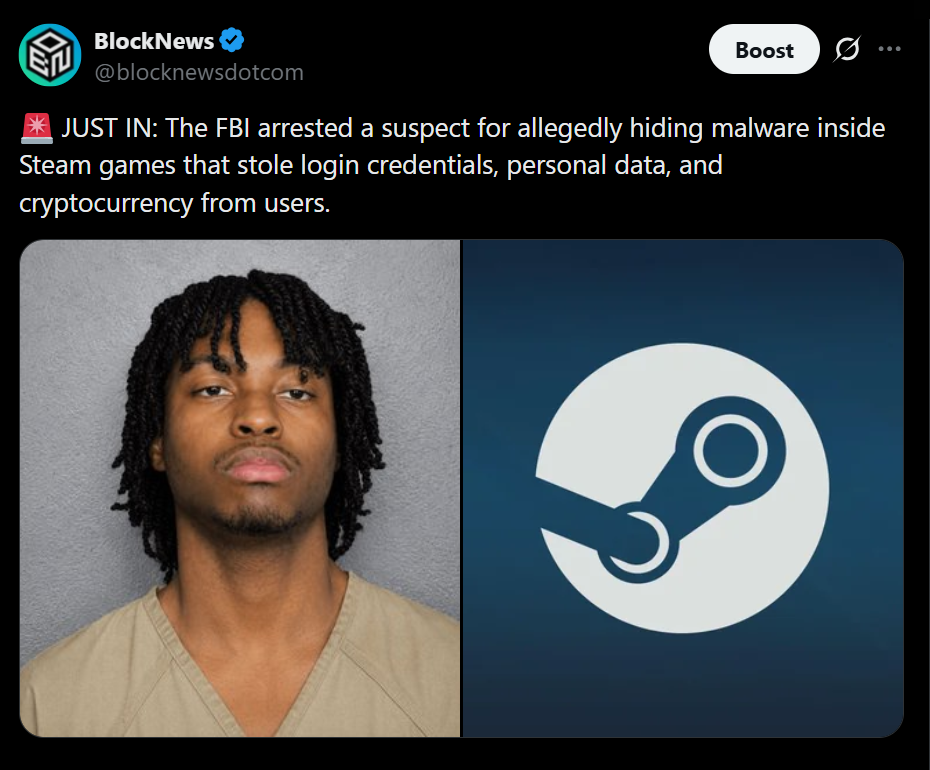
The case highlights the growing threat of malware targeting cryptocurrency holders through seemingly legitimate software.
Malware Hidden Inside Steam Games
Prosecutors allege the operation involved several games, including BlockBlasters, Dashverse, Lampy, Lunara, and PirateFi.
Rather than serving solely as entertainment, authorities claim the games contained malicious software designed to quietly collect login credentials, browser data, and cryptocurrency wallet information after installation.
The games were reportedly promoted through platforms including Discord, Telegram, and LinkedIn to attract downloads and expand the campaign’s reach.
Thousands of Devices Were Allegedly Infected
According to the FBI, the alleged scheme compromised approximately 8,000 computers and accessed around 80 cryptocurrency wallets.
Investigators estimate the operation resulted in at least $220,000 worth of stolen digital assets, though the full financial impact could change as the investigation continues.
The case underscores how cybercriminals are increasingly targeting crypto users through malware embedded in everyday applications rather than directly attacking blockchain networks.

Digital Evidence Led Investigators to the Suspect
Federal investigators say they traced cryptocurrency transactions connected to the alleged thefts to purchases of gift cards, including Uber Eats gift cards linked to deliveries made to Wilkins.
Authorities later executed a search warrant at his residence, where they seized electronic devices and digital wallets as part of the investigation.
Wilkins was arrested on Tuesday and now faces federal charges. His attorney has not publicly responded to the allegations.
Crypto Users Remain Prime Targets
The case serves as another reminder that one of the biggest risks facing cryptocurrency holders often comes from compromised devices rather than weaknesses in blockchain technology itself.
Security experts continue to recommend downloading software only from trusted developers, enabling multi-factor authentication where possible, keeping systems updated, and avoiding unknown files or links shared through social media and messaging platforms.
As digital assets become more valuable and widely adopted, malware campaigns targeting crypto wallets are expected to remain a significant cybersecurity threat.