

- Long-term Bitcoin holders continue accumulating coins, tightening supply ahead of the next halving cycle.
- Historical market trends suggest Bitcoin’s next major bull run could begin after the current bear market fades.
- While risks such as quantum computing and macroeconomic conditions remain, many investors still see a bullish long-term outlook.
Sentiment around Bitcoin hasn’t exactly been cheerful lately.
For many retail investors, the current market feels exhausting. Prices remain well below previous highs, optimism has faded, and every rally seems to run into another wave of selling. It almost feels like the excitement has disappeared.
Ironically, that’s often when the foundation for the next bull market begins taking shape.
History doesn’t repeat perfectly, but Bitcoin has moved through enough market cycles that certain patterns continue appearing. If those trends persist, today’s difficult environment could eventually become tomorrow’s launching pad.
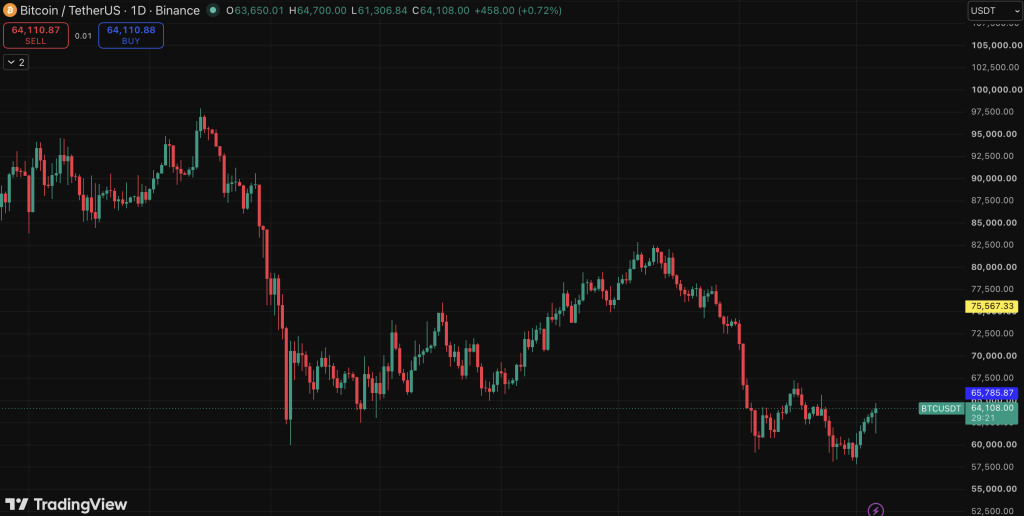
Long-Term Holders Continue Tightening Supply
One of Bitcoin’s strongest long-term indicators isn’t daily price action. It’s how many coins investors simply refuse to sell.
At the moment, roughly 16.7 million Bitcoin have remained untouched in the same wallets for at least 155 days. For comparison, around this point in 2020, that figure stood closer to 13.7 million BTC.
That’s a meaningful difference.
Since Bitcoin’s total supply is permanently capped at 21 million coins, every additional Bitcoin moved into long-term storage reduces the amount readily available on exchanges. Over time, that shrinking liquid supply has repeatedly created conditions where increased demand places stronger pressure on prices.
The process isn’t dramatic overnight. It’s gradual… almost quiet. Then, eventually, supply becomes increasingly difficult to find when new buyers enter the market.
The 2028 Halving Could Tighten Supply Even Further
Another important milestone is already on the horizon.
Bitcoin’s next halving, expected in April 2028, will once again reduce the number of newly issued coins entering circulation by 50%.
Historically, each halving has reinforced Bitcoin’s scarcity by slowing the pace at which fresh supply reaches the market. Combined with growing long-term accumulation, many investors believe that dynamic could once again become one of the biggest drivers behind the next major rally.
Of course, no outcome is guaranteed.
Demand still has to increase for reduced supply to have a meaningful impact. But if previous cycles offer any clues, scarcity has consistently remained one of Bitcoin’s defining characteristics.
History Points Toward Another Bull Cycle
Looking back over Bitcoin’s previous market cycles reveals another interesting pattern.
The cryptocurrency has historically reached new all-time highs roughly 12 to 18 months after each halving event. If that rhythm continues, the next cycle peak could potentially occur sometime during 2029.
Price targets vary dramatically.
Some popular valuation models suggest Bitcoin could eventually trade somewhere between $300,000 and $800,000 during a future cycle peak. Those figures should be viewed as broad estimates rather than predictions, since forecasting cryptocurrency prices years in advance is extremely difficult.
Still, the common theme across many long-term models is fairly consistent: they anticipate significantly higher prices than today’s levels if adoption and demand continue expanding.
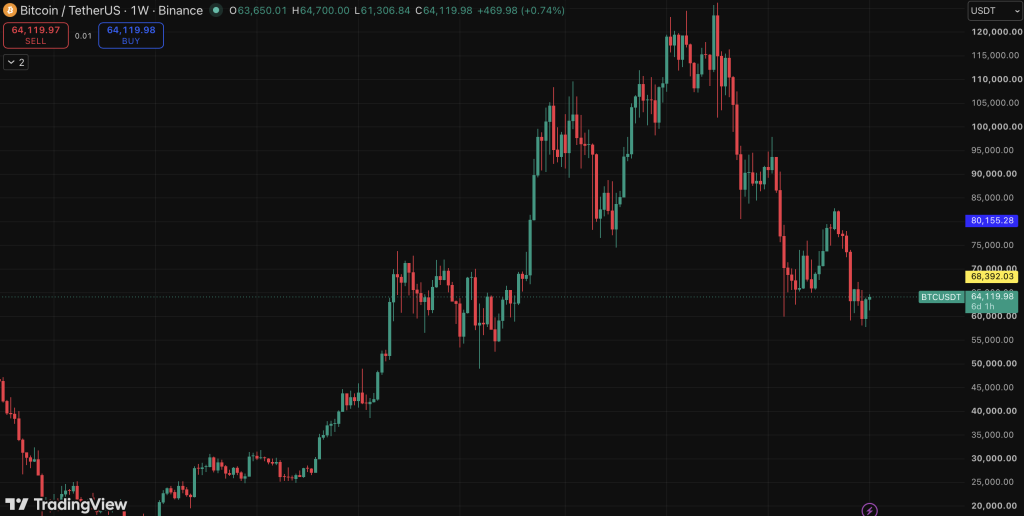
Quantum Computing Remains an Emerging Risk
Not every long-term discussion around Bitcoin is bullish.
One issue drawing increasing attention is quantum computing.
Although today’s quantum computers aren’t capable of breaking Bitcoin’s cryptographic security, future advances could eventually create new challenges for blockchain networks if encryption standards fail to keep pace.
If that risk becomes more immediate, Bitcoin’s developer community would likely need to coordinate major security upgrades to protect the network.
That process wouldn’t necessarily be simple.
Bitcoin has no central authority making decisions, meaning developers, miners, businesses, and node operators would all need to reach broad consensus before implementing significant protocol changes. Discussions around upgrades have historically generated intense debate within the community.
Even so, many researchers believe practical quantum threats remain years away, giving developers time to prepare if necessary.
Macroeconomic Conditions Will Also Matter
Bitcoin doesn’t trade in isolation.
Interest rates, inflation, global liquidity, and investor appetite for risk all continue influencing crypto markets.
Periods of easier monetary policy have generally supported stronger Bitcoin performance, while tighter financial conditions have often created headwinds. The next bull market will likely depend not only on Bitcoin’s internal fundamentals but also on the broader economic backdrop.
If liquidity improves alongside tightening Bitcoin supply, the combination could become especially powerful.
Patience Has Defined Every Bitcoin Cycle
Every bear market has felt different while it was happening.
Each one brought new reasons why Bitcoin supposedly couldn’t recover. Yet over time, the network continued growing, adoption expanded, and new market cycles eventually emerged.
That doesn’t guarantee history will repeat exactly.
Still, with long-term holders continuing to accumulate, another halving approaching, and Bitcoin’s fixed supply remaining unchanged, many investors believe the ingredients for another bull market are gradually falling into place.
For now, patience may prove to be one of the most valuable assets Bitcoin holders can own.