- Normies NFTs climbed roughly 50% this week while most collections stayed flat or declined
- One buyer swept 49 Normies for over 23 ETH, signaling strong collector conviction
- The project is increasingly tied to AI-agent infrastructure and programmable NFT access systems
While most NFT collections continue drifting sideways like abandoned metaverse real estate nobody wants to visit anymore, Normies NFTs are suddenly doing something unusual, actually going up in value.
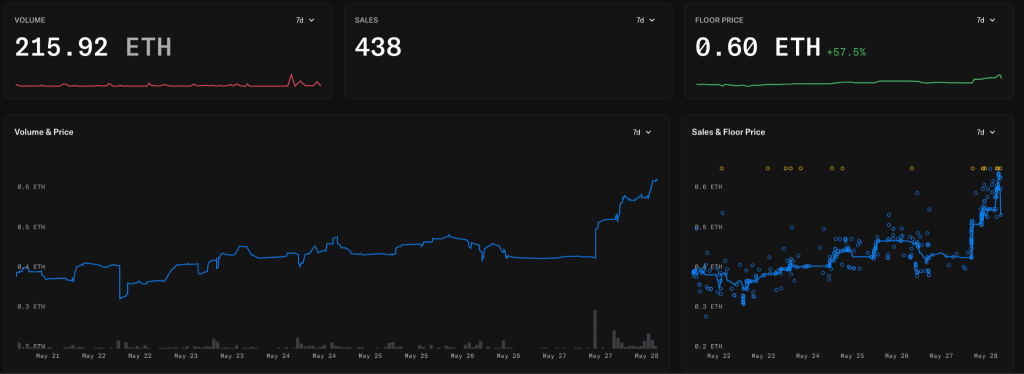
The fully onchain Ethereum NFT collection surged roughly 50% this week, pushing its floor price toward 0.6 ETH while much of the broader NFT market remains stuck somewhere between exhaustion and quiet denial. Even more interesting, one wallet recently swept 49 Normies directly from the floor for roughly 23.388 ETH, a move that immediately caught the attention of traders watching for early signs of renewed momentum.
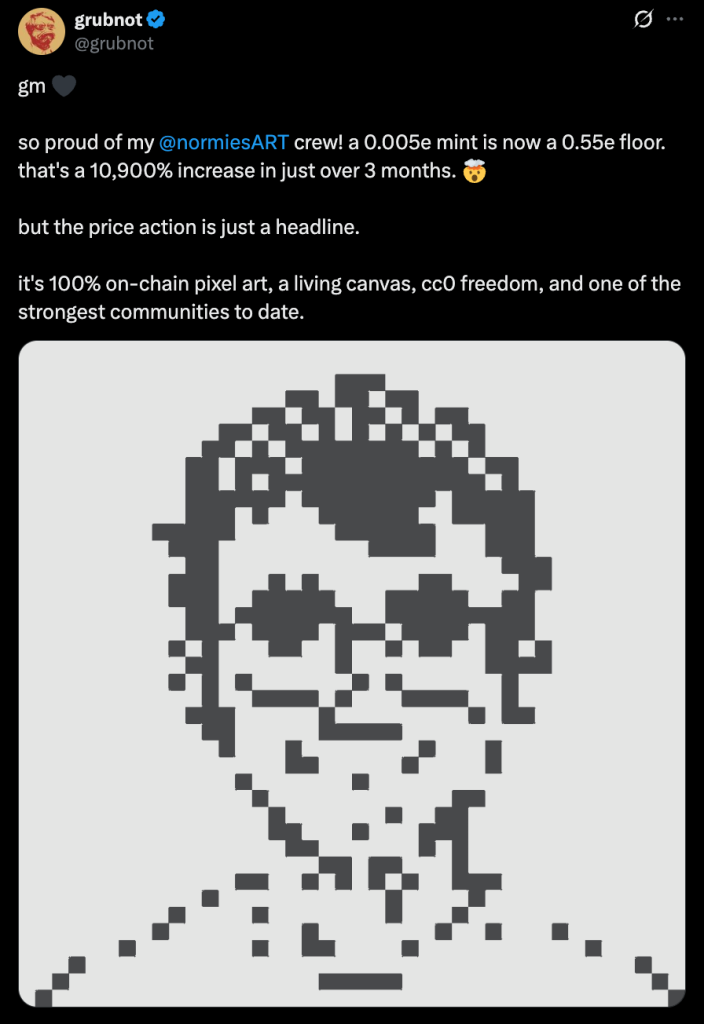
And honestly, large NFT sweeps like that rarely happen unless someone believes there’s something bigger building underneath the surface.
Normies Are More Than Just Pixel Art
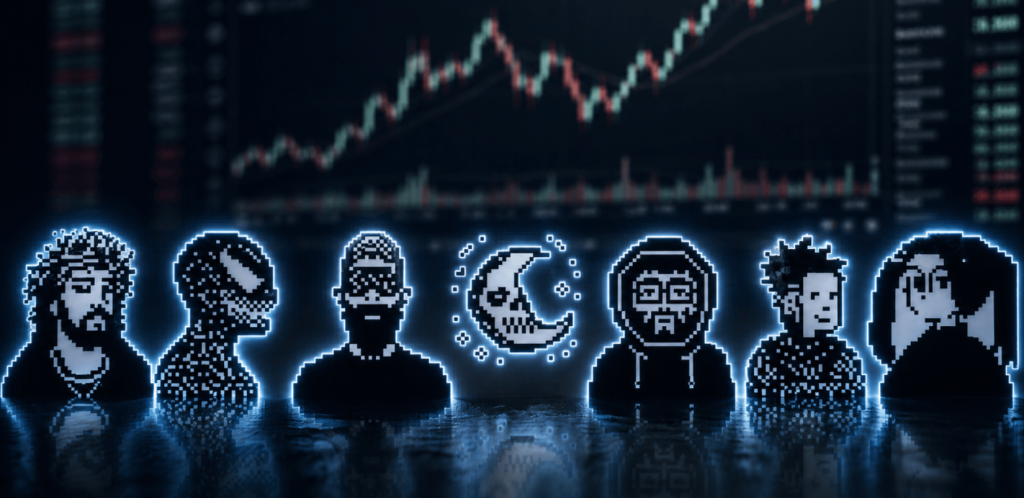
At first glance, Normies look deceptively simple. The collection consists of monochrome 40×40 pixel bitmap characters fully generated and stored onchain through Ethereum smart contracts. The NFTs render dynamically as SVG artwork, meaning the collection exists entirely inside Ethereum itself without relying on centralized image hosting or external servers.
That fully onchain structure has become increasingly attractive again as parts of the NFT community move back toward permanence, decentralization, and digital provenance rather than purely speculative hype cycles.
The collection itself includes Humans, Cats, Aliens, and Agents, each representing different identities within the ecosystem. Importantly, Normies also operates under a CC0 framework, meaning the intellectual property belongs openly to the community instead of being tightly controlled by a centralized company.
That openness appears to be fueling experimentation.
The Ecosystem Is Quietly Expanding Fast
According to the project, more than 100 community-built tools, visualizers, experiments, and applications already exist around the Normies ecosystem. Much of that development accelerated after the release of the public NormiesAPI shortly after launch.
That level of ecosystem activity matters because successful NFT projects increasingly behave less like static collectibles and more like open-source software environments layered with culture, identity, and community ownership.
And now AI infrastructure is starting to enter the picture too.
NFTs Are Quietly Becoming AI Access Infrastructure
One of the more interesting developments surrounding Normies involves growing discussion around ERC-8257, a proposed framework from OpenSea protocol engineer Ryan designed to transform NFTs into programmable access credentials for AI agents, tools, and services.
The concept itself is actually pretty powerful. Instead of NFTs functioning purely as collectible images, ownership could grant automated access to AI trading systems, analytics platforms, autonomous agents, research tools, or other gated services directly tied to blockchain identity.
A developer could theoretically launch an AI platform accessible only to Normies holders. If that tool generated meaningful utility or revenue, the NFT itself effectively becomes part infrastructure layer, part membership system, and part programmable digital identity all at once.
That’s a very different narrative than the “just expensive JPEGs” criticism NFTs spent years dealing with.
AI May Be Giving NFTs A Second Life
What’s happening with Normies reflects a broader shift quietly emerging across parts of the NFT market. The strongest projects increasingly seem focused less on speculative flipping and more on building programmable ecosystems around identity, access, culture, and digital ownership.
In many ways, NFTs are starting to resemble software ecosystems wearing artwork as a visual wrapper rather than pure art projects alone.
That doesn’t guarantee success obviously. NFT markets remain volatile, illiquid, and extremely narrative-driven. But projects exploring actual infrastructure utility tied to AI systems, onchain identity, and autonomous agents are starting to stand out from collections still relying entirely on nostalgia and speculation.
And if AI agents eventually become major participants inside digital economies, programmable NFT ownership layers could end up mattering far more than most people currently realize.
For now, though, Normies are one of the few collections actually showing meaningful momentum while the broader NFT market mostly flatlines. And in crypto, relative strength tends to attract attention very quickly.