
- The BIS says Project Agorá successfully demonstrated atomic cross-border settlement
- Central banks and major financial institutions are testing tokenized payment systems
- Blockchain technology is increasingly shifting from speculation into financial infrastructure
For years, crypto advocates argued that moving money internationally should not feel like sending paperwork through a bureaucracy from the 1980s. Now, the Bank for International Settlements appears to be arriving at a similar conclusion, though probably with far more spreadsheets and fewer laser-eye profile pictures.
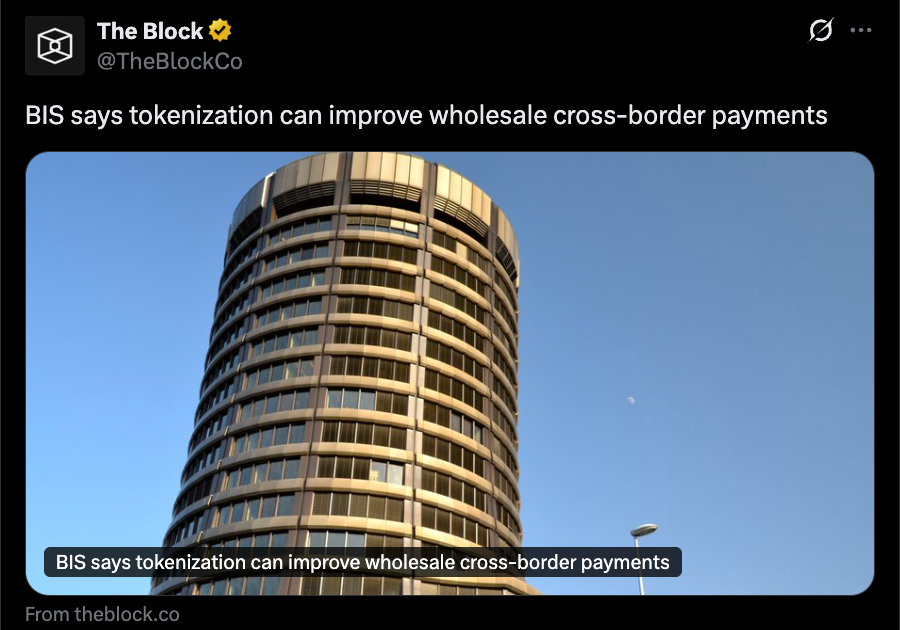
The BIS announced that its Project Agorá prototype successfully demonstrated atomic settlement for wholesale cross-border transactions using tokenized central bank reserves and commercial bank deposits. In simpler terms, the system showed that international payments could potentially settle instantly and simultaneously without the delays, reconciliation issues, and counterparty uncertainty still embedded throughout traditional global banking infrastructure.
And honestly, global finance still runs on some surprisingly ancient plumbing underneath the surface.
Major Central Banks Are Now Testing Blockchain Infrastructure
What makes Project Agorá significant is the scale of institutions involved. The initiative includes participation from the Federal Reserve Bank of New York, the Bank of England, the Bank of Japan, the Swiss National Bank, and more than 40 private financial institutions globally.
That’s a pretty dramatic shift compared to how blockchain discussions looked only a few years ago. Tokenization is no longer just crypto startups pitching futuristic financial concepts inside conference halls. Central banks themselves are now actively testing how blockchain-based systems could improve core payment infrastructure between countries and institutions.
The project specifically focused on atomic settlement structures, meaning transactions either complete fully or fail completely without partial execution risk. That reduces settlement uncertainty and counterparty exposure across multiple currencies and jurisdictions simultaneously.
It sounds technical and slightly boring until you realize trillions of dollars currently move through fragmented systems patched together over decades.
Central Banks Want Blockchain Efficiency Without Crypto Chaos
Importantly, the BIS also emphasized that Project Agorá includes compliance tools covering anti-money laundering monitoring, sanctions enforcement, privacy protections, and fraud detection systems.
That detail matters because central banks are not trying to recreate the early “Wild West” phase of crypto markets. They want the operational efficiencies blockchain technology offers while still maintaining regulatory oversight and financial control structures.

In other words, institutions increasingly appear interested in the technology itself rather than the anti-establishment ideology originally surrounding parts of the crypto movement.
That creates an interesting irony. Some of the strongest validation for blockchain infrastructure is now coming directly from the financial institutions Bitcoin was initially designed to bypass entirely.
Tokenization Is Quietly Becoming A Core Financial Theme
One of the biggest shifts happening right now is that tokenization is gradually moving beyond speculative crypto narratives and becoming part of serious infrastructure discussions inside global finance.
The focus is increasingly about operational efficiency, settlement speed, liquidity management, and cross-border interoperability rather than memecoins or retail trading hype. Financial institutions see enormous potential in reducing friction inside systems that still rely heavily on delayed reconciliation processes and fragmented databases.
And once large institutions start testing infrastructure changes at this level, the conversation usually moves beyond experimentation fairly quickly.
The blockchain layer itself may eventually become almost invisible to end users, functioning more like backend financial architecture rather than a consumer-facing innovation.
Crypto’s Original Vision Is Evolving Into Something Different
Whether crypto purists fully embrace this direction is another question entirely. Many early Bitcoin advocates envisioned blockchain as a way to reduce dependence on centralized financial institutions, not strengthen them with more efficient infrastructure.
But markets evolve in strange ways. Right now, tokenization increasingly looks less like a speculative trend and more like a long-term modernization effort for global finance itself.
The institutions building these systems may not care much about decentralization ideology. What they care about is faster settlement, lower operational costs, improved liquidity flows, and more efficient global coordination.
And slowly, almost quietly, the financial pipes underneath the global economy are starting to move onchain whether people notice it happening or not.