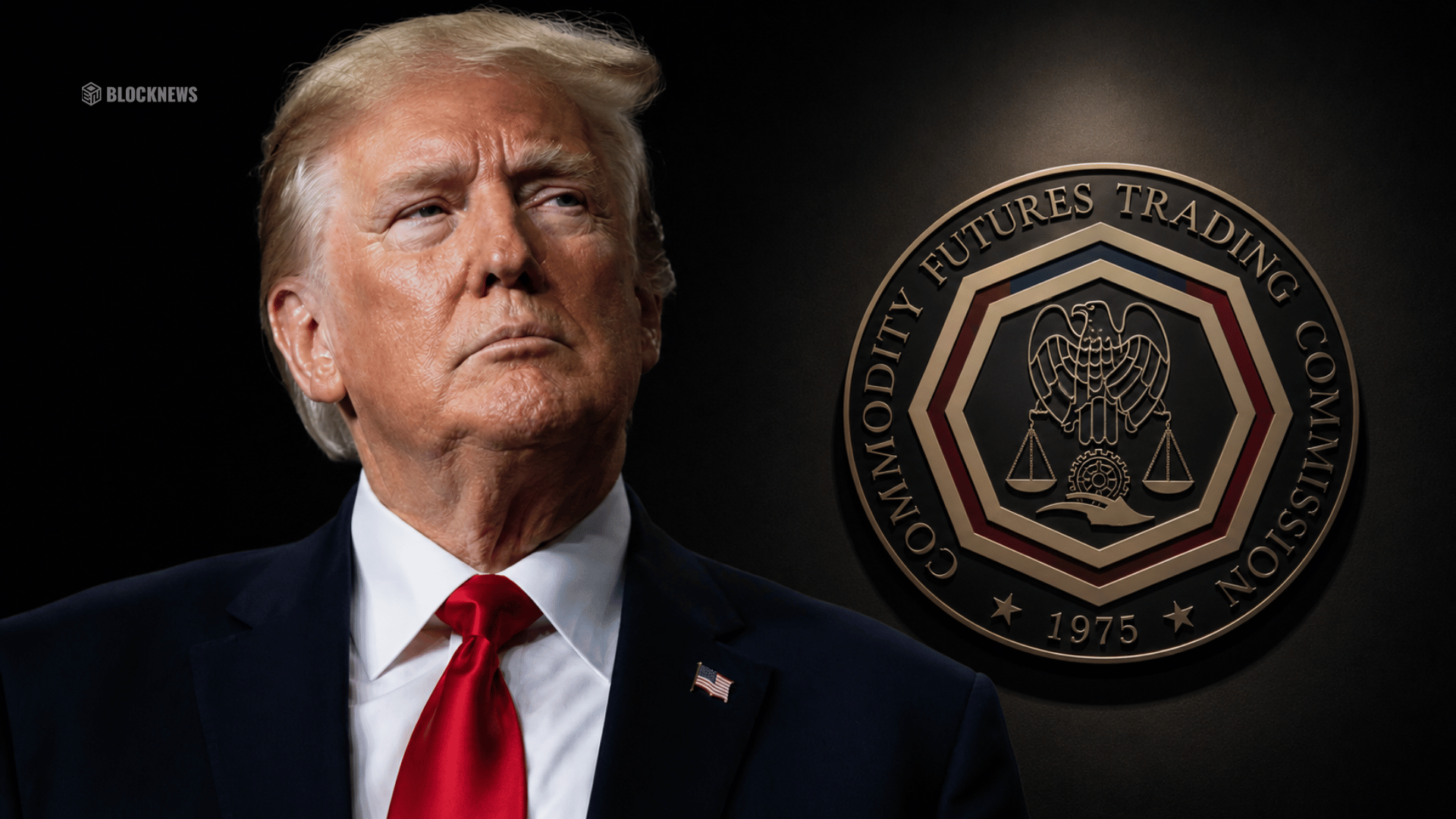
- Donald Trump publicly described crypto as a “major industry” in the United States
- He also voiced support for CFTC leadership amid growing regulatory debates
- Markets increasingly expect a more industry-friendly crypto environment under Trump
Crypto’s political status in Washington has changed dramatically over the past few years, and Donald Trump’s latest comments only reinforced that shift further.
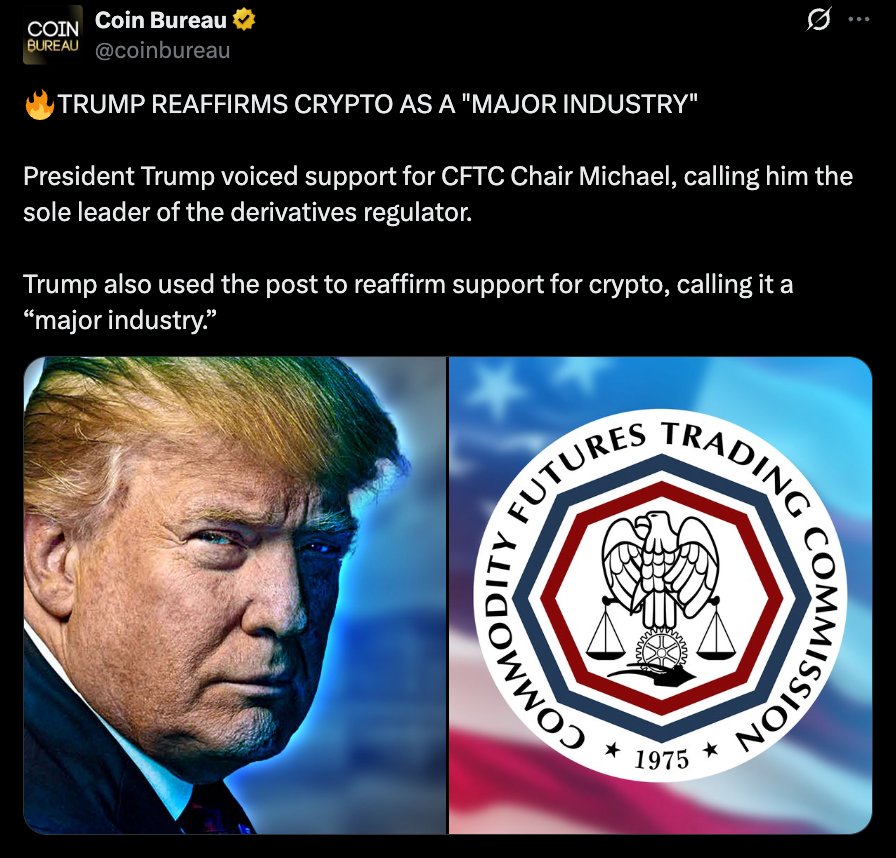
The president publicly reaffirmed support for the digital asset industry this week, describing crypto as a “major industry” while also backing leadership at the Commodity Futures Trading Commission during ongoing debates around U.S. crypto regulation.
That may sound routine now, but honestly, the tone change compared to just a few years ago is pretty remarkable.
There was a time when much of Washington treated crypto like a mix between online gambling and a tech fad nobody fully understood. Now it is increasingly being discussed as a strategic financial and technological sector tied directly to American competitiveness.
Washington Is No Longer Debating Whether Crypto Exists
The broader regulatory conversation in the United States has evolved significantly over the past year. Policymakers are no longer spending most of their time arguing whether crypto should exist at all. Instead, the fight increasingly centers around who gets to regulate it, how innovation should be supervised, and whether the U.S. risks falling behind globally if regulation becomes too hostile.
Trump’s comments fit directly into that larger transition.
The CFTC, in particular, has generally been viewed by many market participants as more constructive toward digital assets compared to some other regulatory agencies, especially regarding commodities classifications, derivatives oversight, and market structure discussions.
Supporters believe a more predictable framework could accelerate institutional participation, stablecoin adoption, tokenized asset markets, and blockchain infrastructure investment throughout the U.S. financial system.
Crypto Is Becoming A Real Political Industry
Part of what makes the situation notable is that crypto now carries genuine political weight in a way it simply did not several years ago.
The industry now includes major ETF issuers, institutional custodians, payment companies, stablecoin operators, venture firms, mining operations, and blockchain infrastructure providers with significant lobbying presence, employment impact, and capital formation attached to them.
In other words, crypto has gradually evolved from “internet experiment” into a real economic sector Washington can no longer comfortably dismiss.
And once industries become tied to jobs, campaign donations, financial markets, and geopolitical competition, political attitudes usually change very quickly afterward.
Regulation Now Shapes Markets Almost As Much As Technology
Investors increasingly understand that regulatory tone itself now influences crypto liquidity nearly as much as technological development does.
Spot Bitcoin ETFs, tokenized financial infrastructure, stablecoin legislation, and blockchain settlement systems are all attracting serious institutional attention simultaneously. Public political support matters because it reduces uncertainty around how those markets may evolve long term.
That does not mean crypto suddenly becomes risk-free, obviously. The industry still deals with volatility, fraud concerns, regulatory fragmentation, and enough memecoin speculation to make traditional finance executives visibly uncomfortable during interviews.
But the broader ecosystem now looks substantially harder for policymakers to ignore compared to even two years ago.
America Is Starting To Treat Crypto As Strategic Infrastructure
The bigger shift happening underneath the surface is that crypto increasingly looks less like a speculative side market and more like emerging financial infrastructure with geopolitical implications attached to it.
Countries worldwide are competing over stablecoins, tokenization, blockchain payments, digital settlement systems, and capital market modernization. Against that backdrop, political leadership supporting domestic crypto development becomes economically meaningful rather than purely symbolic.
Trump’s comments reinforce the growing expectation that future U.S. crypto policy may focus more heavily on enabling industry growth instead of primarily restricting it.
And for markets, regulatory posture now matters almost as much as price action itself.