
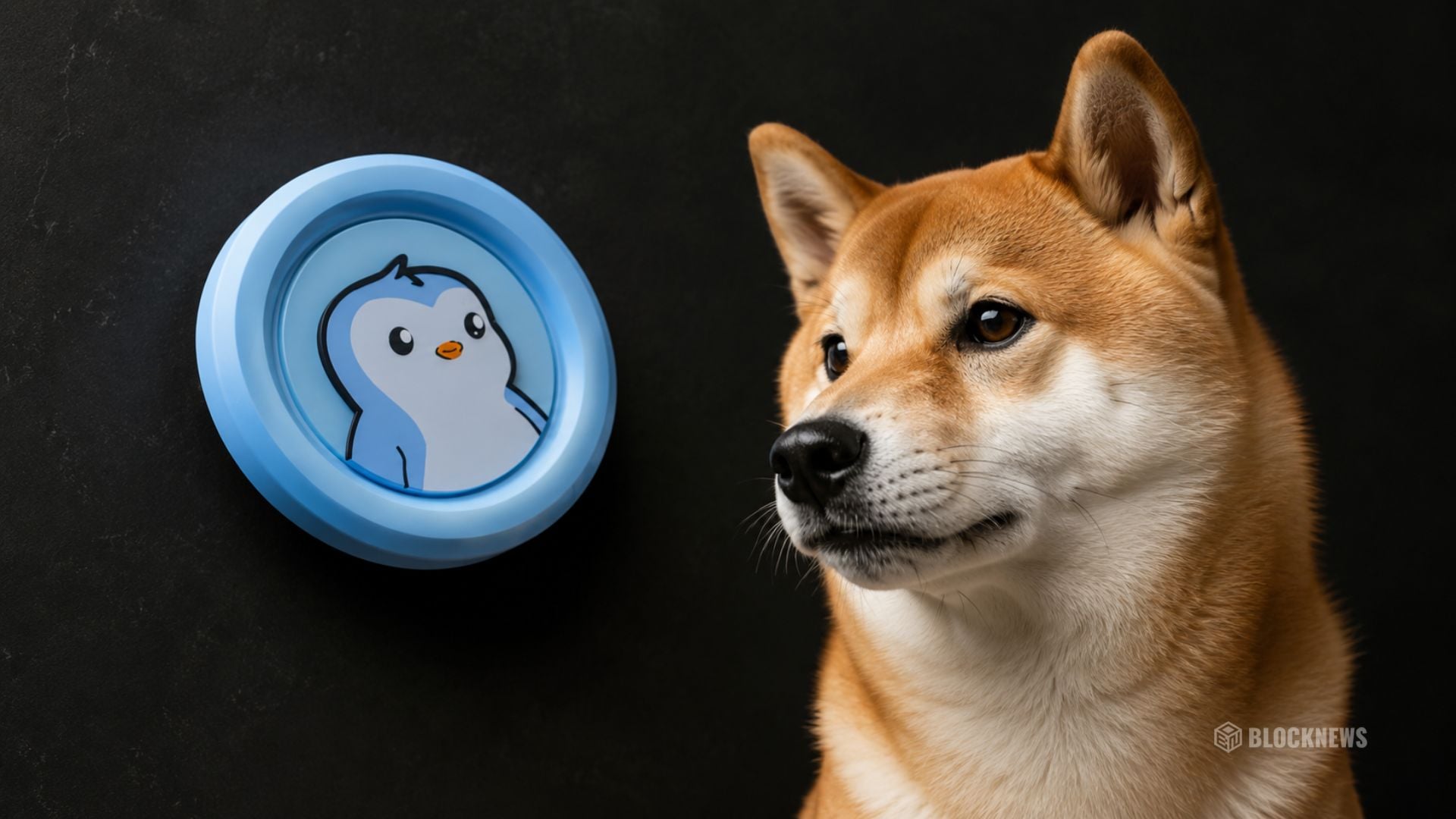
- $PENGU is gaining attention for combining meme culture with retail expansion and institutional visibility.
- Pudgy Penguins products are already distributed through major retailers including Walmart and Target.
- The ecosystem’s expansion into Asian markets could become a major long-term growth catalyst for the brand.
Most meme-driven tokens tend to follow the same cycle. They launch, go viral for a short period, attract speculative traders, and eventually fade once attention moves elsewhere. The problem is usually sustainability. Once the hype disappears, there’s often nothing left driving long-term relevance. $PENGU appears to be taking a very different route.
The Pudgy Penguins brand already operates with a large consumer-facing presence that extends well beyond crypto-native audiences. According to the project’s figures, the ecosystem generates roughly one billion views per day across social media and GIF platforms while maintaining more than five million followers globally. That’s a massive amount of visibility for a crypto brand honestly, especially one still considered early in its broader expansion phase.
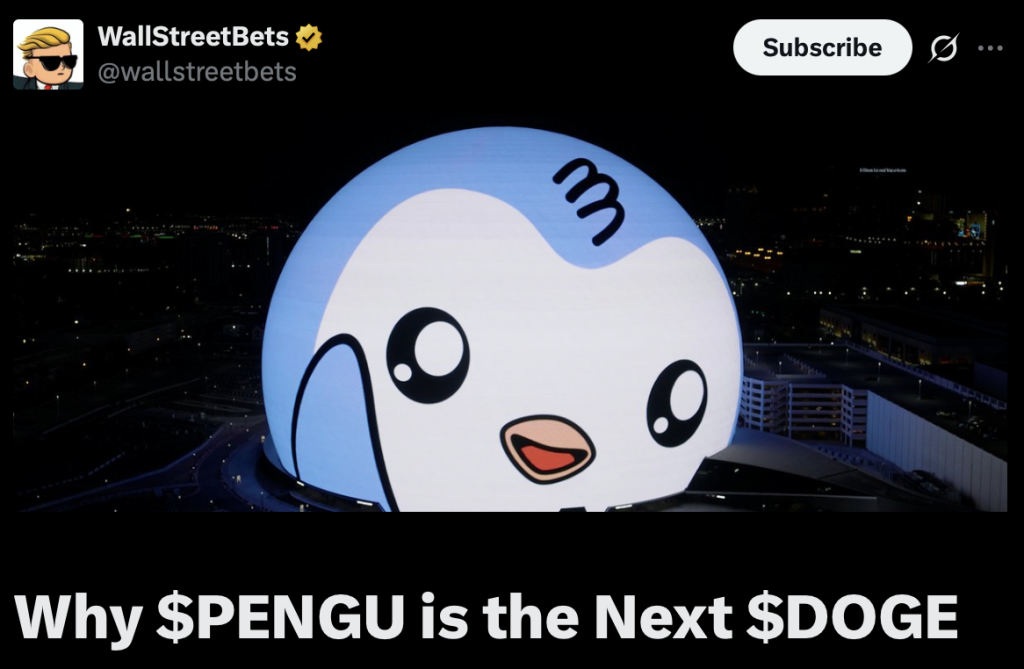
Retail Expansion Gives Pudgy Penguins Mainstream Visibility
One of the biggest things separating $PENGU from earlier memecoin projects is its retail footprint. Pudgy Penguins products are already stocked in more than 10,000 stores worldwide, including major retailers like Walmart, Target, Walgreens, and GameStop. That kind of physical distribution changes how people interact with the brand because it moves exposure outside of purely online crypto communities.
Dogecoin became globally recognizable through internet culture and community-driven virality, but it never really built a structured business engine around that attention. Pudgy Penguins, meanwhile, seems focused on turning cultural awareness into a long-term ecosystem with partnerships, merchandise, media presence, and retail expansion all feeding into each other.
The difference matters because mainstream familiarity tends to compound over time. When consumers repeatedly encounter a brand in stores, social feeds, entertainment content, and collaborations, the recognition becomes more durable than a typical short-lived crypto trend. Supporters of $PENGU believe that ongoing visibility could eventually translate into stronger token adoption as the ecosystem grows.
Institutional Attention Is Separating $PENGU From Most Memecoins
The project’s institutional visibility has also become a major talking point. Pudgy Penguins recently rang the NASDAQ opening bell alongside VanEck, which is an unusually significant moment for a crypto-native consumer brand. Firms like Bitwise and Canary Capital have publicly aligned themselves with the ecosystem as well, helping push the project deeper into traditional finance conversations.
The brand has even appeared in Ethereum ETF commercials, exposing it directly to mainstream financial audiences rather than just crypto traders online. On top of that, $PENGU reportedly became only the second memecoin-style asset after Dogecoin to enter the SEC’s formal 19b-4 ETF filing process. That regulatory milestone carries weight because very few meme-related assets ever reach that level of institutional recognition.
Outside finance, the ecosystem has expanded aggressively into media, sports, and entertainment partnerships too. Pudgy Penguins has collaborated with names like Manchester City, NASCAR, PEZ, and Sotheby’s while also earning coverage from outlets including Forbes and The New York Times. Congressman William Timmons has publicly engaged with the project as well, showing the brand’s visibility is now stretching into political circles too.
Asia Expansion Could Become the Next Major Growth Driver
Another major piece of the long-term growth narrative is Pudgy Penguins’ push into Asian markets. The brand is actively expanding into Japan’s collectibles sector, a market valued at more than $15 billion and already deeply familiar with character-driven intellectual property ecosystems. Distribution deals with retailers like Don Quijote, FamilyMart, and 7-Eleven place the brand directly inside some of the highest-traffic shopping environments in the region.
In South Korea, Pudgy Penguins partnered with Lotte to strengthen retail distribution, while in China the project gained a foothold through Suplay. None of these moves feel random either. The expansion strategy appears highly coordinated around regions where collectible culture and character branding already thrive on a massive scale.
What makes Asia especially important is that many cultural trends originating there often spread globally over time. If Pudgy Penguins successfully establishes itself inside these markets, supporters believe the effect on $PENGU’s visibility and adoption could grow steadily for years rather than months.
The comparison to Dogecoin still comes up frequently, but the structure behind the two projects looks very different. Dogecoin built cultural relevance largely through community momentum alone. $PENGU, on the other hand, is attempting to combine internet culture with retail distribution, institutional attention, partnerships, and global expansion all at the same time. Whether markets have fully priced that in yet remains a huge question.