
- Developer proposes hard fork reallocating Satoshi’s dormant Bitcoin
- Plan aims to fund scaling via controversial investor distribution model
- Community backlash highlights limits of altering Bitcoin’s social contract
A new Bitcoin fork proposal is stirring up serious controversy, and not just because it’s technical, it’s cultural. Developer Paul Sztorc plans to launch a hard fork called eCash this August, but what’s grabbing attention isn’t the scaling ideas, it’s the funding model tied to Satoshi Nakamoto’s untouched coins.
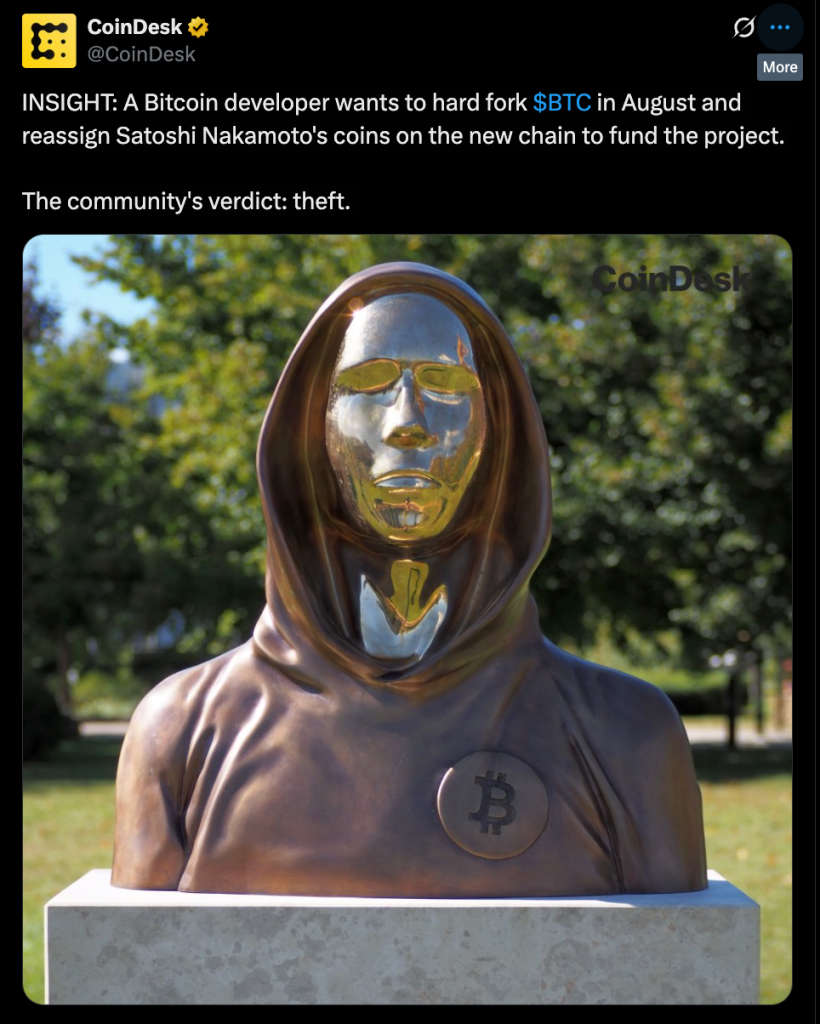
The proposal suggests reassigning up to half of Satoshi’s estimated 1.1 million BTC stash to fund development, which, understandably, has not gone down well.
A Familiar Idea With a New Twist
From a technical standpoint, the plan isn’t entirely outlandish, at least at first glance. The fork would occur at block height 964,000, giving all Bitcoin holders a 1:1 allocation of the new eCash token, while introducing drivechains to improve scalability and expand functionality.
It keeps Bitcoin’s core structure intact, using the same SHA-256 algorithm and similar codebase, which makes it feel more like an extension than a complete reinvention.
The Funding Mechanism Changes Everything
Where things start to unravel is in how the project plans to fund itself. Sztorc proposes redistributing a portion of Satoshi’s dormant coins to a group of “accredited investors,” which immediately raises questions about fairness, access, and control.

Bitcoin famously launched without pre-mines or insider allocations, so introducing a system that effectively creates a privileged investor class cuts against that original ethos, and people noticed fast.
A Community That Rarely Agrees, Suddenly Does
The reaction from the Bitcoin community has been, well… intense, and unusually unified. Critics have called the idea everything from unethical to outright theft, arguing that Satoshi’s untouched coins are part of Bitcoin’s foundational narrative and shouldn’t be altered under any circumstances.
Even in a space known for disagreements, this proposal seems to have brought a rare moment of alignment, mostly in opposition.
Code Can Fork, Culture Cannot
At its core, this situation highlights something deeper than just another fork attempt. While anyone can copy Bitcoin’s code and launch a new chain, replicating the social trust and shared understanding behind it is much harder, maybe impossible.
Sztorc argues that funding is necessary to avoid building another inactive project, which is a fair concern. But the method he’s chosen has shifted the conversation entirely, turning a technical proposal into a philosophical debate about ownership, legitimacy, and what Bitcoin actually represents.