
- Hedera gains traction through enterprise integrations and institutional inflows
- Network upgrades and partnerships strengthen long-term adoption narrative
- Price outlook depends on whether enterprise pilots move into real-world usage
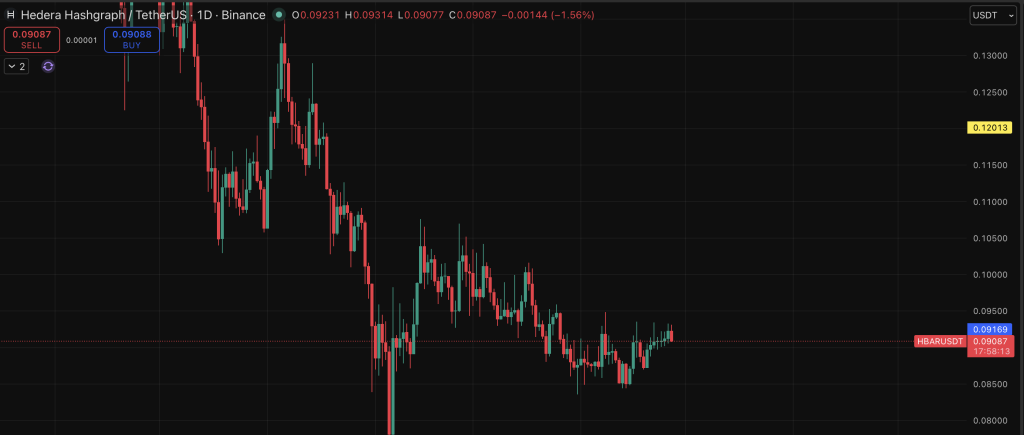
Hedera is quietly holding up better than most right now. Trading around $0.092, up just under 1% on the day, it doesn’t look explosive, but in a flat market, that kind of relative strength stands out a bit. And it’s not random either, there’s been a steady flow of developments behind the scenes, especially on the enterprise side.
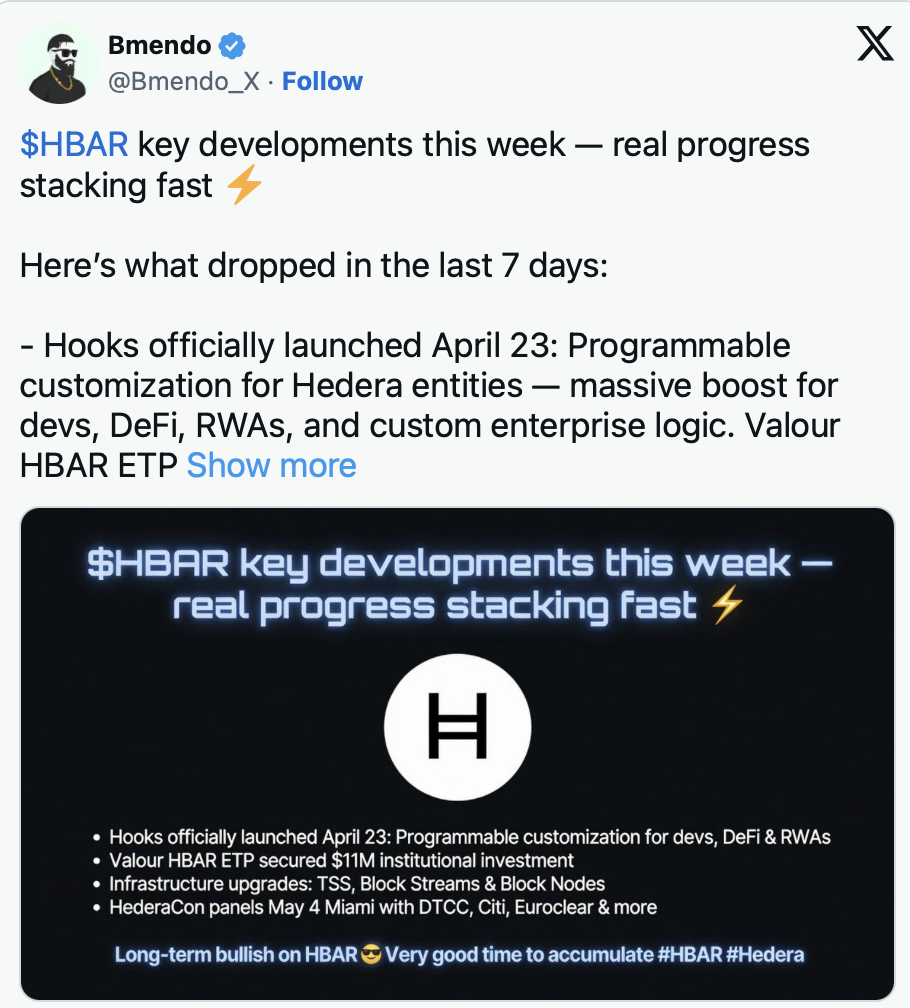
One of the bigger highlights is Teleport, AirAsia’s logistics arm, choosing Hedera for real-world infrastructure use. That’s not just another partnership headline, it actually adds some weight to the adoption story. On top of that, the Valour HBAR ETP pulled in about $11 million, which signals institutional interest is still there, quietly building.
Enterprise Integration Starts to Take Shape
There’s a growing idea, pushed by analysts like Bmendo, that Hedera is moving closer to traditional finance rails. Names like DTCC, Citi, Euroclear, and Moody’s are being mentioned in connection with upcoming discussions, which, honestly, puts Hedera in a very different category compared to most projects.
These aren’t small players. They sit right at the core of global settlement and financial infrastructure. If Hedera can position itself within those systems, even partially, it could start supporting real transaction flows, cross-border settlements, asset transfers, the kind of stuff that actually matters beyond speculation.
At the same time, the network is evolving technically. Features like Hooks for programmable logic, along with upgrades like Threshold Signature Schemes and Block Streams, are aimed at making the system faster, cheaper, and more reliable. It’s not flashy, but it’s the kind of groundwork that institutions tend to care about.
Institutional Access and Supply Dynamics Shape Price
From a price perspective, HBAR sits in a bit of a balancing act. On one side, you’ve got growing institutional access through ETPs and potential ETF exposure, which opens the door for larger capital. Governance backing from companies like Google, IBM, and Boeing also adds a layer of trust, especially for enterprise adoption.
But then there’s the supply side. With around 43 billion tokens in circulation, price doesn’t move easily without sustained demand. That’s just the reality. Even if adoption grows, it needs to be consistent to really shift valuation in a meaningful way.
Adoption Could Change Everything… or Not Yet
Looking ahead, the big question is whether these enterprise pilots actually go live. If institutions like DTCC or Citi move from testing into real settlement systems, that’s when things could change quickly. Real usage tends to drive real demand, and that’s very different from hype-driven cycles.
In a bullish scenario, stronger adoption combined with ETF flows could push HBAR toward the $0.18–$0.25 range. A more neutral outcome keeps price stuck between $0.08 and $0.12, which is where it’s been hovering anyway. And if things slow down, whether it’s macro conditions or delayed adoption, a drop toward $0.06–$0.075 isn’t off the table.
A Network at a Turning Point
Right now, Hedera feels like it’s at an interesting point, not quite proven, but not ignored either. Enterprise infrastructure, institutional access, and technical upgrades are starting to overlap, and that doesn’t happen often.
The next phase depends on execution. If these integrations turn into real-world usage, valuation could shift pretty fast. If not, then HBAR likely keeps moving with the broader market, slower, more incremental, nothing dramatic.