

- Litecoin experienced a zero-day bug allowing invalid transactions via MWEB
- Developers executed a 13-block reorganization to remove faulty transactions
- Network stabilized after patch, with minimal impact on price and operations
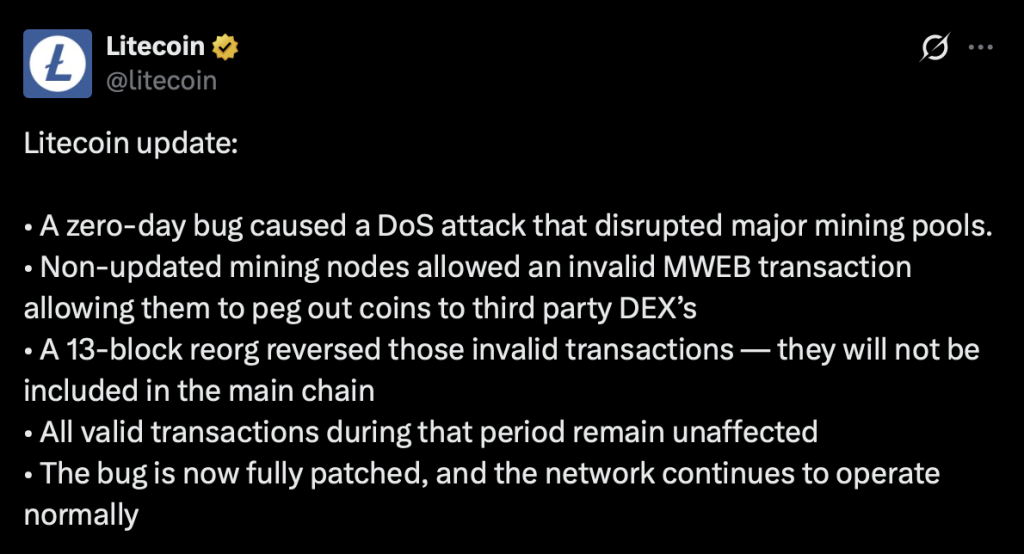
Litecoin ran into a pretty serious issue on April 25, though, to be fair, it didn’t last too long. A zero-day vulnerability slipped through, affecting the MimbleWimble Extension Block (MWEB) feature, which is usually meant to improve privacy and scalability, not cause chaos. For a short window, outdated nodes started accepting transactions they shouldn’t have, and that opened the door for attackers to move funds and mess with network stability.
It wasn’t a total collapse or anything, but things definitely got shaky. Mining pools reported disruptions, and there were even signs of a denial-of-service-style impact that slowed normal operations for a few hours. Developers later confirmed the issue publicly, noting that while invalid transactions did slip through, legitimate activity remained untouched, which, honestly, was a bit of a relief.
Exploit Enabled Invalid Transactions and Fund Movement
The vulnerability wasn’t just theoretical, attackers actually used it. By crafting invalid MWEB transactions, they managed to trigger unauthorized “peg-outs,” which basically means moving coins from the private MWEB layer back onto the main chain. That shouldn’t happen without proper validation, but the bug made it possible.
From there, funds were routed toward third-party platforms, including some decentralized exchanges, which raised concerns about tracking and verification. According to Aurora Labs CEO Alex Shevchenko, the attack appeared coordinated, with some cross-chain protocols being targeted directly. He even estimated around $600,000 in exposure tied to NEAR Intents, which, while not massive in crypto terms, is still significant.
Developers Step In With a 13-Block Reorg
To fix the situation, Litecoin developers took a fairly decisive step, they initiated a 13-block chain reorganization. This covered blocks 3,095,930 through 3,095,943, essentially rolling back the network state to remove the invalid transactions entirely. It’s not something you see every day, but in cases like this, it’s sometimes the cleanest fix.
The process took just over three hours, during which the network worked through the correction. Importantly, only the invalid transactions were removed, while legitimate ones stayed intact, which helped avoid wider disruption. Once the reorg was complete and a patch was deployed, the network returned to normal operation.
Patch Deployed, Network Stabilizes
Developers confirmed that the vulnerability has now been addressed, and updated nodes no longer accept those flawed transactions. The fix has been rolled out across the network, though node operators are still being encouraged to update, just to be safe. It’s one of those situations where timing matters, being late to update could leave you exposed.
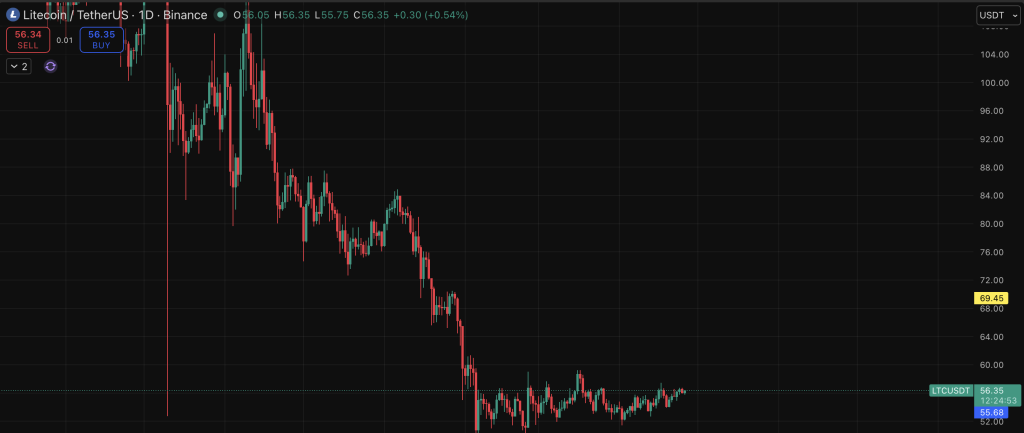
Interestingly, the market reaction was pretty muted. Litecoin traded around $56 during the incident, with only a slight dip of about 0.5%, which suggests traders didn’t panic, or maybe didn’t fully grasp the situation in real time. Some platforms did report losses tied to the exploit, but overall, the broader market stayed relatively calm.
A Reminder of Blockchain Fragility and Coordination
Events like this highlight something that’s easy to forget, even established networks aren’t immune to bugs. What matters more is how quickly and effectively teams respond, and in this case, the coordination seemed to work. The issue was identified, patched, and resolved without long-term damage, which says a lot about the system’s resilience.
Still, it’s a reminder, maybe a quiet one, that keeping nodes updated isn’t optional. It’s essential. For now, Litecoin is back to normal, but you get the sense that developers will be watching things a little more closely in the days ahead.