

- Banfield sees Hedera as enterprise-focused, with limited appeal for retail users
- ICP stands out to him as a more complete “world computer” with fewer barriers
- He views HBAR as relatively overvalued compared to ICP’s growth potential
Jerry Banfield, a crypto YouTuber known for backing Internet Computer (ICP), recently dropped a 16-minute review of Hedera (HBAR). He framed it as one of his most honest—and honestly, one of his most difficult—evaluations to date. At first glance, he appreciates quite a bit: the team looks credible, the governance model seems structured, even thoughtful. But the deeper he goes, the more something feels… off, at least for someone like him. In his view, Hedera leans heavily toward institutional use, and that creates a quiet disconnect with everyday crypto users.
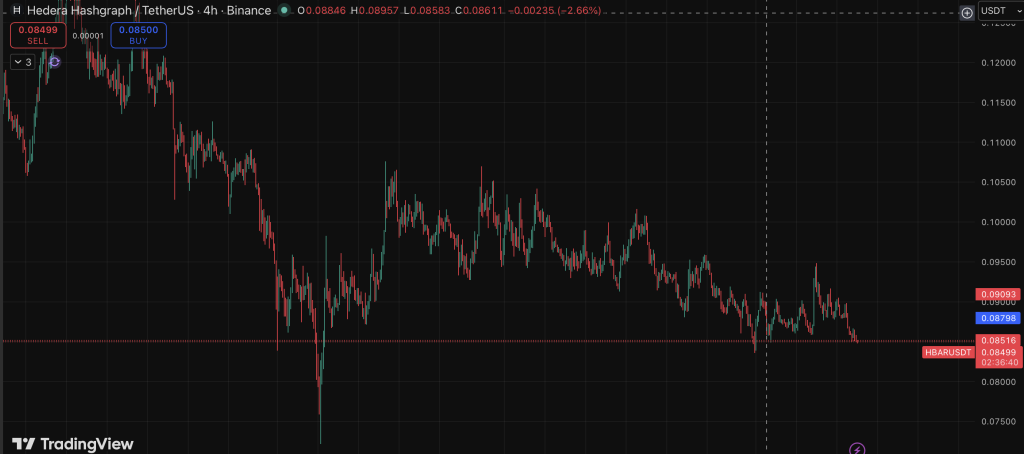
Where HBAR and ICP Start to Split
Banfield draws a pretty sharp contrast between what Hedera offers and what ICP is already doing. Hedera delivers a reliable ledger, fast transactions, and EVM compatibility—which, sure, is solid groundwork, no doubt about it. Still, he sees ICP as operating on a different level entirely, functioning more like a full “world computer” where apps and websites live fully on-chain. That difference matters, at least to him, because it shifts the narrative from incremental utility to something bigger, almost foundational. And in a space where big visions tend to win attention, Hedera starts to feel a bit… contained.
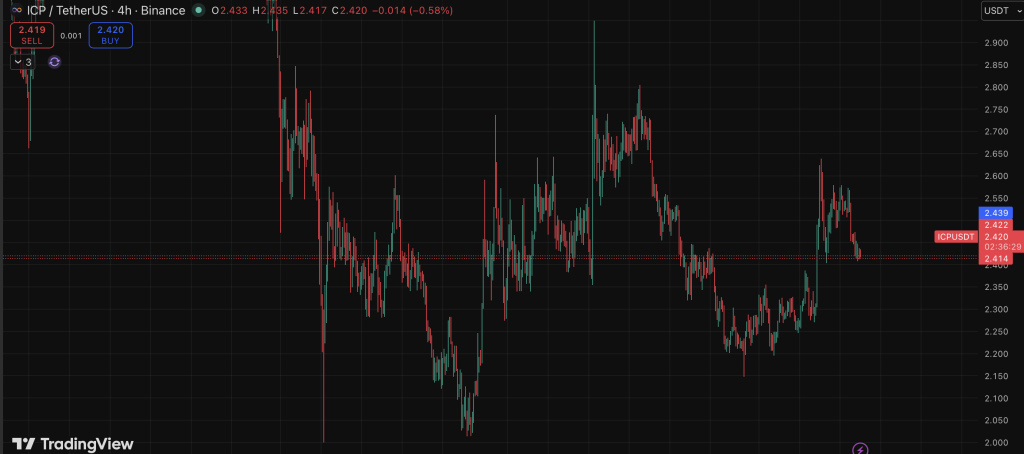
The Friction Problem and a Familiar Pattern
Another sticking point comes down to usability, especially for retail users trying to get involved. On Hedera, you still need a wallet, you still need to buy HBAR—it’s the usual crypto flow, which Banfield calls “crypto for crypto people,” not exactly beginner-friendly. ICP, on the other hand, removes that friction with its reverse gas model, letting users interact without even realizing they’re on-chain, which is kind of wild when you think about it. He also brings up Bittensor (TAO), pointing out how hype can sometimes outpace reality, and how polished narratives can mask limitations underneath. It’s not a direct comparison, but the pattern feels familiar enough to make him cautious.
Valuation, Vision, and the Final Call
When it comes to numbers, Banfield doesn’t ignore the market cap gap between the two. At the time, HBAR sat around $3.9 billion, while ICP hovered closer to $1.4 billion, and that difference shapes how he sees value. In simple terms, he believes a dollar in ICP buys more exposure to future upside than the same dollar in HBAR—by a noticeable margin. He does acknowledge Hedera’s strengths, especially for enterprises that want predictability, clear governance, and stable infrastructure. Still, his conclusion is pretty straightforward: Hedera feels like a polished corporate tool, while ICP feels like something aiming to rebuild the internet itself—and that’s where he’d rather place his bet.