
- Arizona may hold seized Bitcoin and XRP instead of selling them
- The bill creates a state-managed crypto reserve fund
- This could shift how governments treat crypto as long-term capital
At first glance, Arizona’s Bitcoin reserve bill might seem procedural, almost routine. The state simply wants to stop auctioning off seized crypto assets like Bitcoin and XRP, which has been standard practice for years. But look a bit closer, and the shift feels bigger than it first appears, maybe even quietly radical.
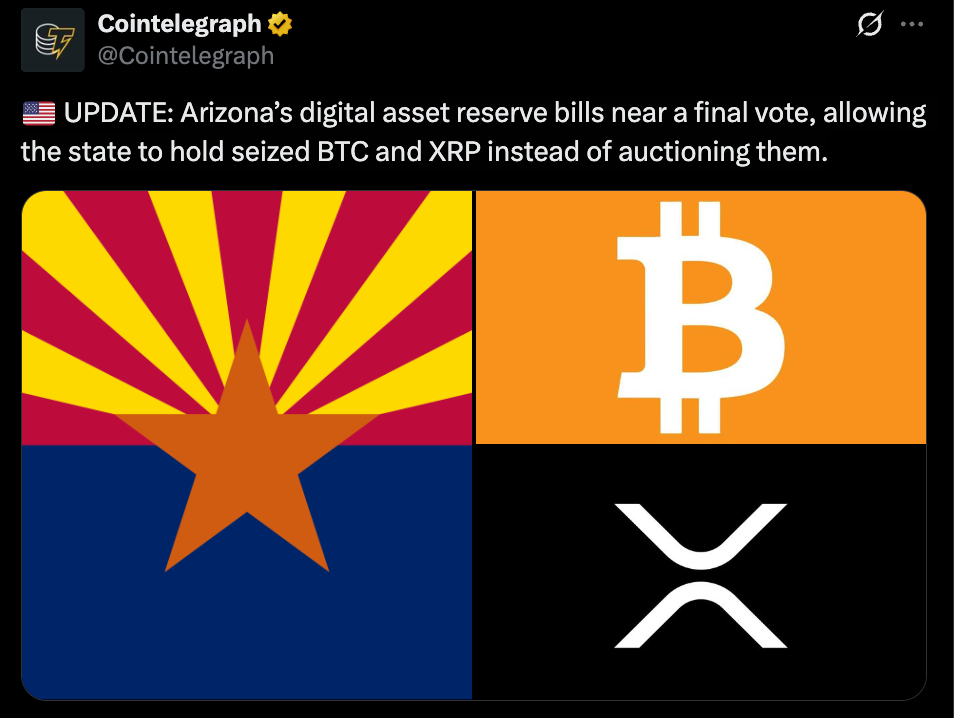
Under SB1649, confiscated crypto would no longer be treated as something to offload immediately. Instead, it would be placed into a managed reserve, held and potentially grown over time. That alone changes the framing, from crypto as disposable evidence to crypto as something worth keeping.
From Evidence Locker to State Balance Sheet
The mechanics behind the bill are where things get more interesting. Arizona plans to establish a Digital Assets Strategic Reserve Fund, allowing seized crypto to be securely stored and even used in controlled investment strategies, including lending. That’s a noticeable leap from simply holding assets in cold storage with no purpose.
Assets that once sat idle, almost forgotten in digital evidence lockers, are now being repositioned as part of a broader financial strategy. It’s a subtle but important shift, suggesting that governments are starting to see crypto less as a liability and more as a potential store of value, even if cautiously.
Other States May Follow the Same Crypto Path
Arizona isn’t entirely alone in exploring this idea, but it’s among the closest to actually implementing it. If the bill passes, it could set a precedent that other states watch closely. And if it works without major issues, the incentive to replicate the model becomes hard to ignore.

Why liquidate seized assets immediately if they could appreciate over time? That question alone could drive broader adoption of similar policies. Not necessarily out of belief in crypto, but out of simple financial logic.
The Crypto Debate Is Far From Settled
Of course, this approach isn’t without pushback. Critics are quick to point out the volatility of crypto markets and the risks of exposing public funds to such unpredictable assets. That tension isn’t going away anytime soon, and it will likely shape how aggressively other states move forward.
Still, the direction is becoming clearer. This isn’t just about managing seized assets anymore, it’s about redefining how governments interact with crypto as a whole. Arizona may not be buying Bitcoin outright, but choosing not to sell it could end up being just as significant.