- Mastercard invites Ripple, Binance, and PayPal to join a new crypto partner program
- The initiative aims to integrate blockchain payments with Mastercard’s global network
- XRP investors are watching closely for potential adoption impact
Mastercard is expanding deeper into the crypto sector with the launch of a new Crypto Partner Program designed to bring fintech and blockchain companies into its global payments ecosystem. The initiative reportedly includes invitations to around 85 fintech firms, with Ripple among the most closely watched participants due to its role in cross-border blockchain payments.
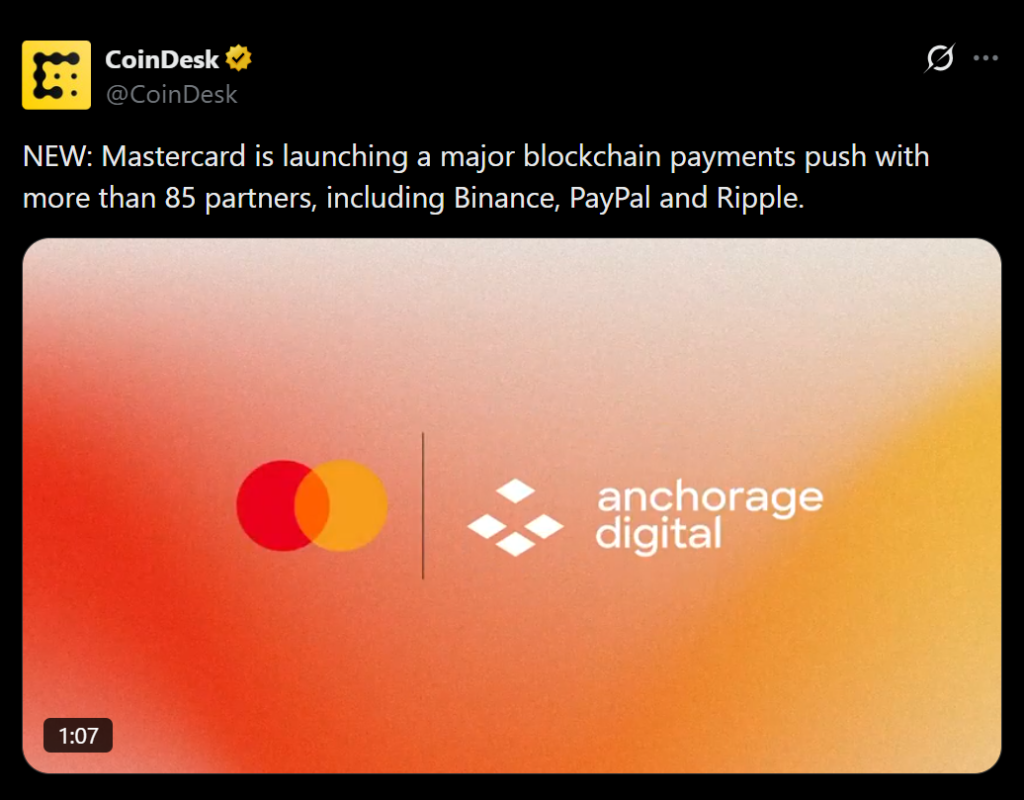
The program signals growing interest from traditional financial giants in integrating blockchain technology into existing payment networks. Mastercard’s infrastructure already spans more than 200 countries, meaning any successful integration with blockchain-based services could significantly expand the reach of digital assets and crypto-powered payments.
Ripple’s Remittance Technology Draws Mastercard’s Attention
One of the main reasons Ripple has been invited into the program is its focus on international remittances. The global remittance industry is estimated to exceed $59 billion and continues expanding as individuals and businesses look for faster and cheaper ways to move money across borders.
Traditional remittance systems often rely on intermediaries that increase fees and settlement times. Blockchain-based payment systems, however, can dramatically reduce both costs and delays. Ripple’s technology is designed specifically to address these issues, which likely explains Mastercard’s interest in collaborating with the company.
Beyond consumer transfers, blockchain solutions are also gaining traction in business-to-business payments. Many companies are now exploring faster settlement options for international transactions, creating additional demand for blockchain infrastructure.
Traditional Finance Is Moving Toward Blockchain
The Crypto Partner Program reflects a broader trend where major financial institutions are experimenting with blockchain technology. Mastercard’s move to bring companies like Ripple, Binance, and PayPal into a collaborative framework highlights how traditional payment networks are gradually exploring digital asset infrastructure.
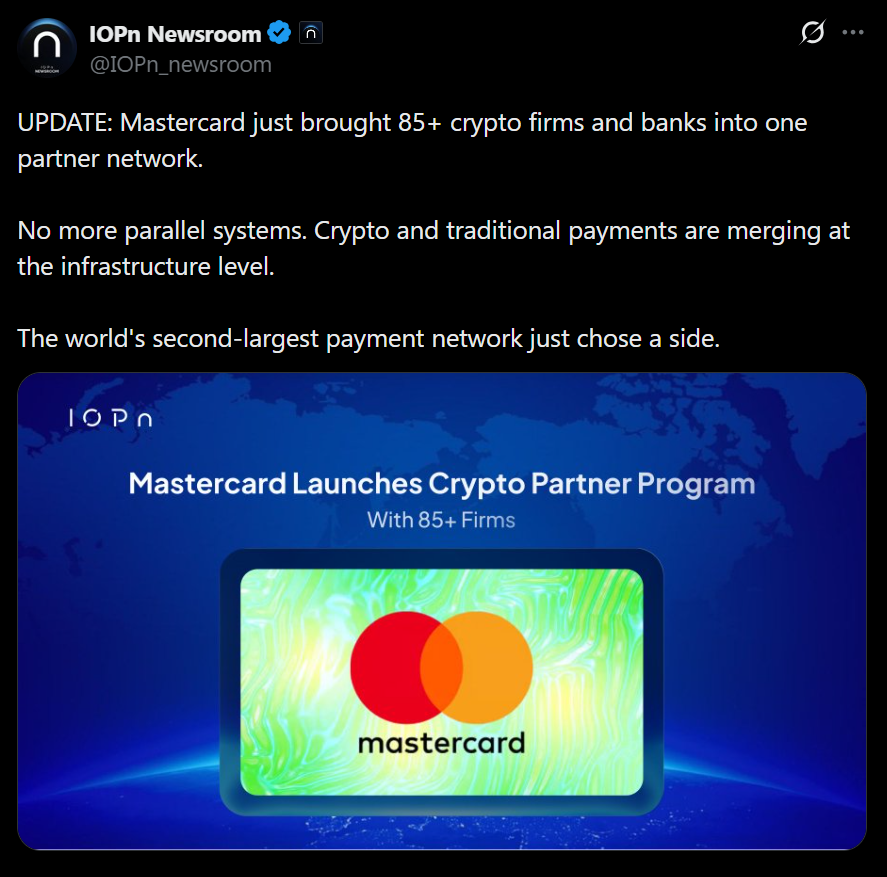
If successful, the program could connect blockchain-based payment rails directly to Mastercard’s existing global network. That integration would potentially make it easier for fintech firms to scale their services and reach mainstream users.
For Ripple, participation in such an initiative could strengthen its position within the global payments ecosystem, especially if its technology becomes part of the infrastructure powering cross-border settlements.
What This Could Mean for XRP
The announcement has naturally sparked interest among XRP investors, though the direct impact on the token itself remains uncertain. At this stage, Mastercard has only extended invitations to fintech companies, and no formal agreement has been finalized yet.
Even if the collaboration progresses, Ripple’s partnerships historically have not always translated directly into XRP price movement. Many of the company’s enterprise solutions operate independently of the token.
Additionally, the broader crypto market remains under pressure amid global geopolitical tensions and macroeconomic uncertainty. These external factors continue to influence asset prices across the sector.
XRP’s Price Outlook Remains Uncertain
For now, the Mastercard initiative represents a potential strategic opportunity rather than a confirmed catalyst for XRP. The partnership discussions highlight growing interest in blockchain payments from major financial institutions, but the timeline and scope of any collaboration remain unclear.
If Mastercard ultimately integrates Ripple’s technology into its payment ecosystem, it could strengthen the company’s role in global financial infrastructure. Whether that development translates into significant price movement for XRP, however, will likely depend on broader market conditions and the exact structure of the partnership.