

- Magic Eden is shutting down Ethereum, L2, and Bitcoin Ordinals NFT marketplaces
- The company is shifting focus toward Solana and a new crypto gaming platform
- NFT collectors are being urged to revoke old wallet approvals for security
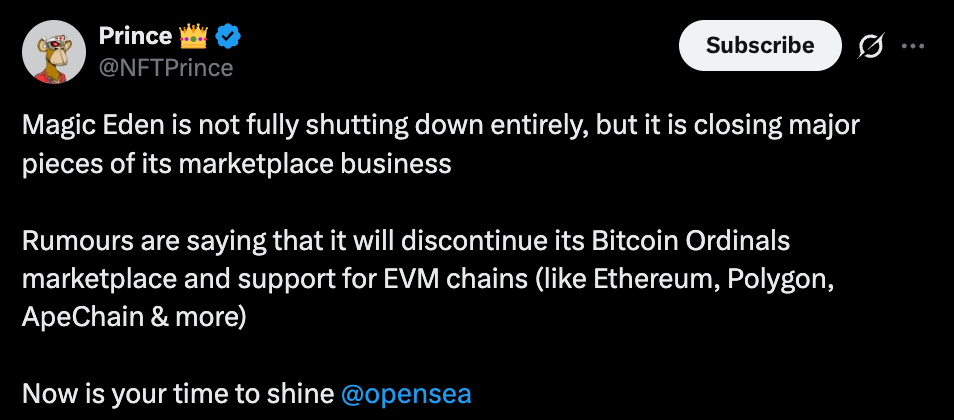
Magic Eden, once one of the most influential NFT marketplaces in crypto, is scaling back major parts of its marketplace operations. The platform is discontinuing support for several blockchain ecosystems, including Ethereum, various EVM-based networks, and Bitcoin Ordinals trading.

The move marks a significant shift for a company that once played a central role in expanding NFT trading across multiple blockchains during the previous crypto market cycle.
Magic Eden Retreats From Multi-Chain NFT Markets
The shutdown affects Ethereum-based NFT trading along with other EVM networks such as Polygon and ApeChain. The company is also ending support for its Bitcoin Ordinals marketplace.
These expansions had helped Magic Eden grow beyond its original home on Solana. At its peak, the platform became one of the most recognizable NFT marketplaces in crypto, helping onboard collectors across multiple ecosystems.
Magic Eden was also among the early platforms supporting Bitcoin NFTs when the Ordinals movement gained traction, providing a familiar marketplace experience for traders entering the space.
The Company Is Pivoting Toward New Crypto Products
Magic Eden is not leaving the crypto industry entirely. Instead, the company is redirecting its resources toward areas it believes offer stronger long-term growth.
One of those areas is blockchain-based gaming and gambling. The company is investing heavily in a new crypto iGaming platform called Dicey, an on-chain casino that allows users to place wagers using digital assets.
Early beta testing reportedly generated strong activity, with hundreds of users placing millions of dollars in wagers within a short period of time.
Magic Eden leadership appears to believe that interactive financial entertainment could represent a larger opportunity than purely collectible NFT assets.
Solana Remains the Core Ecosystem
While scaling back multi-chain marketplace support, Magic Eden plans to continue operating within the Solana ecosystem. The platform originally built its reputation as the dominant NFT marketplace on Solana and still hosts a large portion of its trading activity there.
Reducing cross-chain infrastructure also lowers engineering costs and operational complexity, allowing the company to concentrate resources on fewer products.
This pivot reflects how many crypto companies are adjusting their strategies after the NFT market cooled following its explosive growth during the previous cycle.
NFT Liquidity May Shift to Other Platforms
Magic Eden’s exit from several NFT segments could reshape trading activity across the market. Ethereum NFT collectors may increasingly migrate to other marketplaces such as OpenSea, which dominated the sector before newer competitors fragmented trading volume.
Meanwhile, the Bitcoin Ordinals community has already begun shifting toward specialized platforms like Gamma and UniSat, which focus specifically on Bitcoin-native digital assets.
The broader NFT infrastructure continues evolving as platforms compete for liquidity and collectors.
NFT Holders Should Check Wallet Permissions
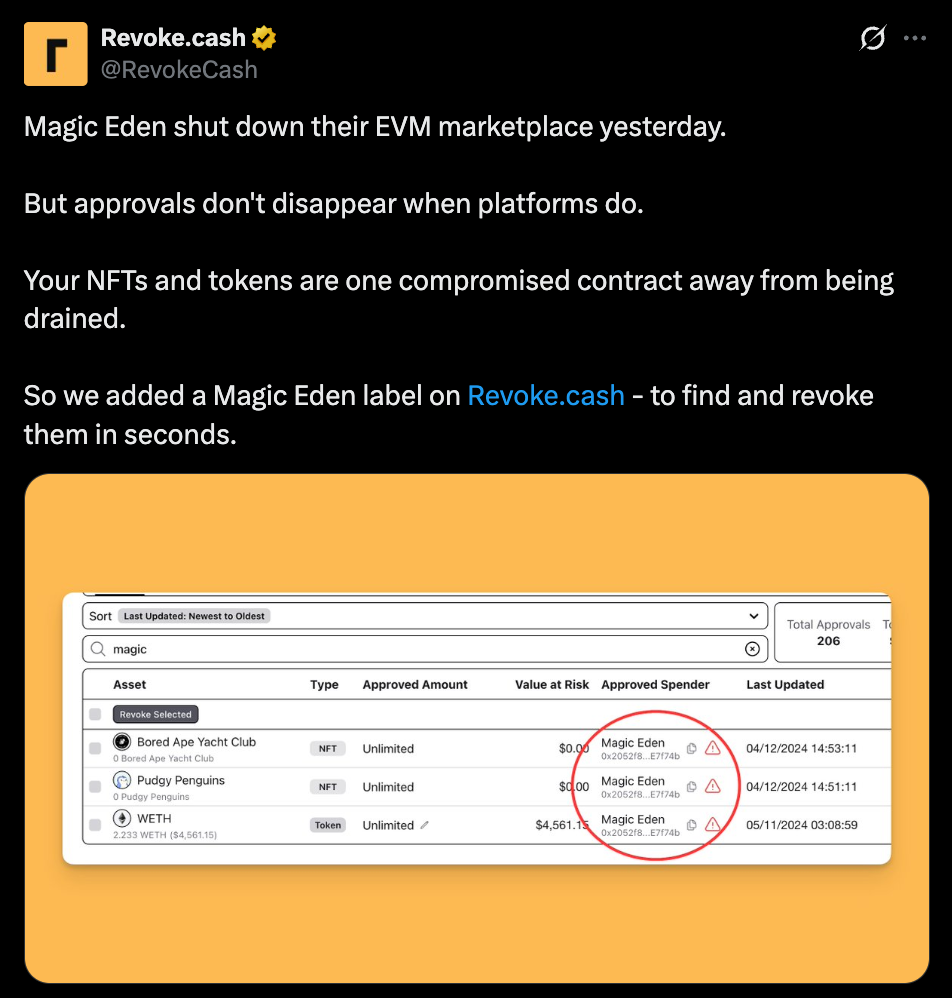
One immediate issue for NFT collectors involves wallet approvals linked to older marketplace listings. When users list NFTs on a platform, they typically grant smart contracts permission to transfer tokens if a sale occurs.
Those approvals remain active on the blockchain even if a marketplace stops operating.
Security experts are encouraging collectors to review and revoke any outdated permissions connected to Magic Eden or other unused platforms. Removing these approvals reduces the risk of unauthorized transfers and protects assets from potential exploits.
The NFT Market Is Entering a New Phase
Magic Eden’s decision highlights a broader shift in the NFT industry. During the last bull cycle, marketplaces expanded rapidly across multiple chains to capture trading activity.
In the current market environment, maintaining large cross-chain trading infrastructure has become more expensive and less sustainable.
As a result, companies are narrowing their focus and exploring new blockchain use cases such as gaming, digital entertainment, and financial applications built on crypto networks.