

- Florida becomes the first US state to pass a full stablecoin regulatory framework
- The law creates licensing rules for payment stablecoin issuers
- A pilot program may allow stablecoins to pay for government services
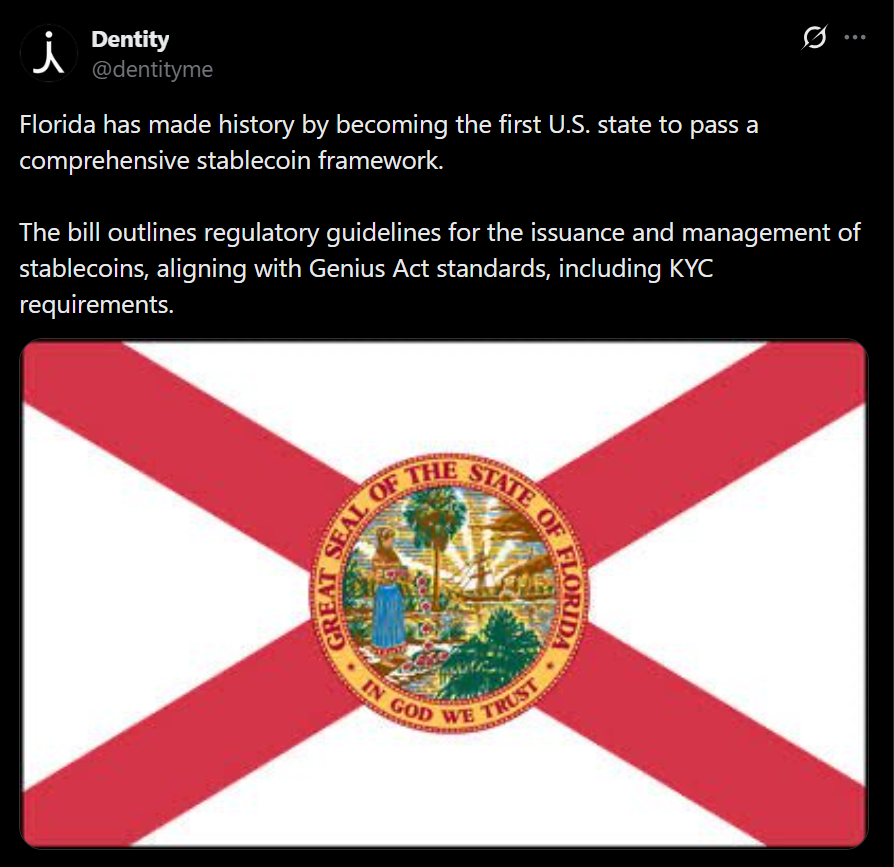
Florida has taken a major step in digital asset regulation by passing a comprehensive framework governing payment stablecoins. The legislation makes Florida the first state in the United States to establish a full regulatory structure specifically designed for stablecoin issuers. The bill now moves to Governor Ron DeSantis, who is widely expected to sign it into law.
The state has been positioning itself as a hub for blockchain innovation for several years. DeSantis has repeatedly voiced support for crypto-friendly policies, and lawmakers have worked to create an environment that attracts digital asset companies and financial technology projects. If signed, the new law could further strengthen Florida’s position in the growing digital payments sector.
Stablecoin Licensing Framework Introduced
The legislation establishes a formal licensing system for companies that issue payment stablecoins. Firms operating under the framework will need to meet regulatory requirements set by the state before offering services within Florida. The goal is to create a structured environment where stablecoin issuers can operate with clearer oversight.
Companies based outside Florida will also be affected. The law requires stablecoin issuers located in other states to notify Florida’s Office of Financial Regulation before providing services to residents. This requirement gives regulators visibility into stablecoin activity entering the state’s financial ecosystem.
Stablecoins May Be Used for Government Payments
One of the most notable elements of the bill is a pilot program involving government services. The program would allow Florida’s Department of Financial Services to experiment with accepting stablecoin payments for certain state transactions. If implemented, it could mark one of the first real-world integrations of stablecoins into a government payment system.
Supporters believe this approach could modernize how citizens interact with government services. Stablecoin payments could potentially offer faster settlement times and lower transaction costs compared with traditional payment systems.
Alignment With Federal Stablecoin Rules
Florida lawmakers structured the framework to align with the federal GENIUS Act signed by President Donald Trump in July 2025. That legislation established national guidelines for payment stablecoins and created baseline compliance standards across the United States.
By aligning with federal rules, Florida’s law creates a pathway for companies to operate under state supervision while still meeting national regulatory expectations. This approach could make it easier for stablecoin issuers to expand services across multiple jurisdictions.
Yield Restrictions Included in the Law
The framework also addresses a controversial issue surrounding stablecoins: interest payments. Under the new rules, qualified stablecoin issuers will not be allowed to offer yield or interest to holders if such payments are restricted under federal law.
This limitation reflects ongoing debates about how stablecoins should function within the broader financial system. Regulators have expressed concerns that interest-bearing stablecoins could blur the line between payment instruments and investment products.