

- Up to 18% of Bitcoin supply may sit in quantum-vulnerable addresses
- A powerful quantum computer could theoretically recover private keys
- Proposed fixes raise difficult questions about immutability and ownership
Bitcoin has survived countless crises over the years, from exchange collapses to regulatory battles. Yet quantum computing presents a very different kind of challenge. Unlike economic or political pressure, the issue comes from the cryptography underpinning the network itself.
Early Bitcoin mining rewards were often stored in pay-to-public-key addresses. In that design, the public key is directly visible on-chain. With today’s classical computers, that exposure is harmless. But in a quantum computing environment, algorithms such as Shor’s could theoretically derive the private key from the public key.
Millions of Dormant Coins Could Be Vulnerable
Researchers estimate that roughly 13–18% of Bitcoin’s supply sits in addresses that may be vulnerable to this kind of quantum attack. That includes a large number of early mining wallets, some believed to be linked to Bitcoin’s creator, Satoshi Nakamoto.
Altogether, the amount potentially exposed is estimated at around 1.7 million BTC. If a sufficiently powerful quantum computer emerged, attackers could theoretically unlock those dormant coins and move them onto the market. For an asset built around predictable supply, that possibility raises serious questions.
The Hard Fork Debate Nobody Wants
The real controversy lies in how Bitcoin might respond if the threat became practical. Some developers suggest a migration strategy where users move funds into quantum-resistant addresses. After a transition period, coins remaining in vulnerable addresses could be frozen to prevent theft.
However, that proposal directly challenges one of Bitcoin’s foundational principles. Ownership on the network is defined by private keys, not by social consensus or administrative intervention. Freezing coins — even abandoned ones — would introduce a precedent many Bitcoin supporters find uncomfortable.
The Potential Market Shock
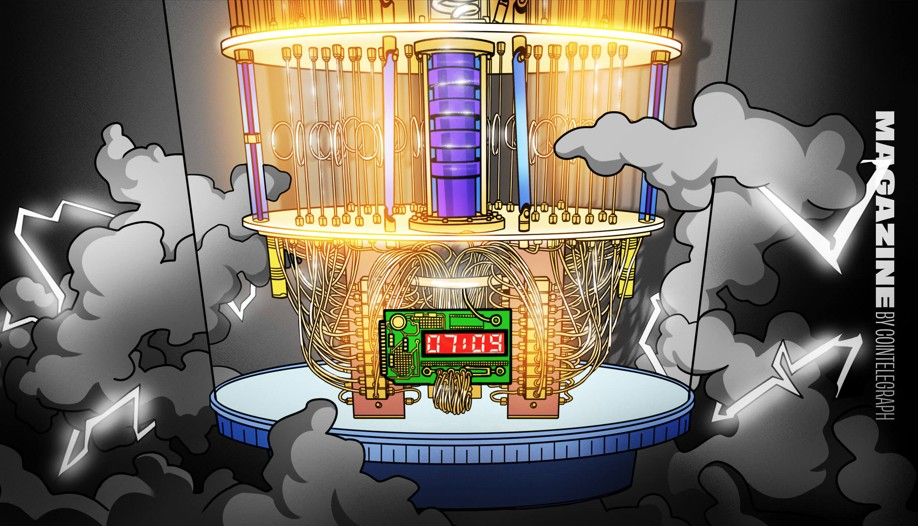
If quantum attackers ever gained access to those vulnerable wallets, the market impact could be significant. Large quantities of long-dormant Bitcoin might suddenly begin moving. Even a fraction of those coins entering circulation could create intense selling pressure.
Some analysts believe the market would eventually absorb such supply. Others argue the shock could damage Bitcoin’s narrative as predictable, fixed-supply money. Either way, the scenario highlights a risk that remains largely theoretical but increasingly discussed.
A Debate Bitcoin May Eventually Face
Quantum computing capable of breaking Bitcoin’s cryptography may still be years away. Yet the discussion itself is growing louder among developers and researchers. The challenge is not only technical but philosophical.
At some point, the network may need to choose between preserving strict immutability and protecting the integrity of its monetary system. Neither option is simple. And the longer the conversation is postponed, the more complex that decision could become.