
- CFTC Chair suggests compliant U.S. crypto perps could launch within weeks
- Offshore exchanges have dominated perpetual futures for years
- Onshore perps could reshape liquidity, leverage, and institutional access
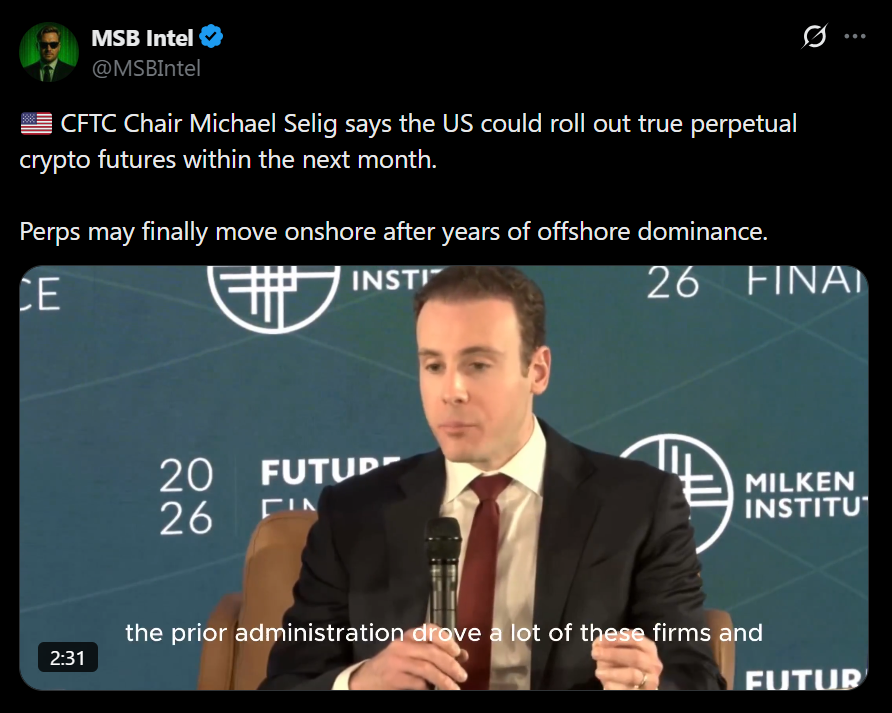
The Commodity Futures Trading Commission appears ready to open the door to “true” perpetual crypto futures in the United States. According to CFTC Chair Michael Selig, compliant onshore perps could launch within weeks. If that timeline holds, it would mark one of the most significant structural shifts in U.S. crypto market policy to date.
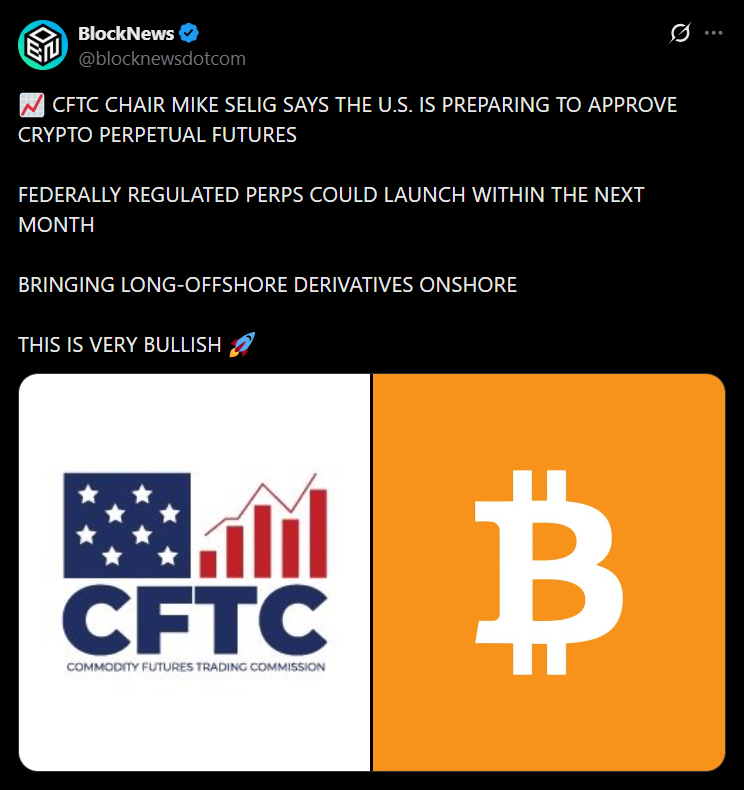
Perpetual futures are central to crypto price discovery. They trade around the clock, rely on funding rates instead of expiry dates, and frequently account for the majority of global derivatives volume. For years, however, U.S. traders were effectively boxed out of this product class under domestic regulatory constraints.
Offshore Exchanges Filled the Vacuum
The dominance of offshore venues like Binance and Bybit did not happen by accident. As U.S. regulators drew firm boundaries, global exchanges stepped in to capture demand for leveraged crypto derivatives. Billions in daily volume flowed through platforms operating under lighter regulatory regimes.
American traders participated anyway, but often without the consumer protections or transparency associated with regulated markets. The result was a paradox. The U.S. did not eliminate perpetual futures trading, it simply exported it.
Liquidity and Institutions Could Shift Back Onshore
If compliant U.S.-listed perps launch, liquidity dynamics could change quickly. Hedge funds, proprietary trading desks, and even traditional futures commission merchants may enter the market once contracts operate under CFTC oversight. Regulated clearing, standardized margin frameworks, and enhanced counterparty protections would likely appeal to institutional participants.
Bringing perpetual futures onshore could also tighten spreads and stabilize funding rate mechanics. Integration with spot ETFs, custody providers, and established clearing infrastructure may deepen market structure in ways offshore venues have struggled to replicate. For the first time, crypto perps could sit comfortably within mainstream U.S. financial plumbing.
A Structural Repatriation of Crypto Derivatives
This development is not just another product rollout. It represents a potential repatriation of crypto derivatives liquidity back into U.S. regulatory territory. Rather than suppressing demand, policymakers appear ready to channel it into a compliant framework.
If the CFTC follows through, the shift could redefine how leverage, risk management, and institutional capital interact in crypto markets. The U.S. did not eliminate perpetual futures. It watched them migrate abroad. Now it seems prepared to bring them home under its own supervision.