

- Unrealized ETH losses reflect long-term crypto exposure, not sell pressure
- mNAV discounts reduce dilution and discourage panic-driven actions
- Large Ethereum treasuries behave more like index vehicles than traders
The criticism surrounding BitMine Immersion Technologies’ unrealized Ethereum losses misunderstands how crypto treasury strategies are supposed to function. Treasury-style exposure is not designed to look attractive during drawdowns, and it never has been. Unrealized losses are simply a reflection of market conditions at a given moment, not a signal that ETH is about to be sold or that the strategy is breaking down.
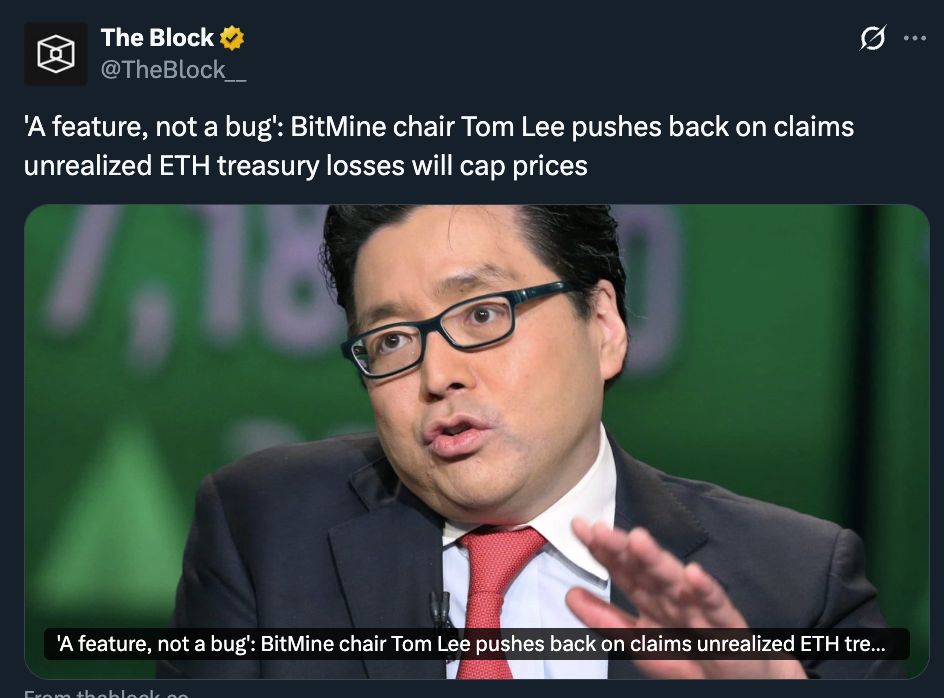
Labeling these losses as “exit liquidity” mixes accounting with intent, and that confusion matters. Just like equity index funds show red numbers during selloffs, Ethereum treasuries absorb volatility without changing their long-term posture. The goal is endurance across cycles, even when the optics feel uncomfortable.
mNAV Discounts Act as a Natural Brake
A key mechanic often overlooked is how mNAV discounts quietly shape behavior during downturns. When ETH-focused treasury companies trade below the value of their holdings, issuing new shares becomes unattractive. That naturally slows dilution and removes incentives to raise capital at poor prices, especially when sentiment is fragile.
In practice, this functions like a circuit breaker. Balance sheets are protected, reactive selling is discouraged, and capital is preserved for future cycles. Rather than creating excess supply, mNAV pressure tends to reduce it, slowing decisions when markets are already stressed.
Long-Duration ETH Exposure Isn’t a Trading Bet
BitMine’s roughly 4.285 million ETH position, representing about 3.5% of circulating supply, is not a short-term trade that depends on perfect timing. It is long-duration exposure to the Ethereum network itself. That distinction becomes especially important during drawdowns, when emotions tend to distort narratives.
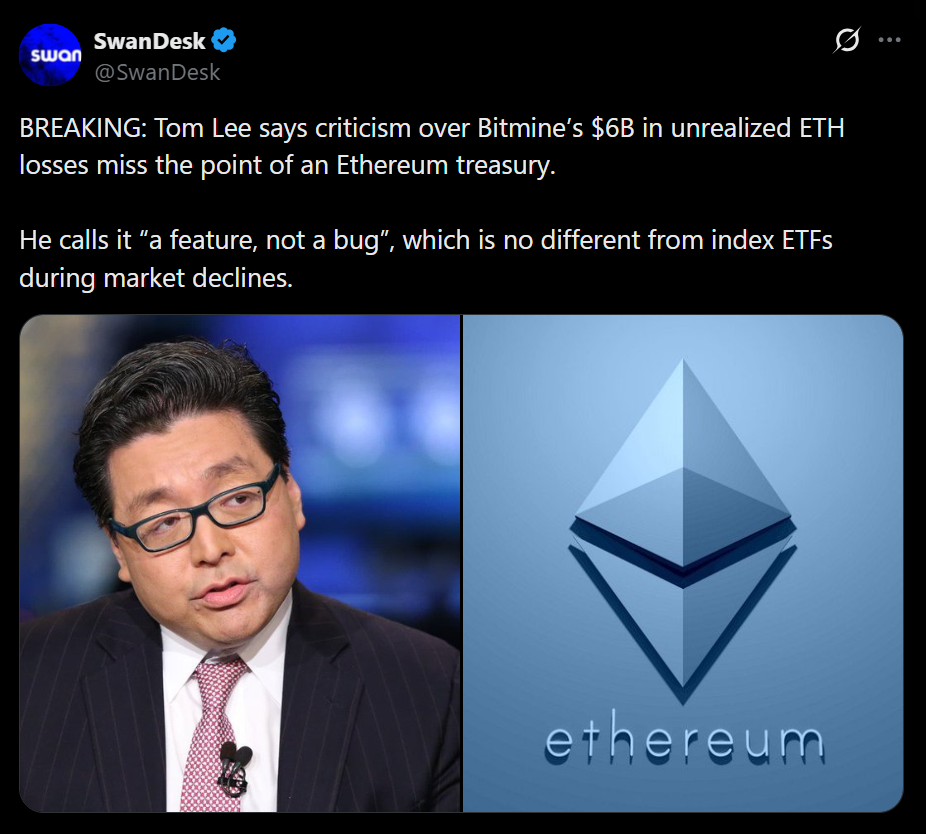
The company’s continued ETH accumulation, expanded staking activity, and ability to attract institutional interest during weakness point to conviction, not capitulation. Large ETH treasuries behave far more like index vehicles than active trading desks, and that restraint changes how supply behaves in down markets.
Discomfort Doesn’t Mean the Model Is Broken
Unrealized losses don’t feel good, and they were never meant to. But discomfort is not dysfunction. Ethereum treasury models are built to survive drawdowns without blowing up balance sheets or flooding the market with forced selling.
If anything, these structures introduce discipline when sentiment collapses. They slow reactions, limit dilution, and reduce panic-driven supply. That restraint is not a flaw in the system. It is exactly the feature critics keep missing, even as the crypto market evolves.