
- Magic Eden will use 30% of secondary revenues to buy back $ME tokens and NFTs, locking them away permanently.
- The buyback structure ties platform revenue directly to holders, creators, and collectors, tightening supply and strengthening floors.
- Engagement programs like Back in the Grass feed marketplace activity, which fuels buybacks — creating a self-reinforcing ecosystem.
Magic Eden has just rolled out one of its most ambitious changes yet: a buyback program that uses 30% of all secondary-market revenue to buy both $ME tokens and NFTs directly from the market. It’s a bold shift that connects the marketplace’s financial success with the people who actually drive its activity — holders, creators, and collectors. By automatically sweeping tokens and NFTs off the market and locking them away, Magic Eden is tightening supply while reinforcing loyalty across its ecosystem.
What Magic Eden Has Been Building
Over the past few years, Magic Eden has become one of the leading NFT hubs across Solana, Bitcoin, Ethereum, and soon, newer chains like Monad. Even through unpredictable market cycles, they’ve consistently pushed out new creator-focused and collector-focused features. Their recent launch of Back in the Grass — a live entertainment series with graded card giveaways, stream-only prizes, and volume-based referrals — shows how they’ve been layering engagement loops into their marketplace. All of this momentum sets the foundation for a much bigger structural upgrade: tying revenue directly into buybacks.
How the Buybacks Work
Magic Eden is allocating 30% of all secondary revenue into two automated buyback streams. Half goes to purchasing $ME tokens on-chain and sending them into a publicly visible wallet, effectively removing them from circulation. The other half sweeps NFTs — starting with Solana collections like Solana Monkey Business, then expanding to Bitcoin, Ethereum, and others through 2025. Once enough fees accumulate to buy an NFT, the system automatically sweeps it and deposits it into The Garden of Eden, an on-chain, permanent vault where NFTs are held indefinitely. No selling, no flipping — just long-term removal from active supply.
Why This Is Bullish
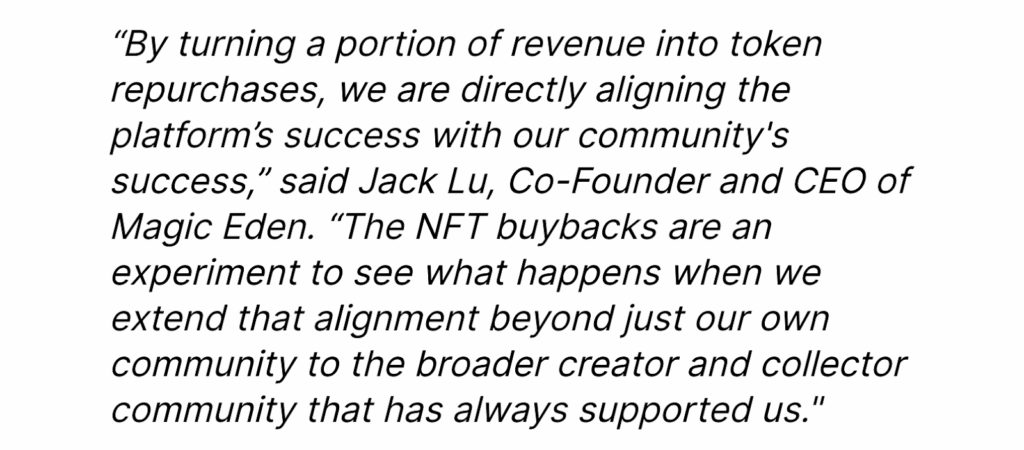
Buybacks usually signal confidence, but this program goes further. By removing $ME tokens from circulating supply, Magic Eden strengthens the long-term stability of its native asset. Meanwhile, buying NFTs and locking them away tightens floors in high-demand collections and shows creators that the marketplace is willing to reinvest its own revenue back into the ecosystem. Instead of extracting value from traders, Magic Eden is looping a portion of that value directly back into the assets that matter most. It’s a sharp contrast to the usual “charge fees, keep fees” model most marketplaces follow.
What This Means for Price and the Community
No one can predict prices, but mechanically, buybacks create sustained buy pressure that often stabilizes or supports an asset over time. As marketplace volume grows, so does the amount funneled into $ME buybacks. Meanwhile, NFT communities benefit from having Magic Eden act as a recurring buyer — especially during slow periods when floors might otherwise weaken. Socially, this program gives traders and creators a deeper connection to the platform’s performance, strengthening loyalty and reducing friction during volatility. It turns marketplace success into a shared win.
Recent Programs That Add Context
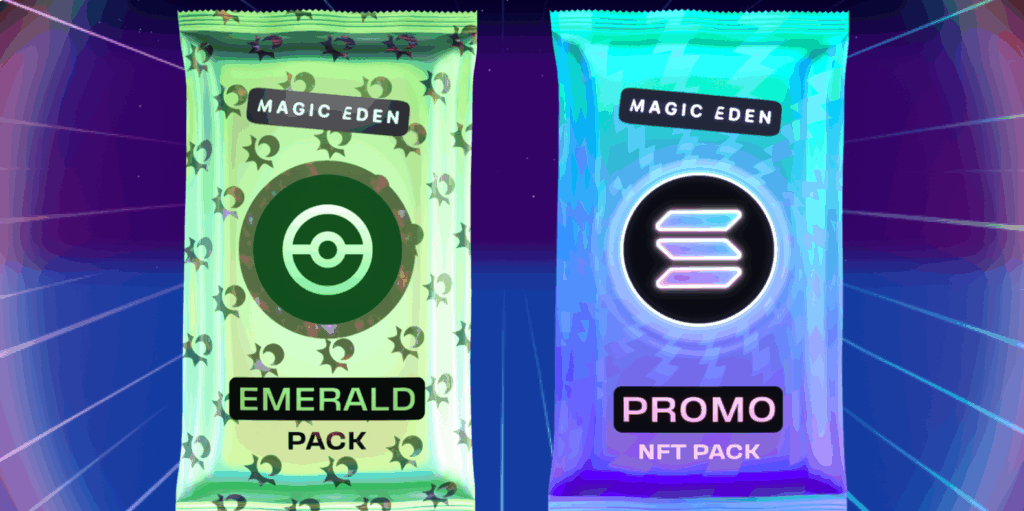
This announcement comes right after Magic Eden launched Back in the Grass, a live-stream entertainment series built around collectibles, spending activity, and referrals. Users can earn entries by spending across ETH, SOL, or Poké Packs, and some rewards drop only during the live stream. When you combine this with the buybacks, a clear pattern emerges: Magic Eden is building engagement loops that directly boost revenue — which then automatically gets recycled back into $ME and NFTs. It’s a circular system designed to reinforce itself over time.
Conclusion
Magic Eden’s buyback structure changes the dynamic between the platform, its users, and the NFTs being traded. By routing real revenue into both token and NFT buybacks, they’re blending user incentives with marketplace growth in a way few platforms have attempted. And here is why that matters: if this structure proves durable, it could push the broader NFT space to rethink how long-term loyalty and value-sharing should work.